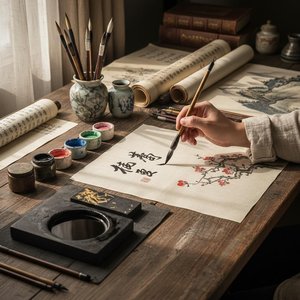
The Spirit of the Brush
In the bustling atmosphere of Beijing, during the later years of the eighteenth century, the hands of Zi Dianqing and Hao Liangang began to shape a legacy rooted in deep study and quiet contemplation. Born in 1739, these artists lived through a period where the shadows of the past loomed large over the creative mind. Their work was not merely an imitation of what came before, but a thoughtful engagement with the weight of tradition. They sought to find their own voice within the established canons that had guided painters for generations.
The path they walked was one of intense observation and memory. One finds in their approach a dedication to the masters of old, particularly the subtle ways of handling ink and line. Their practice involved a rigorous examination of existing works, looking closely at the brushwork of those who had long since passed into history. This careful study allowed them to grasp the nuances of texture and tone that defined the classical style.
A Dialogue with Tradition
The essence of their artistry is perhaps best understood through their relationship with the great masters of the landscape tradition. They drew inspiration from the smoky ink washes and sensitive brushlines characteristic of the Ni Zan style, a method that favored a certain restrained elegance. This was not a simple act of copying, but a way to honor the spirit of the man of letters through a modern lens.
In their creation, there exists a fascinating tension between fidelity and personal truth. While they studied specific works—such as those attributed to the monk of Longmen—with great intensity for many years, their ultimate goal was not to produce a perfect replica. Instead, they used these studies to build a foundation of memory. Their paintings emerged from this mental reservoir, allowing the quality of their own execution to take precedence over the strict accuracy of a copy. This approach reflected a growing spirit of the nineteenth century, a time when the authenticity of classical models began to be viewed with a more questioning and independent eye.
الأسئلة والأجوبة
من أي بلد Zi Dianqing, Hao Liangang؟
وُلد Zi Dianqing, Hao Liangang في China.
أين يمكن العثور على أعمال Zi Dianqing, Hao Liangang الفنية مصنفة حسب التقنية؟
يمكن تصفح أعمال Zi Dianqing, Hao Liangang حسب الوسيط الفني عبر صفحة حسب الوسيط الفني.
كيف يمكنني استعراض كافة الأعمال الفنية للفنان Zi Dianqing, Hao Liangang؟
يمكن تصفح جميع أعمال Zi Dianqing, Hao Liangang على هذا الموقع عبر صفحة كافة الأعمال الفنية الخاصة بالفنان.