


 Преглед в реален мащаб
 Сподели
 Сподели
 Подробности
 Ръководство

 Изтегляне
 Подобни артикули
 Рентгенова снимка
 Слайдшоу
 Статистика
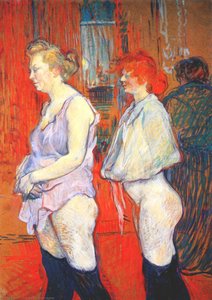
Nude Standing before a Mirror


 Разгърни целия текст
Ръчно изработена маслена репродукция
Ръчно рисувана маслена картина върху платно във вашия размер и рамка, изработена по поръчка от нашите художници. ( Избор на принт Превключване към дигитално изображение)




P118B $10

P118H $10

P118W $10

P438Z $10

P508JH $12

P508YH $12

P805H $10

P805Z $10

P919BZ $10

P919G $10

P919XJ $10

P959ZH $10

P968JZ $12

W106C $8

W218G $10

W218JH $8

W218Y $10

W307PJ $10

W316G $10

W316PJ $8

W316Y $10

W398PJ $8

W4111J $10

W500HY $15

W500JH $15

W692G $12

W849H $8

W940BG $15

W953PJ $8




Изберете от нашите предварително зададени размери, които съответстват на оригиналните пропорции на произведението.

Можете да въведете свои собствени размери, за да паснат на конкретна рамка или пространство. Ако избраният от вас размер не съответства на пропорциите на оригиналното изображение, ние ще изрежем произведението или ще разширим картината с допълнителни ръчно рисувани елементи. Дигитален макет ще бъде изпратен за ваше одобрение преди започване на производството.
Моля, обърнете внимание, че предпрогледа на екрана не отразява действителното изрязване или разширяване. Само макетът ще покаже точно финалната композиция.
Въпреки че са налични персонализирани размери, препоръчваме да изберете размер от предварително дефинирания списък, за да запазите оригиналните пропорции.
След получаване на поръчка, екипът на AllPaintingsStore.com ще изпрати имейл до клиента с инструкции и ще предостави примерен макет за преглед.
Доставка по целия свят () в рамките на 3-4 седмици вместо стандартните 5 седмици. (21 Септември). Без компромис с качеството.

Безплатна експресна доставка по целия свят

Висококачествено ленено платно

Пълно застраховане на доставката

Гаранция за възстановяване на митнически такси

Гаранция за пълно съответствие на цветовете

Политика за връщане в рамките на 100 дни (само при дефекти)

100% Гаранция за връщане на сумата

Отстъпка при поръчка на повече произведения
 Опцията със стъкло е налична само за размери под 110 см

Nude Standing before a Mirror
Техника на репродукция
Размер на репродукцията
-


Крайна цена
$ 258
Henri de Toulouse-Lautrec: A Portrait of Parisian Night
Comte Henri Marie Raymond de Toulouse-Lautrec-Monfa, universally known as Toulouse-Lautrec, remains an enduring emblem of the late 1890s artistic landscape. Born into a crumbling aristocratic lineage in Albi on November 24, 1864, his life unfolded against a backdrop of both privilege and profound physical impediment—a rare genetic condition severely restricting limb growth—transforming him into an artist acutely attuned to the marginalized souls inhabiting Montmartre’s vibrant, often scandalous milieu.
The Painting: “Girl Before a Mirror” – A Study in Reflection
Pablo Picasso's "Girl Before a Mirror," completed in 1932, transcends mere portraiture; it embodies a masterful exploration of perception and identity. Executed during Picasso’s prolific period, the canvas depicts Marie-Thérèse Walter, Toulouse Lautrec’s muse, positioned before an oval mirror reflecting her face and upper torso. This seemingly simple composition belies a complex layering of symbolism—the mirror serving as a conduit for introspection and highlighting the duality inherent in human experience.
Technique and Style: Impressionistic Echoes
Picasso’s approach aligns with Impressionism's legacy, prioritizing luminous color palettes and fragmented forms to convey immediacy and emotional resonance. The artist employs loose brushstrokes—characteristic of Cubism—to dissect Walter’s figure into geometric planes, simultaneously capturing her physical presence and psychological state. Careful attention is paid to light—primarily emanating from the left—illuminating Walter's torso while casting shadows that delineate contours and contribute to the painting's dramatic atmosphere.
Historical Context: Montmartre’s Bohemian Spirit
“Girl Before a Mirror” emerged during Montmartre’s zenith as a bohemian epicenter, attracting artists, writers, and performers eager to challenge societal conventions. Toulouse Lautrec himself frequented these establishments—particularly brothels—drawing inspiration from the raw energy and sensual allure of Parisian nightlife. Picasso's depiction reflects this cultural milieu, capturing not merely an image but also a mood—a poignant contemplation on self-awareness amidst the complexities of desire.
Symbolism: The Mirror as Window to Consciousness
The mirror’s central role in “Girl Before a Mirror” transcends its literal function. It symbolizes introspection and duality, mirroring Walter's face while simultaneously concealing her gaze—suggesting an awareness of self beyond outward appearance. Picasso skillfully utilizes visual cues—the placement of the mirror frame, the subtle shading—to heighten the painting’s emotional impact, prompting viewers to confront questions about identity and perception.
Emotional Impact: A Moment Frozen in Time
"Girl Before a Mirror" resonates with an enduring fascination due to its ability to capture a fleeting moment of vulnerability and contemplation. Picasso's masterful technique—combining Impressionistic color harmonies with Cubist fragmentation—creates a visual experience that is both intellectually stimulating and emotionally evocative. The painting serves as a testament to the transformative power of art—its capacity to distill complex ideas into a single, unforgettable image.
Свързани произведения



Биография на художника
A Life Etched in Parisian Nights: The World of Henri de Toulouse-Lautrec
Henri Marie Raymond de Toulouse-Lautrec-Monfa, forever known simply as Toulouse-Lautrec, remains a captivating figure of the late 19th century. Born into the waning days of French aristocracy in Albi on November 24, 1864, his life was marked by both privilege and profound physical challenge. A rare genetic condition, suspected to be pycnodysostosis – though debated even today – halted the growth of his legs at a young age, leaving him with a disproportionately small lower body and an adult torso. This physical difference profoundly shaped his perspective, leading him not toward self-pity but towards an intensely observant and empathetic engagement with the marginalized figures of Parisian society. His aristocratic background afforded him access to artistic training, yet it was the vibrant, often scandalous world of Montmartre that truly ignited his creative spirit.From Academic Training to Bohemian Rhapsody
Toulouse-Lautrec’s formal artistic journey began in Paris under the tutelage of Léon Bonnat and later Fernand Cormon. While he mastered the technical skills expected of a Salon painter, it was his immersion in the bohemian heart of Montmartre that irrevocably altered his trajectory. He rejected the prevailing academic focus on historical or mythological subjects, instead turning his keen eye towards the everyday dramas unfolding around him: the dancers at the Moulin Rouge, the prostitutes of the rue des Moulins, the circus performers and café singers who populated the Parisian nightlife. This wasn’t mere observation; it was a deep dive into a world often ignored by polite society. He didn't simply paint *about* these people, he inhabited their spaces, understanding their vulnerabilities and celebrating their resilience. His early works show a clear academic foundation, but quickly evolve to embrace a more daring and unconventional style, influenced by Japanese woodblock prints – then gaining popularity in Europe – with their bold compositions and flattened perspectives. These prints provided him with a new way of seeing the world, emphasizing strong outlines and simplified forms.A Master of Line and Color: Defining a Style
Toulouse-Lautrec’s artistic innovations are readily apparent in his distinctive style. He was a master of line, using it not just to define form but to convey movement, emotion, and character. His drawings were particularly striking, capturing the energy and immediacy of his subjects with rapid, confident strokes. His color palette, while often muted – dominated by browns, grays, and blacks – possessed an extraordinary vibrancy, capturing the artificial glow of gaslight and the smoky atmosphere of Parisian cabarets. He experimented with different mediums, including lithography, watercolor, and pastel, each lending a unique quality to his work. He embraced lithography with particular enthusiasm, recognizing its potential for mass reproduction and artistic expression. This allowed his images to circulate widely, further cementing his reputation as a chronicler of modern life. His posters, advertising performers like Jane Avril and Yvette Guilbert, were not merely promotional materials; they were works of art in their own right, instantly recognizable for their dynamic compositions and striking imagery. La Blanchisseuse, sold at auction for $22.4 million in 2005, exemplifies his early talent, but it’s the later depictions of Montmartre that truly define his legacy. He wasn't interested in idealizing his subjects; he presented them with unflinching honesty, capturing their flaws and vulnerabilities alongside their beauty and spirit.The World of Montmartre: Subjects and Themes
Toulouse-Lautrec’s artistic focus centered almost exclusively on the vibrant, often disreputable world of Montmartre. He frequented cabarets, dance halls, brothels, and circus sideshows, documenting the lives of its inhabitants with a mixture of fascination and empathy. His subjects ranged from glamorous dancers and celebrated singers to impoverished prostitutes and eccentric performers. He wasn’t interested in romanticizing these figures; instead, he portrayed them with a keen eye for detail, capturing their physicality, their emotions, and their social circumstances. The Moulin Rouge, with its dazzling spectacle of can-can dancing, became a recurring motif in his work, offering him a constant source of inspiration. His depictions of the *guignol*, a form of Parisian vaudeville, further showcased his ability to capture the humor and pathos of everyday life. He developed close relationships with many of these individuals, including Jane Avril, Yvette Guilbert, and Valentin-le Desosse, who often posed for him and became central figures in his artistic vision.Legacy and Lasting Influence
Toulouse-Lautrec’s life was tragically cut short at the age of 36 on September 9, 1901, a consequence of years battling alcoholism and syphilis. Despite his relatively brief career, his impact on the art world is immeasurable. He stands as a pivotal figure in the transition from Impressionism to modern art, paving the way for artists who would further explore subjective experience and psychological depth. He is considered one of the key Post-Impressionist painters alongside Cézanne, Van Gogh, Gauguin, and Seurat. His influence can be seen in everything from early 20th-century illustration to contemporary graphic design. He didn’t just paint what he saw; he revealed a hidden world, challenging conventional notions of beauty and morality. His work continues to resonate today, reminding us of the power of art to illuminate the human condition in all its complexity and contradiction.Exploring Toulouse-Lautrec’s World Further
- Discover a comprehensive collection of his artwork at /en/artists/comte-henri-marie-raymond-de-toulouse-lautrec-monfa.
- Delve into the world of Post-Impressionism and its key artists at /en/art-movements/post-impressionism.
- Learn more about his life and artistic journey through resources like Wikipedia: https://en.wikipedia.org/wiki/Henri_de_Toulouse-Lautrec

comte henri marie raymond de toulouse-lautrec-monfa
1864 - 1901 , Франция
Бързи факти
- Artistic Movement Or Style: Пост-импресионизъм
- Artists Or Movements Influenced By This Artist: ['Къснe импресионизъм']
- Artists Who Influenced This Artist: ['Льоон Бонат']
- Date Of Birth: 24 ноември 1864 г.
- Date Of Death: 9 септември 1901 г.
- Full Name: Henri Marie Raymond de Toulouse-Lautrec-Monfa
- Nationality: Френски
- Notable Artworks:
- La Blanchisseuse
- In the Wings at the Circus
- Woman in Bed — Waking
- Place Of Birth: Алби, Франция
Свързани статии

Post-Impressionism Guide: Bold Colors and Expressive Masterpieces for Professional Hotel Decorators
Elevate hospitality interiors with Post-Impressionist masterpieces. A professional guide for hotel designers on selecting bold, expressive oil reproductions and large-scale murals to create impactful, high-end guest experiences through expert art procurement.


