Гаранция за връщане на сумата · 100 дни Безплатна доставка по целия свят
449564произведения на изкуството 30613художници 4660музеи 32езици
Експонатно описание

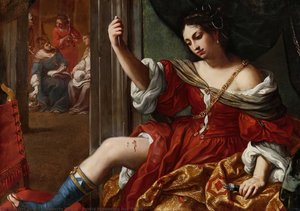
Study

1663. Acrylic On Paper, 210.0 x 162.0 cm. Walker Art Gallery.

Фиг. 1. Елизабета Сирани, Study, 1663. Показано като репродукцията, която посочвате: , .

§ 1Каталожни данни

Размери
210.0 x 162.0 cm

§ 2Абстракция

Описание на колекционерския предмет

Discover "Study" by Elisabetta Sirani – a captivating 17th-century chalk drawing of two figures, showcasing Baroque artistry and the artist's remarkable skill. Explore its history & beauty!

Биография на художника

Елизабета Сирани (1638-1665) е барокова художничка от Болоня, известна с портрети и религиозни картини. Управлявала семейната работилница и основала академия за жени-художнички – пионер в изкуството!

§ 3Коментар

A Moment Frozen in Charcoal: Elisabetta Sirani’s “Study”

Within the hallowed halls of the Walker Art Gallery in Liverpool resides a deceptively simple yet profoundly moving work – Elisabetta Sirani's "Study," executed in 1663. More than just a preparatory sketch, it is a miniature world brimming with tenderness, quiet observation, and an exquisite understanding of human connection. The drawing, rendered primarily in delicate shades of brown and beige using charcoal on paper, immediately draws the eye with its intimate scale – measuring a modest 210 x 162 centimeters – inviting viewers to step into a private, almost sacred space.

Sirani’s genius lies not in grand gestures or dramatic displays, but rather in her ability to capture fleeting moments of genuine emotion. The composition centers on a young woman, presumably the artist's sister, gently lifting the sleeve of a child – likely her own son, Giovanni Andrea – revealing his small hand. This simple act, frozen in charcoal, speaks volumes about familial love and the quiet intimacy of domestic life. The pose is remarkably naturalistic; Sirani eschews overly stylized figures, opting instead for a directness that feels utterly honest and unpretentious.

Baroque Simplicity: Technique and Style

“Study” exemplifies the hallmarks of Baroque art while simultaneously forging its own distinctive path. Sirani’s technique is characterized by an economy of line – she employs minimal outlining, relying instead on subtle tonal variations to define form and create a sense of volume. The use of *grisaille*, a monochrome drawing technique using shades of gray, allows her to focus entirely on capturing the essence of the subject without distraction from color. The paper itself is laid down, adding texture and visual interest to the composition.

Noticeably absent are any elaborate details or decorative flourishes typical of some Baroque works. Instead, Sirani’s strength lies in her masterful control of light and shadow – a technique known as *chiaroscuro* – which imbues the scene with a palpable sense of depth and atmosphere. The soft, diffused lighting suggests an interior setting, perhaps a room bathed in natural light, further enhancing the feeling of intimacy.

A Window into 17th-Century Bologna

To fully appreciate “Study,” it’s crucial to understand its historical context. Elisabetta Sirani emerged as one of the first women artists to achieve significant recognition in early modern Bologna – a city renowned for its vibrant artistic community and patronage system. Despite facing considerable societal obstacles, she established herself as a respected painter, producing both commissioned works and independent studies. “Study” offers a rare glimpse into her working methods and artistic philosophy.

The drawing’s creation coincided with a period of intense artistic innovation in Bologna, influenced by the legacy of Guido Reni and the prevailing trends of the Baroque style. However, Sirani's approach was distinctly her own – characterized by a refined sensibility and an unwavering commitment to capturing the emotional truth of her subjects. It is believed that this drawing served as a study for a larger allegorical composition, likely commissioned by Prince Leopoldo de’ Medici in Florence, highlighting the virtues associated with his family’s rule.

The Enduring Power of Observation

“Study” transcends its technical merits to become a poignant meditation on human connection. The simple act of a mother tending to her child is rendered with such sensitivity and grace that it resonates deeply with viewers across centuries. Sirani's ability to distill complex emotions into a single, carefully observed drawing speaks to the enduring power of art to illuminate the beauty and fragility of everyday life.

Today, reproductions of “Study” are readily available through platforms like AllPaintingsStore.com, offering art enthusiasts the opportunity to bring this exquisite work into their homes and offices. It’s a testament to Sirani's skill that her drawing continues to captivate audiences with its quiet dignity and profound emotional resonance – a timeless reminder of the simple joys of family and the enduring power of observation.

Въпроси и отговори

Каква е техниката и стилът на "Study"?

В „Study“ техниката Acrylic On Paper се среща с движението Baroque Art.

Признато ли е произведението „Study“ в рамките на Baroque Art?

„Study“ е регистрирана като Recognized сред произведенията от Baroque Art в каталога.

Мога ли да видя рентгенов образ на „Study“ на Елизабета Сирани?

„Study“ може да бъде разгледан слой по слой на страницата Рентгенови лъчи на произведението – интерактивен преглед, вдъхновен от светлинната маса на реставратор, предлагащ единадесет оптични слоя на изображението.

§ 4Художникът

Елизабета Сирани

Елизабета Сирани

1638 - 1665, Италия

Бързи факти за Елизабета Сирани

  • Artistic Movement Or Style: Барокко
  • Artists Who Influenced This Artist: ['Гуидо Рени']
  • Date Of Birth: Януари 8 1638
  • Date Of Death: Август 28 1665
  • Full Name: Elisabetta Sirani
  • Nationality: Италианка
  • Notable Artworks:
    • Юдит с главата на Холоферес
    • Автопортрет
    • Изследване за кръщението Христово
    • Порция пробива бедрото
  • Place Of Birth: Болоня, Италия

Биография на художника

Elisabetta Sirani - A Life in Baroque Bologna

Elisabetta Sirani was a luminous figure in the 17th-century art world, a testament to talent and determination flourishing amidst the societal constraints of her time. Born in Bologna on January 8, 1638, she rose to prominence as one of the most celebrated painters of the Italian Baroque period—a remarkable feat for any artist, but particularly extraordinary for a woman navigating a profession overwhelmingly dominated by men. Her story is not merely that of an artistic prodigy; it’s a narrative interwoven with entrepreneurial spirit, familial dedication, and a progressive vision that extended to establishing opportunities for other women in the arts.

Artistic Roots and Early Development

Elisabetta's artistic journey began within the vibrant atmosphere of her family home. Her father, Giovanni Andrea Sirani, was himself a respected painter and art merchant, deeply connected to the Bolognese school—a tradition profoundly influenced by the legacy of Guido Reni. While some accounts suggest initial hesitation on his part regarding fully embracing Elisabetta as a pupil, fearing she might surpass his own skill, it quickly became evident that her talent was exceptional. She absorbed and mastered his techniques with astonishing speed, developing a distinctive style that blended the grace and idealism of Reni with an emerging dynamism all her own. Giovanni Andrea had been a student and close collaborator of Guido Reni, ensuring that this master’s influence permeated the family studio. This connection to Reni was crucial; it instilled in Elisabetta a mastery of light and shadow, elegant compositions, and a refined sense of form that would characterize much of her work. Beyond technical skill, she received a broad education encompassing classical mythology and biblical narratives—essential foundations for an artist working within the religious and mythological traditions of the Baroque era. She studied the works of Annibale Carracci, Lorenzo Pasinelli, Desubleo, Simone Cantarini, and Carlo Cignani – artists who had shaped Bolognese painting during her formative years.

A Prolific Career and Innovative Style

Despite a tragically short career—she died at just 27 years old in August 1665—Elisabetta Sirani produced an astonishing body of work. Over 120 paintings, countless drawings, and numerous etchings attest to her relentless creativity and productivity. This output wasn’t simply the result of innate talent; it was fueled by necessity. By 1654, with her father incapacitated by gout, Elisabetta assumed responsibility for managing the family workshop, becoming the primary breadwinner for her parents and siblings. She skillfully balanced artistic creation with the demands of running a business—accepting commissions for portraits, religious scenes, and mythological subjects while simultaneously teaching students in her studio. Her style was characterized by dynamic compositions, vibrant colors, and an ability to capture emotion and movement with remarkable skill. Contemporaries like Carlo Cesare Malvasia praised her “originality of composition,” her distinctive drawing style, and the speed with which she worked—a testament to both her technical prowess and her artistic vision. She wasn’t merely replicating existing styles; she was forging a new path, infusing traditional subjects with a fresh energy and emotional depth. Her paintings were acquired by wealthy, noble, and even royal patrons, including the Grand Duke Cosimo III de Medici.

Legacy and Lasting Significance

Elisabetta Sirani cultivated a devoted following during her lifetime, becoming arguably more famous than both her father and her sisters. She was often hailed as the “diva” of Bolognese painting—the female reincarnation of Guido Reni himself. Her sudden death at such a young age, initially shrouded in suspicion due to accusations of poisoning by a maidservant (though these charges were later dropped), only amplified public fascination with her life and work. The most likely cause was peritonitis resulting from a ruptured peptic ulcer, exacerbated by the stresses of managing her household and workshop. Her elaborate funeral—complete with an enormous catafalque adorned with a life-sized sculpture and orations composed in her honor—underscored the high esteem in which she was held by her contemporaries. Beyond her artistic achievements, Elisabetta’s most enduring legacy lies in her commitment to empowering other women artists. She established an academy for female artists in Bologna, providing them with opportunities for training and professional development at a time when such avenues were largely closed to them. This act of defiance against societal norms cemented her place as a pioneer—a champion of gender equality within the art world. Today, Elisabetta Sirani’s contributions are increasingly recognized, solidifying her position as a significant figure in Baroque art history and an inspiration for generations of artists to come. Her story serves as a powerful reminder that talent knows no gender and that determination can overcome even the most formidable barriers.

Key Works

  • Judith with Holofernes: A dramatic depiction of the biblical heroine, showcasing Sirani’s mastery of chiaroscuro and emotional intensity.
  • Self-Portrait: An intimate and revealing portrayal of the artist herself, offering a glimpse into her personality and artistic confidence.
  • Study for the Baptism of Christ: A dynamic sketch demonstrating Sirani’s skill in capturing movement and anatomical detail.
  • Portia Wounding Her Thigh: An unusual and compelling interpretation of a Shakespearean scene, highlighting Sirani’s willingness to tackle complex narratives.
  • The Virgin Crowned by Christ Child with Roses: A tender and devotional image showcasing Sirani's ability to convey warmth and intimacy in her religious paintings.

§ 5Подобни произведения

§ 6Въпроси

Бърза информация

  • Dimensions: 210 x 162 cm
  • Title: Study
  • Artistic style: Realistic
  • Year: 1663
  • Location: Walker Art Gallery, Liverpool
  • Artist: Elisabetta Sirani

Тест за познания по изкуство

За всеки въпрос има само един верен отговор.

Въпрос 1:
What is the primary medium used in Elisabetta Sirani’s ‘Study’?
Въпрос 2:
The drawing 'Study' is primarily a preparatory study for what type of commission?
Въпрос 3:
What is a notable characteristic of Elisabetta Sirani’s technique as demonstrated in ‘Study’?
Въпрос 4:
In what century was Elisabetta Sirani’s ‘Study’ created?
Въпрос 5:
The drawing 'Study' features which of the following subjects?

§ 7Цитирайте този запис

AllPaintingsStore.com, “Елизабета Сирани, Study (1663)”, https://allpaintingsstore.com/bg/art/elisabetta-sirani-study-8XZVHF-en/ArtistReproduction/ (достъпен на 8 Октомври 2026).

§ 8Репродукцията

Ръчно изработена маслена репродукция

Ръчно рисувана маслена картина върху платно във вашия размер и рамка, изработена по поръчка от нашите художници. ( Превключване към принт Превключване към дигитално изображение)

Това е посочено в полето на края на формуляра за поръчка; настоящото състояние на този формуляр е следното.

Study

Вид репродукция

Размер на репродукцията

-

Елитен старши художник

Повече детайлност, изящество и допълнително време за производство

-

Рамка за репродукция

-

-

За произведения на изкуството или репродукции, чийто размер е над 105 см (приблизително 41 инча) във всяка страна, рамката ще бъде изпратена в разглобен вид като комплект за сглобяване. Този метод гарантира безопасна доставка и предотвратява повреди по време на транспортиране.

Изисква се професионално сглобяване – това не е продукт за самостоятелна изработка (DIY).
Комплектът трябва да бъде сглобен, а платното – опънато от опитен професионален багер, като се използва дървено лепило (не е включено в комплекта), клещи за опъване на платно и затягащи скоби, за да се поддържа правотата на подрамника, докато лепилото изсъхне. Неправилното сглобяване или неравномерното опъване на платното може трайно да повреди произведението и не е покрито от нашата гаранция.

  • Всички елементи от масивна дървесина са включени, прецизно изрязани по размер.

  • Сглобява се с предоставените винтове, както и с лепило за дърво за ъгловите връзки, което не е включено в комплекта и трябва да бъде осигурено от вашия рамкар.

  • Изискват се професионални инструменти, които не са включени: щипка за опъване на платно (натягач) и скоби за фиксиране на подрамниците под прав ъгъл, докато лепилото изсъхне.

Важно:
За сглобяването на ъглите е необходимо лепило за дърво, рейките трябва да се фиксират с клещи (затягащи скоби, докато лепилото изсъхне напълно, а за опъването на платното върху готовата рамка е необходим инструмент за опъване на платно. Нито един от тези артикули не е включен в комплекта. Моля, осигурете услугите на опитен професионалист по багетно окантоване, преди да поръчате този размер.

Етикет с име

-

-

Защитен лак

Гланцов лак (подсилва цветовете и предпазва от светлина и влага)

-

Персонализирай моето произведение

Примери за възможности за персонализация: Заменете лицето със снимка на клиента; Добавете домашен любимец (например, заменете котка с куче); Включете скрито съобщение във фона; Променете пейзажа или елементите на фона.

-

Спешно

Доставка по целия свят () в рамките на 3-4 седмици вместо стандартните 5 седмици. (6 Ноември). Без компромис с качеството.

-

Експресна доставка

Доставка по целия свят () в рамките на 5 седмици. (13 Ноември).

Включена

Обща цена

€ 230

Включено във всяка поръчка

  • Безплатна експресна доставка по целия свят
  • Висококачествено ленено платно
  • Пълно застраховане на доставката
  • Гаранция за възстановяване на митнически такси
  • Гаранция за пълно съответствие на цветовете
  • Политика за връщане в рамките на 100 дни (само при дефекти)
  • 100% Гаранция за връщане на сумата
  • Оферта за отстъпка при поръчка на повече бройки
Разгледайте произведения на изкуството, организирани по теми, стилове и характеристики.
Форма за поръчка