


 Преглед в реален мащаб
 Изпрати
 Сподели
 Детайли
 Ръководство

 Изтегляне
 Подобни артикули
 Рентгенова снимка
 Слайдшоу
 Въпроси и отговори
 Статистика
Composition in yellow bottle

- 36.0 x 27.0 cm


 Прочети повече
Получете файл, готов за печат, който предлага много по-високо качество от уеб прегледа. Всяко дигитално изображение, което предлагаме, е извлечено от висококачествен оригинал в нашата база данни — обикновено с ширина между 5 000 и 15 000 пиксела — така че със сигурност да можете да принтирате в голям формат, да кадрирате тесно или да възпроизведете фините детайли.
Нито един файл не напуска нашето студио без внимание. Дигитален експерт проверява цветовете спрямо оригиналната картина и ги коригира при необходимост, след което подобрява яснотата и детайлите с професионални инструменти за ретуш — винаги оставайки верен на мазките и стила на художника. Резултатът е изображение, което изглежда като самата картина, а не като сканиран образ с филтър.
Одобрявате преди финализиране: нашият експерт ще изпрати изображението по имейл в рамките на 72 часа за ваш преглед. Не сте доволни? Можете да поискате подобрения или корекции, или пълно възстановяване на сумата, ако качеството не отговаря на очакванията ви.
Това е качеството, на което разчитат издателства, дизайн студиа, галерии и печатници.
Дигитално изображение
Изтеглете файл с висока резолюция за лично съхранение, принтиране и творчески проекти. ( Превключване към принт Купете ръчно рисувана картина)
Включено във всяка поръчка за дигитални изображения
Гарантирана експертна дигитална доставка
Избирайки AllPaintingsStore.com, вие не получавате просто изображение – вие придобивате професионално обработена дигитална творба, създадена с прецизност и подкрепена от гаранция за удовлетворение. Ето какво автоматично е включено във вашата поръчка:

Бърза доставка по имейл
Вашето дигитално изображение с висока резолюция ще бъде изпратено по имейл в рамките на 72 часа от поръчката – готово за незабавно използване.

Дигитален файл с подобрено качество чрез ИИ
Вашата картина е професионално оптимизирана чрез усъвършенствани инструменти с изкуствен интелект и ръчна редакция, което гарантира максимална детайлност, яснота и точност на цветовете.

Безплатна доживотна повторна доставка
Изгубили сте или сте изтрили файла си по погрешка? Не се притеснявайте – ще го изпратим отново на Вас по всяко време, безплатно.

Без митнически такси – завинаги
Насладете се на вашето произведение незабавно, без мита, такси или разходи за доставка – дигиталните изтегляния винаги са освободени от данъци.

Гаранция за цветово съответствие
Гарантираме, че вашето дигитално изображение отразява оригиналните цветове възможно най-точно чрез използването на професионални инструменти и системи за управление на цветовете.

100-дневна гаранция за удовлетвореност
Ако не сте доволни от вашето дигитално изображение, ще го преработим или ще възстановим 100% от сумата в рамките на 100 дни – без излишни въпроси.

100% Гаранция за връщане на сумата
Не сте доволни? Получете пълен възврат на сумата в рамките на 100 дни от получаването на вашия цифров файл – без излишни въпроси.

Отстъпки за големи поръчки
Купете 3 изображения, спестете 10% - Купете 5, спестете 15% - Купете 10+, спестете 20%. Идеално за творчески проекти, галерии и агенства.
Composition in Yellow Bottle by Fernand Léger: A Purist's Ode to Modernity
Fernand Léger’s “Composition in Yellow Bottle” is more than just a still life; it’s a carefully constructed dialogue between the rustic past and the burgeoning industrial present. Executed in 1920, this intimate work – measuring a modest 36 x 27 cm – exemplifies Léger's pivotal role within the Purist movement, a reaction against the increasingly fragmented and subjective approaches of early modernism. Born in Argentan, Normandy, Léger’s upbringing amidst the rhythms of rural life profoundly shaped his artistic sensibility, informing his later exploration of geometric forms and his fascination with the machine age.
- Subject Matter: The painting centers on a glass bottle adorned with a yellow label, surrounded by a carefully arranged collection of utilitarian objects – a knife, spoon, and cup. These commonplace items are elevated to symbolic significance through Léger’s deliberate composition.
- Purist Style: Léger rejected the prevailing abstraction of his time, instead seeking to represent reality in a simplified, geometric manner. This “Purism” aimed for clarity and directness, stripping away unnecessary detail to reveal the underlying structure of objects.
- Technique: Léger employed a bold, almost brutalist technique characterized by thick, angular brushstrokes and a limited palette dominated by yellows, ochres, and grays. This approach emphasized the materiality of the objects themselves, highlighting their form and texture.
Decoding the Symbolism
Within Léger’s Purist framework, the yellow bottle itself becomes a potent symbol. The bright color – reminiscent of industrial dyes and machinery – immediately associates it with modernity and technological advancement. The surrounding objects—the knife, spoon, and cup—are not merely props; they represent the everyday tools of labor, subtly referencing the agricultural roots of Léger’s upbringing while simultaneously acknowledging the shift towards mechanized production. The arrangement isn't random; it suggests a carefully considered balance between natural forms and geometric abstraction, reflecting Léger’s core artistic philosophy.
- Geometric Forms: The bottle and its surroundings are rendered with sharp, angular shapes – a hallmark of Purism. These forms evoke the impression of machinery, hinting at the influence of industrial design on Léger's vision.
- Color as Symbol: The dominant yellow color represents energy, industry, and progress—themes central to Léger’s exploration of the modern world.
Historical Context and Artistic Significance
Created around 1920, “Composition in Yellow Bottle” reflects a crucial moment in Léger's artistic development. Following his initial explorations of Cubism, he solidified his Purist style, seeking to create a visual language that was both aesthetically compelling and intellectually rigorous. This work demonstrates his commitment to representing the world as it appeared to him – filtered through the lens of modern technology and industrialization. Léger’s influence extended beyond the Parisian art scene, impacting artists across Europe who were grappling with the challenges and opportunities presented by the rapidly changing 20th century.
Artist Biography Snippet: Fernand Léger (1881-1955) was a French painter and sculptor whose work is characterized by its geometric forms, bold colors, and exploration of modern themes. He was a key figure in the Purist movement and his art reflects his fascination with machinery and industrial design.Emotional Impact and Artistic Value
“Composition in Yellow Bottle” possesses a quiet intensity that belies its seemingly simple subject matter. Léger’s masterful use of color, form, and texture creates a visually arresting composition that invites contemplation. This piece offers a unique window into the mind of one of modern art's most innovative figures, capturing both the beauty and the anxieties of a world undergoing profound transformation. A hand-painted reproduction allows you to bring this powerful artwork into your own space, celebrating Léger’s legacy and adding a touch of modernist elegance to your interior design.
Въпроси и отговори
Към кой период от кариерата на Фернан Леже принадлежи „Composition in yellow bottle“?
В рамките на кариерата на Фернан Леже, „Composition in yellow bottle“ принадлежи към периода Purist Phase. Тази фаза позволява да се направи сравнение с другите творби на художника.
Колко популярна е творбата „Composition in yellow bottle“ в рамките на Purist Cubism?
„Composition in yellow bottle“ на Фернан Леже е класифициран като Recognized и принадлежи към движението Purist Cubism.
От коя епоха е „Composition in yellow bottle“ на Фернан Леже?
"Composition in yellow bottle" принадлежи към епохата на Modern.


Биография на художника
The Life of Fernand Léger
The story of Fernand Léger begins in the village of Argentan, located in the Orne region of Lower Normandy. He arrived into this world on February 4, 1881, as an only son. His early years were shaped by the quietude of the French countryside and the presence of his mother, Marie-Adèle Daunou. His father, a man who made his living as a cattle dealer, passed away when Fernand was still a young boy, leaving the child to be raised by his mother in a household marked by her piety and a certain self-effacing nature.
This upbringing in the rural landscapes of Normandy provided a grounding contrast to the life he would eventually lead in the bustling centers of French culture. While his roots were tied to the earth and the physicality of agricultural life, his spirit was drawn toward the complexities of the modern age. He would eventually expand his reach far beyond the borders of Argentan, becoming a man of many disciplines. He did not limit himself to the canvas, but instead sought to express his vision through sculpture and the moving images of film.
His life was a constant movement between the organic textures of his youth and the structured, mechanical rhythms of the cities. This duality defined his very existence, as he navigated the shifts of a changing century. His path was never a simple one, marked by the tension between the traditional world of his childhood and the rapid, industrial pulse of the future he would eventually help to define through his art.
Early Life, Family and Training
The roots of his vision were planted in the rural landscapes of Argentan, in the Orne region of Lower Normandy, France. Born into a world of cattle farming, his early years were shaped by the physicality of the land and the steady rhythms of agricultural life. This grounding in the tangible, working world would remain a quiet presence beneath the surface of his later, more complex explorations. He was an only son, raised by a mother who was both pious and self-effacing, and his path was initially steered toward the structured discipline of architecture. From 1897 to 1899, he dedicated himself to this technical craft, learning the logic of space and the necessity of precise drafting.
By 1900, the pull of the city became too strong to ignore, and he moved to Paris. He supported himself by working as an architectural draftsman, a role that required a keen eye for line and proportion. While his formal training in architecture provided a foundation of structural understanding, his heart began to drift toward the canvas. He sought entry into the prestigious École des Beaux-Arts, but the institution did not grant him the official status of an enrolled student. Undeterred, he attended the school as a non-enrolled student, absorbing the lessons of the masters while navigating the fringes of the academic establishment. This period of study, though sometimes described as a time of searching, was essential in refining the technical skill he would eventually use to dismantle and rebuild the world in his own image.
The Influence of Cézanne and Cubism
A profound shift occurred in 1907 when the artist encountered the retrospective of Cézanne at the Salon d'Automne. This encounter acted as a catalyst, pulling him away from the soft impressions of his youth and toward a more structural way of seeing. He began to look past the surface of things, seeking instead the underlying geometry that defines the world. By 1909, his presence in the creative circles of Paris grew as he met figures such as Alexander Archipenko, Jacques Lipchitz, Marc Chagall, and Robert Delaunay. These encounters were not merely social; they were collisions of new ideas that helped shape the direction of his developing vision.
As the years progressed, he found himself moving within the orbit of the Puteaux Group, a circle of artists also known as the Section d'Or. Alongside Jean Metzinger and Henri Le Fauconnier, he explored the mathematical and structural possibilities of this new language. He was not content to simply follow the paths laid by others, but instead sought to find his own way through the fractured planes and overlapping forms that defined the era. This period of intense experimentation led to his first major exhibition at the Salon des indépendants in 1911, where he presented Nudes in the Forest.
- Nudes in the Forest (1911)
War and the Mechanical Period
The chaos of the Great War pulled the artist away from the studios of Paris and into the harsh realities of the front. From 1914 to 1917, he served in the French Army, spending two grueling years in the Argonne. The conflict was not merely a backdrop to his life but a transformative force that altered his very perception of form. In 1916, a mustard gas attack nearly claimed his life, leaving him to recover while the world around him was being reshaped by the sheer power of industrial destruction. Even during a brief furlough in that same year, he found himself compelled to paint, producing Soldier with a Pipe. This work captured a sense of the new reality, where the human figure began to take on the qualities of the machines that dominated the battlefield.
By 1917, a distinct shift had taken hold in his creative spirit, marking the beginning of what would be called his mechanical period. He found a strange, rhythmic beauty in the tools and technology of modern warfare and industry. The sleek, tubular shapes and the precision of mechanical parts became his new visual language. He did not see these objects as cold or impersonal; instead, he embraced their strength and their ability to organize the chaos of modern existence. The war had stripped away the soft edges of his earlier work, replacing them with a hard-edged, structural clarity that mirrored the steel and pistons of a changing age.
Technique and Style
His brush moved with a rhythmic, almost industrial precision, seeking to capture the pulse of a changing era. He moved away from the soft, blended shadows of the past, choosing instead to build his compositions through a language of robust, geometric strength. This led to the development of a personal form of Cubism that critics identified as "Tubism." In this style, the world was reimagined through tubular, conical, and cubed forms, creating a sense of volume that felt both solid and dynamic. He did not merely paint objects; he sought to find their essential, structural logic.
The colors he chose were as assertive as the shapes they filled. He favored a palette dominated by primary colors, often punctuated by stark black and white, which helped to define the sharp boundaries of his subjects. Rather than relying on traditional illusionism, he applied paint in bold, flattened planes of color. He often used a thick impasto, a technique that emphasized the physical presence of the medium on the canvas. This textural approach ensured that his work felt grounded and material, mirroring the very machines and urban structures he so admired. His figures often took on sleek, mechanical-looking shapes, blurring the line between the organic human form and the engineered precision of the modern age.
- Nudes in the Forest (1910)
- The Woman in Blue (1912)
- Soldier with a Pipe (1916)
- The Mechanic (1920)
Later Years and Death
The shifting tides of global conflict eventually pulled the artist away from his Parisian circles and across the Atlantic. Between 1940 and 1945, he lived in the United States, a period that offered a different perspective on the modern world he had so long sought to translate onto canvas. This time abroad provided a pause in his long evolution, a moment of transition before his eventual return to the soil of France.
Upon returning to his homeland, his personal life saw a significant change. In February 1952, he married Nadia Khodasevich. This union marked a final chapter in his life, one lived amidst the continued production of his diverse works, from large-scale murals to delicate stained-glass windows. Even as he aged, his recognition remained steady on the international stage. In 1955, he won the Grand Prize at the São Paulo Bienal, a high honor that arrived in the same year as his passing. He died on August 17, 1955, in Gif-sur-Yvette, France.
Legacy and Influence
Léger left a mark that reached far beyond the avant-garde circles of his own time. By bridging the gap between abstract art and figurative representation, he offered a way for artists to engage with the modern world without abandoning the human subject entirely. His approach allowed for a dialogue between the structural logic of geometry and the recognizable presence of people and objects. This ability to find a middle ground between the purely conceptual and the tangible helped shape the direction of much of the art that followed.
His bold simplification of form and his fascination with the aesthetics of mass production acted as a forerunner to the pop art movement. He saw a certain beauty in the repetitive, functional nature of the machine age, a perspective that would later resonate with a new generation of creators. Artists such as Roy Lichtenstein and Andy Warhol drew a clear line from his experiments with bold outlines and mechanical imagery to their own explorations of popular culture. He helped prepare the visual language for an era that would eventually celebrate the very industrial and commercial elements he had once sought to translate onto canvas.
Where to See the Works Today
To encounter the physical presence of his vision, one might travel to the south of France, specifically to Biot in the Alpes-Maritimes. Here, the Musée national Fernand Léger resides, a place dedicated entirely to the study and preservation of his creative output. The museum occupies the Mas Saint-André, a villa that once belonged to the artist himself. Within these walls and the surrounding gardens, his polychrome ceramic sculptures find their intended setting, allowing the viewer to see how his forms interact with the light and space of the Mediterranean landscape.
Beyond this specialized sanctuary, his canvases and sculptures are held within various significant institutions. The Musée d'Art et d'Histoire in France maintains a collection of his works, ensuring his presence in the broader narrative of French art. These holdings allow for a continued study of how he translated the energy of the machine age into static, yet pulsing, visual forms. Travelers seeking his specific aesthetic can find his traces in several major collections, including:
- The Kimbell Art Museum in Fort Worth
- The Museum of Modern Art in New York City
- The Musée National Fernand Léger in Biot
His influence also lingers in the works of others, but the primary way to witness his direct hand is through these established repositories. Whether observing the bold, cylindrical shapes in a museum setting or seeing his sculptures in the quiet of a garden, the viewer is met with the same structural clarity that defined his life's work. His legacy remains anchored in these specific locations, where the heavy, mechanical rhythms of his paintings are preserved for those who seek the truth of his geometry.
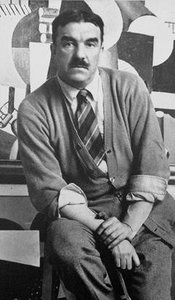
Фернан Леже
1881 - 1955 , Франция
Бърза справка
- Artistic Movement Or Style:
- Кубизъм
- Тубизъм
- Секция „Златно сечение“
- Пуризъм
- Дадаизъм
- Конструктивизъм
- Artists Or Movements Influenced By This Artist:
- Поп арт
- Рой Лихтенщайн
- Андди Уорхъл
- Artists Who Influenced This Artist: ['Пол Сезан']
- Date Of Birth: 1881
- Date Of Death: 1955
- Full Name: Жозеф Фернан Анри Леже
- Nationality: Френска
- Notable Artworks:
- Наклонени фигури в гората
- Градът
- Механикът
- Три жени
- Жената в синьо
- Place Of Birth: Аржантан, Франция