


 Преглед в реален мащаб
 Сподели
 Сподели
 Подробности
 Ръководство

 Изтегляне
 Подобни артикули
 Рентгенова снимка
 Слайдшоу
 Статистика
Stables


 Разгърни целия текст
Закупете дигитално изображение с висока резолюция и подобрени характеристики, значително по-качествено от онлайн прегледа.
Всеки файл е щателно подготвен от нашите специалисти с помощта на съвременни инструменти и експертен ръчен ретуш. Гарантираме, че всяко изображение притежава изключителна яснота, прецизна цветова точност и фини детайли.
Окончателният файл се доставя по имейл в рамките на 72 часа, оптимизиран за незабавна употреба в професионални, редакционни и печатни среди. Това е същото качество, на което се доверяват водещи дизайнерски студия, издатели и галерии.
Дигитално изображение
Изтеглете файл с висока резолюция за лично съхранение, принтиране и творчески проекти. ( Избор на принт Поръчайте ръчно рисувано репродукция на този колекционерски предмет)
Включено във всяка поръчка за дигитални изображения
Експертна дигитална доставка, гарантирана
Избирайки AllPaintingsStore.com, вие не получавате просто изображение – вие придобивате професионално обработена дигитална творба, създадена с прецизност и подкрепена от гаранция за удовлетворение. Ето какво автоматично е включено във вашата поръчка:

Бърза доставка по имейл
Вашето дигитално изображение с висока резолюция ще бъде изпратено по имейл в рамките на 72 часа от поръчката – готово за незабавно използване.

Дигитален файл с подобрено качество чрез ИИ
Вашата картина е професионално оптимизирана с помощта на усъвършенствани инструменти за изкуствен интелект и ръчна редакция, осигурявайки максимална детайлност, яснота и точност на цветовете.

Безплатна доживотна повторна доставка
Изгубили сте или сте изтрили файла си по погрешка? Не се притеснявайте – ще го изпратим отново на Вас по всяко време, безплатно.

Без митнически такси – завинаги
Насладете се на вашето произведение незабавно, без мита, данъци или такси за доставка – дигиталните изтегляния винаги са освободени от данъци.

Гаранция за точност на цветовете
Гарантираме, че вашето дигитално изображение отразява оригиналните цветове възможно най-точно, чрез използването на професионални инструменти и системи за управление на цветовете.

100-дневна гаранция за удовлетвореност
Ако не сте доволни от вашето дигитално изображение, ще го преработим или ще възстановим 100% от сумата в рамките на 100 дни – без излишни въпроси.

100% Гаранция за връщане на сумата
Не сте доволни? Получете пълен възврат на сумата в рамките на 100 дни от получаването на вашия цифров файл – без излишни въпроси.

Отстъпки за големи поръчки
Купете 3 изображения, спестете 10% - Купете 5, спестете 15% - Купете 10+, спестете 20%. Идеално за творчески проекти, галерии и агенства.
A Symphony of Color and Spirit
In the quiet, transformative realm of German Expressionism, few works capture the primal pulse of existence as vibrantly as Franz Marc’s “Stables,” completed in 1913. This masterpiece is far more than a mere depiction of livestock within a barn; it is an evocative exploration of the profound interconnectedness between humanity and the natural world. Through a lens of remarkable precision, Marc invites us into a space where the boundaries between subject and environment begin to dissolve. The painting focuses on a group of horses inhabiting a stable interior, yet the artist deliberately eschews meticulous anatomical realism. Instead, he employs abstracted shapes that prioritize the capture of the animals' spiritual essence over their physical form, allowing the viewer to feel the very heartbeat of the creatures within.
The technique employed in “Stables” is as luminous as its subject matter. Utilizing tempera on canvas, Marc achieved a rich, textured surface through the meticulous layering of pigments, imbuing the composition with an almost ethereal quality. This method allows for a depth of color that seems to glow from within, creating a visual impact that is both striking and deeply immersive. The painting’s palette is a masterful arrangement of bold, non-naturalistic hues—striking reds, yellows, blues, greens, and purples—chosen not for mere decoration, but to evoke specific, profound sensations.
Symbolism and the Expressionist Vision
To gaze upon “Stables” is to enter a world where color functions as a spiritual language. Marc’s use of hue is deeply symbolic: the central red circle serves as a powerful emblem of passion and vitality, while the surrounding yellow circles radiate warmth and illumination. These energetic tones are masterfully juxtaposed against cooler blues and greens, creating a visual tension that mirrors the emotional complexity of the scene. This interplay of light and shadow suggests a contemplation on mortality and the cyclical nature of life, themes that resonate deeply within Marc’s broader artistic journey.
The style of the work reflects the dynamic intellectual climate of the Blue Rider movement. While the fractured planes and geometric distortions reveal clear Cubist influences, the heart of the piece remains firmly rooted in Expressionism. Marc sought to liberate art from academic conventions, using simplified forms to communicate inner experience and spiritual truth. For collectors and lovers of fine art, “Stables” offers a rare moment of contemplative stillness—a yearning for connection to something larger than oneself. It is a work that transcends time, offering an enduring sense of awe and wonder that makes it a breathtaking centerpiece for any sophisticated collection or thoughtfully designed interior.
Въпроси и отговори
От коя епоха е „Stables“ на Франц Марк?
"Stables" принадлежи към епохата на Modern.
Колко популярна е творбата „Stables“ в рамките на German Expressionism?
„Stables“ на Франц Марк е класифициран като Iconic и принадлежи към движението German Expressionism.
Мога ли да видя „Stables“ на Франц Марк под различно осветление?
Страницата Рентгенови лъчи на „Stables“ на Франц Марк е интерактивен визуализатор, който ви позволява да прелиствате през единадесет оптични слоя на изображението на произведението, включително и рентгенов вид.
Свързани произведения


Биография на художника
A Life Immersed in Color and Spirit
Franz Moritz Wilhelm Marc, born in Munich in 1880, was a painter whose brief but intensely focused career irrevocably altered the course of German Expressionism. His story is one of profound spiritual seeking translated into a vibrant visual language, a quest to understand the essence of life through the purity he found in the natural world—particularly within the animal kingdom. Initially influenced by his father, Wilhelm Marc, a landscape painter, young Franz’s artistic path wasn't immediately certain. He briefly considered theology, grappling with questions of faith and existence before ultimately dedicating himself to art at the Academy of Fine Arts in Munich. These early explorations into religious thought would remain deeply embedded within his work, shaping his belief that art could be a conduit for spiritual experience. His academic training provided him with technical foundations, but it was encounters with the works of Vincent van Gogh during visits to Paris that truly ignited his artistic vision. Van Gogh’s emotive use of color and raw expression resonated profoundly with Marc, liberating him from conventional techniques and setting him on a path toward a more subjective and emotionally charged style.The Blue Rider and a New Artistic Vision
Marc's artistic development wasn’t solitary; it flourished within the dynamic context of early 20th-century Munich. He experimented with various artist groups, including the Neue Künstlervereinigung München, before co-founding *Der Blaue Reiter* (The Blue Rider) in 1911 alongside Wassily Kandinsky. This wasn’t merely a group or an exhibition series; it was a philosophical and artistic revolution. *Der Blaue Reiter* sought to move beyond mere representation, aiming instead to express inner spiritual truths through abstraction and symbolic color. The journal of the same name became a platform for disseminating these ideas, showcasing not only their own work but also that of other forward-thinking artists and exploring diverse cultural influences from folk art to primitive sculpture. Marc’s contributions during this period were pivotal. He moved away from depicting landscapes as static scenes, instead focusing on animals—horses, deer, foxes—as vessels of spiritual energy. These weren’t simply animal portraits; they were symbolic representations of innocence, harmony, and a connection to the natural world that he believed humanity had lost. The influence of Robert Delaunay’s exploration of abstract forms and vibrant colors further propelled Marc toward simplification and heightened emotional expression in his work. Paintings like *The Tiger* (1912) and *Red Deer* (1912) exemplify this shift, showcasing bold color choices and a growing focus on the inherent qualities of his subjects rather than realistic depiction.Symbolism, Color, and the Essence of Being
Marc’s artistic style is immediately recognizable for its distinctive use of color and form. He didn't employ color descriptively; instead, he imbued it with symbolic meaning. Blue represented spirituality and masculinity, yellow signified joy and femininity, and red embodied violence and materiality. These weren’t arbitrary choices but a carefully constructed system designed to convey specific emotional and philosophical ideas. His animals aren’t merely subjects; they are embodiments of these concepts. The simplification of forms—reducing figures to their essential shapes—further emphasized the underlying spiritual essence he sought to capture. *The Tower of Blue Horses* (1913), sadly lost during World War II, is perhaps the most iconic example of this approach, a powerful and evocative composition that encapsulates his artistic vision. He believed animals possessed an inherent purity and connection to nature that humans had forfeited through societal constraints and intellectualization. By portraying them with such reverence and symbolic weight, Marc sought to remind viewers of this lost harmony and inspire a deeper appreciation for the natural world. His work wasn’t about depicting *what* he saw but rather *how* he felt—a deeply personal and spiritual response to his surroundings.Influences and Development
Marc's artistic journey was shaped by a confluence of influences. Initially, his father’s landscape paintings instilled in him an appreciation for the beauty of nature. However, it was his exposure to Vincent van Gogh’s expressive brushwork and emotional intensity that truly transformed his approach. Van Gogh’s willingness to prioritize feeling over objective representation resonated deeply with Marc's own spiritual inclinations. Furthermore, his time in Paris exposed him to the innovations of Impressionism and Post-Impressionism, particularly the work of Paul Gauguin, who similarly sought to infuse symbolism into his art. The encounter with Wassily Kandinsky within *Der Blaue Reiter* proved crucial, fostering a shared belief in the power of abstraction to convey spiritual truths. Marc’s artistic style evolved over time, moving from a more academic style to one characterized by simplified forms, bold colors, and symbolic imagery. He experimented with various techniques, including cloisonné enameling, reflecting his interest in exploring new modes of expression.A Tragic End and Lasting Legacy
The outbreak of World War I in 1914 dramatically altered Marc’s life and artistic trajectory. Despite seeking exemption due to his status as an artist, he was drafted into the German army, serving as a cavalryman. The horrors of war deeply affected him, yet even amidst the chaos, he continued to paint, finding solace and meaning in his art. Tragically, Franz Marc died on March 4, 1916, at the Battle of Verdun, a devastating loss for the art world. His untimely death cut short a career brimming with potential, but it also cemented his place as a pivotal figure in modern art history. His work continues to resonate today, influencing generations of artists and captivating audiences with its emotional depth and spiritual resonance. Marc’s paintings are exhibited in major museums worldwide, including the Lenbachhaus in Munich, which holds an extensive collection of his work. He is remembered not only as a pioneer of German Expressionism but also as a visionary artist who dared to explore the profound connection between art, spirituality, and the natural world—a legacy that continues to inspire awe and contemplation. His artistic vision remains a testament to the power of art to transcend the material realm and touch upon something deeper within the human spirit.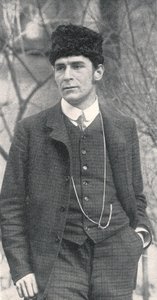
Франц Марк
1880 - 1916 , Германия
Кратка информация
- Artistic Movement Or Style: Хуманизъм и израз
- Artists Or Movements Influenced By This Artist:
- Израз
- БлаUER Reiter
- Artists Who Influenced This Artist:
- Ван Гог
- Делаunay
- Date Of Birth: 8 февруари 1880 г.
- Date Of Death: 4 март 1916 г.
- Full Name: Франц Moritz Wilhelm Marc
- Nationality: Германец
- Notable Artworks:
- Тирол
- Флок на овце II
- Търпеливо животно
- Place Of Birth: Мюнхен, Германия

