


 Преглед в реален мащаб
 Изпрати
 Сподели
 Детайли
 Ръководство

 Изтегляне
 Подобни артикули
 Рентгенова снимка
 Слайдшоу
 Въпроси и отговори
 Статистика
untitled (9371)

 Прочети повече
Получете файл, готов за печат, който предлага много по-високо качество от уеб прегледа. Всяко дигитално изображение, което предлагаме, е извлечено от висококачествен оригинал в нашата база данни — обикновено с ширина между 5 000 и 15 000 пиксела — така че със сигурност да можете да принтирате в голям формат, да кадрирате тесно или да възпроизведете фините детайли.
Нито един файл не напуска нашето студио без внимание. Дигитален експерт проверява цветовете спрямо оригиналната картина и ги коригира при необходимост, след което подобрява яснотата и детайлите с професионални инструменти за ретуш — винаги оставайки верен на мазките и стила на художника. Резултатът е изображение, което изглежда като самата картина, а не като сканиран образ с филтър.
Одобрявате преди финализиране: нашият експерт ще изпрати изображението по имейл в рамките на 72 часа за ваш преглед. Не сте доволни? Можете да поискате подобрения или корекции, или пълно възстановяване на сумата, ако качеството не отговаря на очакванията ви.
Това е качеството, на което разчитат издателства, дизайн студиа, галерии и печатници.
Дигитално изображение
Изтеглете файл с висока резолюция за лично съхранение, принтиране и творчески проекти. ( Превключване към принт Купете ръчно рисувана картина)
Включено във всяка поръчка за дигитални изображения
Гарантирана експертна дигитална доставка
Избирайки AllPaintingsStore.com, вие не получавате просто изображение – вие придобивате професионално обработена дигитална творба, създадена с прецизност и подкрепена от гаранция за удовлетворение. Ето какво автоматично е включено във вашата поръчка:

Бърза доставка по имейл
Вашето дигитално изображение с висока резолюция ще бъде изпратено по имейл в рамките на 72 часа от поръчката – готово за незабавно използване.

Дигитален файл с подобрено качество чрез ИИ
Вашата картина е професионално оптимизирана чрез усъвършенствани инструменти с изкуствен интелект и ръчна редакция, което гарантира максимална детайлност, яснота и точност на цветовете.

Безплатна доживотна повторна доставка
Изгубили сте или сте изтрили файла си по погрешка? Не се притеснявайте – ще го изпратим отново на Вас по всяко време, безплатно.

Без митнически такси – завинаги
Насладете се на вашето произведение незабавно, без мита, такси или разходи за доставка – дигиталните изтегляния винаги са освободени от данъци.

Гаранция за цветово съответствие
Гарантираме, че вашето дигитално изображение отразява оригиналните цветове възможно най-точно чрез използването на професионални инструменти и системи за управление на цветовете.

100-дневна гаранция за удовлетвореност
Ако не сте доволни от вашето дигитално изображение, ще го преработим или ще възстановим 100% от сумата в рамките на 100 дни – без излишни въпроси.

100% Гаранция за връщане на сумата
Не сте доволни? Получете пълен възврат на сумата в рамките на 100 дни от получаването на вашия цифров файл – без излишни въпроси.

Отстъпки за големи поръчки
Купете 3 изображения, спестете 10% - Купете 5, спестете 15% - Купете 10+, спестете 20%. Идеално за творчески проекти, галерии и агенства.
A Symphony of Inner Turmoil: Decoding Franz Marc’s Untitled Composition
To gaze upon Franz Marc’s untitled (9371) is to be drawn into a vortex of color and fragmented form, a realm where the boundaries between representation and abstraction dissolve. Created during a period of intense artistic ferment – likely between 1910 and 1914 – this work stands as a powerful testament to the core principles of early Expressionism, specifically as championed by the groundbreaking Der Blaue Reiter (“The Blue Rider”) group. It’s not merely a painting; it's an emotional landscape rendered in swirling hues and dynamic brushwork, offering a glimpse into the artist’s innermost world.
Color, Texture, and the Language of Feeling
Marc deliberately abandoned traditional representational strategies, choosing instead to forge a deeply subjective visual language. The canvas pulsates with energy, achieved through an extraordinary technique: impasto – layers of paint applied with such thickness that they retain the palpable texture of the brushstroke. This isn’t simply about applying color; it's about building form and movement, creating a physicality that invites tactile exploration even from afar. Swirling shapes, jagged lines, and overlapping planes dominate the composition, eschewing linear perspective in favor of an internal logic dictated by color and form. The eye is not led along a predetermined path but rather drawn into the heart of the swirling chaos, compelled to decipher its emotional resonance.
Beyond Representation: Animals, Spirituality, and Symbolism
Though abstract, hints of organic forms – fragmented figures or perhaps animalistic shapes – emerge from the vibrant tumult. Marc harbored a profound fascination with animals, believing them to possess an inherent innocence and spiritual purity absent in human experience. While no specific creatures are readily identifiable within this composition, the implied movement and vital energy suggest a life force struggling for expression. The intense color palette is far from arbitrary; it’s deeply symbolic. Marc associated colors with specific emotions – blue representing spirituality and masculinity, yellow embodying femininity and joy. In untitled (9371), however, these hues are not presented in harmonious balance but rather clash and collide, hinting at underlying anxieties and emotional turmoil. The unsettling saturation of color speaks to a world on the brink, mirroring the premonitions of a Europe hurtling towards war.
A Reflection of an Era: Expressionism and the Dawn of Modernity
Franz Marc was a pivotal figure in German Expressionism, a movement born from the rapid social and political upheavals of the early 20th century. Artists sought to express their subjective emotions and inner realities rather than objectively mirroring the external world. Der Blaue Reiter, co-founded by Marc and Wassily Kandinsky, rejected academic conventions and embraced abstraction as a means of spiritual exploration. This painting embodies that spirit of rebellion and the relentless search for new ways to articulate the human condition in an increasingly fragmented world. Tragically, Marc’s life was cut short during World War I in 1916, adding another layer of poignancy to his work – imbuing it with a sense of urgency and a haunting premonition of loss.
Inviting Emotion into Your Space
untitled (9371) is not a passive artwork; it demands attention, provokes thought, and evokes strong emotional responses. Its dynamic composition and intense colors can be interpreted as representing inner conflict, spiritual awakening, or the raw energy of life itself. Its compelling nature makes it a striking focal point for any interior space.
- For Modern Living Rooms: This piece would beautifully complement minimalist décor, adding a vibrant splash of color and intellectual depth.
- In Home Offices: The painting’s energy can inspire creativity, focus, and a sense of dynamic possibility.
- As a Statement Piece: Its bold aesthetic makes it ideal for those seeking to create a dramatic and thought-provoking atmosphere.
The artwork's abstract nature invites personal interpretation, fostering conversation and providing an ongoing source of fascination. A high-quality reproduction would faithfully capture the texture and vibrancy of the original, bringing Marc’s powerful vision into your home or office.
Въпроси и отговори
Цветовете на „untitled (9371)“ на Франц Марк наситени или приглушени ли са?
„untitled (9371)“ на Франц Марк е заснето с Balanced Soft наситеност.
Как се преплитат стилът и епохата в „untitled (9371)“ на Франц Марк?
„untitled (9371)“ на Франц Марк се отнася към течението Expressionism, създадено в епохата Модерно изкуство на своя автор.
„untitled (9371)“ едно от най-популярните произведения на Франц Марк?
Записният ниво на популярност за „untitled (9371)“ на Франц Марк е Iconic.
Подобни произведения


Биография на художника
A Life Immersed in Color and Spirit
Franz Moritz Wilhelm Marc, born in Munich in 1880, was a painter whose brief but intensely focused career irrevocably altered the course of German Expressionism. His story is one of profound spiritual seeking translated into a vibrant visual language, a quest to understand the essence of life through the purity he found in the natural world—particularly within the animal kingdom. Initially influenced by his father, Wilhelm Marc, a landscape painter, young Franz’s artistic path wasn't immediately certain. He briefly considered theology, grappling with questions of faith and existence before ultimately dedicating himself to art at the Academy of Fine Arts in Munich. These early explorations into religious thought would remain deeply embedded within his work, shaping his belief that art could be a conduit for spiritual experience. His academic training provided him with technical foundations, but it was encounters with the works of Vincent van Gogh during visits to Paris that truly ignited his artistic vision. Van Gogh’s emotive use of color and raw expression resonated profoundly with Marc, liberating him from conventional techniques and setting him on a path toward a more subjective and emotionally charged style.The Blue Rider and a New Artistic Vision
Marc's artistic development wasn’t solitary; it flourished within the dynamic context of early 20th-century Munich. He experimented with various artist groups, including the Neue Künstlervereinigung München, before co-founding *Der Blaue Reiter* (The Blue Rider) in 1911 alongside Wassily Kandinsky. This wasn’t merely a group or an exhibition series; it was a philosophical and artistic revolution. *Der Blaue Reiter* sought to move beyond mere representation, aiming instead to express inner spiritual truths through abstraction and symbolic color. The journal of the same name became a platform for disseminating these ideas, showcasing not only their own work but also that of other forward-thinking artists and exploring diverse cultural influences from folk art to primitive sculpture. Marc’s contributions during this period were pivotal. He moved away from depicting landscapes as static scenes, instead focusing on animals—horses, deer, foxes—as vessels of spiritual energy. These weren’t simply animal portraits; they were symbolic representations of innocence, harmony, and a connection to the natural world that he believed humanity had lost. The influence of Robert Delaunay’s exploration of abstract forms and vibrant colors further propelled Marc toward simplification and heightened emotional expression in his work. Paintings like *The Tiger* (1912) and *Red Deer* (1912) exemplify this shift, showcasing bold color choices and a growing focus on the inherent qualities of his subjects rather than realistic depiction.Symbolism, Color, and the Essence of Being
Marc’s artistic style is immediately recognizable for its distinctive use of color and form. He didn't employ color descriptively; instead, he imbued it with symbolic meaning. Blue represented spirituality and masculinity, yellow signified joy and femininity, and red embodied violence and materiality. These weren’t arbitrary choices but a carefully constructed system designed to convey specific emotional and philosophical ideas. His animals aren’t merely subjects; they are embodiments of these concepts. The simplification of forms—reducing figures to their essential shapes—further emphasized the underlying spiritual essence he sought to capture. *The Tower of Blue Horses* (1913), sadly lost during World War II, is perhaps the most iconic example of this approach, a powerful and evocative composition that encapsulates his artistic vision. He believed animals possessed an inherent purity and connection to nature that humans had forfeited through societal constraints and intellectualization. By portraying them with such reverence and symbolic weight, Marc sought to remind viewers of this lost harmony and inspire a deeper appreciation for the natural world. His work wasn’t about depicting *what* he saw but rather *how* he felt—a deeply personal and spiritual response to his surroundings.Influences and Development
Marc's artistic journey was shaped by a confluence of influences. Initially, his father’s landscape paintings instilled in him an appreciation for the beauty of nature. However, it was his exposure to Vincent van Gogh’s expressive brushwork and emotional intensity that truly transformed his approach. Van Gogh’s willingness to prioritize feeling over objective representation resonated deeply with Marc's own spiritual inclinations. Furthermore, his time in Paris exposed him to the innovations of Impressionism and Post-Impressionism, particularly the work of Paul Gauguin, who similarly sought to infuse symbolism into his art. The encounter with Wassily Kandinsky within *Der Blaue Reiter* proved crucial, fostering a shared belief in the power of abstraction to convey spiritual truths. Marc’s artistic style evolved over time, moving from a more academic style to one characterized by simplified forms, bold colors, and symbolic imagery. He experimented with various techniques, including cloisonné enameling, reflecting his interest in exploring new modes of expression.A Tragic End and Lasting Legacy
The outbreak of World War I in 1914 dramatically altered Marc’s life and artistic trajectory. Despite seeking exemption due to his status as an artist, he was drafted into the German army, serving as a cavalryman. The horrors of war deeply affected him, yet even amidst the chaos, he continued to paint, finding solace and meaning in his art. Tragically, Franz Marc died on March 4, 1916, at the Battle of Verdun, a devastating loss for the art world. His untimely death cut short a career brimming with potential, but it also cemented his place as a pivotal figure in modern art history. His work continues to resonate today, influencing generations of artists and captivating audiences with its emotional depth and spiritual resonance. Marc’s paintings are exhibited in major museums worldwide, including the Lenbachhaus in Munich, which holds an extensive collection of his work. He is remembered not only as a pioneer of German Expressionism but also as a visionary artist who dared to explore the profound connection between art, spirituality, and the natural world—a legacy that continues to inspire awe and contemplation. His artistic vision remains a testament to the power of art to transcend the material realm and touch upon something deeper within the human spirit.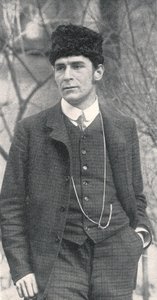
Франц Марк
1880 - 1916 , Германия
Бърза справка
- Artistic Movement Or Style: Хуманизъм и израз
- Artists Or Movements Influenced By This Artist:
- Израз
- БлаUER Reiter
- Artists Who Influenced This Artist:
- Ван Гог
- Делаunay
- Date Of Birth: 8 февруари 1880 г.
- Date Of Death: 4 март 1916 г.
- Full Name: Франц Moritz Wilhelm Marc
- Nationality: Германец
- Notable Artworks:
- Тирол
- Флок на овце II
- Търпеливо животно
- Place Of Birth: Мюнхен, Германия