


 Преглед в реален мащаб
 Сподели
 Сподели
 Подробности
 Ръководство

 Изтегляне
 Подобни артикули
 Рентгенова снимка
 Слайдшоу
 Статистика
Professor John Struthers, FRCSEd (1845), PRCSEd (1895–1897)
 Oil On Canvas
- WallArt
- Contemporary Realism
 19th Century
 109.0 x 135.0 cm
 The Royal College of Surgeons of Edinburgh
 Разгърни целия текст
Ръчно изработена маслена репродукция
Ръчно рисувана маслена картина върху платно във вашия размер и рамка, изработена по поръчка от нашите художници. ( Избор на принт Превключване към дигитално изображение)




P118B $10

P118H $10

P118W $10

P438Z $10

P508JH $12

P508YH $12

P805H $10

P805Z $10

P919BZ $10

P919G $10

P919XJ $10

P959ZH $10

P968JZ $12

W106C $8

W218G $10

W218JH $8

W218Y $10

W307PJ $10

W316G $10

W316PJ $8

W316Y $10

W398PJ $8

W4111J $10

W500HY $15

W500JH $15

W692G $12

W849H $8

W940BG $15

W953PJ $8




Изберете от нашите предварително зададени размери, които съответстват на оригиналните пропорции на произведението.

Можете да въведете свои собствени размери, за да паснат на конкретна рамка или пространство. Ако избраният от вас размер не съответства на пропорциите на оригиналното изображение, ние ще изрежем произведението или ще разширим картината с допълнителни ръчно рисувани елементи. Дигитален макет ще бъде изпратен за ваше одобрение преди започване на производството.
Моля, обърнете внимание, че предпрогледа на екрана не отразява действителното изрязване или разширяване. Само макетът ще покаже точно финалната композиция.
Въпреки че са налични персонализирани размери, препоръчваме да изберете размер от предварително дефинирания списък, за да запазите оригиналните пропорции.
След получаване на поръчка, екипът на AllPaintingsStore.com ще изпрати имейл до клиента с инструкции и ще предостави примерен макет за преглед.
Доставка по целия свят () в рамките на 3-4 седмици вместо стандартните 5 седмици. (21 Септември). Без компромис с качеството.

Безплатна експресна доставка по целия свят

Висококачествено ленено платно

Пълно застраховане на доставката

Гаранция за възстановяване на митнически такси

Гаранция за пълно съответствие на цветовете

Политика за връщане в рамките на 100 дни (само при дефекти)

100% Гаранция за връщане на сумата

Отстъпка при поръчка на повече произведения
 Опцията със стъкло е налична само за размери под 110 см

Professor John Struthers, FRCSEd (1845), PRCSEd (1895–1897)
Техника на репродукция
Размер на репродукцията
-


Крайна цена
$ 258
A Window into Victorian Intellect
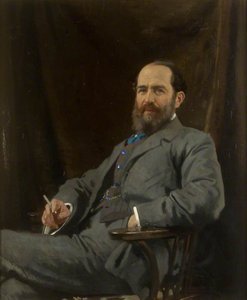
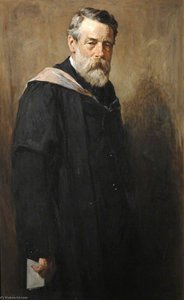
In the quiet, amber-hued depths of George Reid’s 1873 masterpiece, Professor John Struthers, FRCSEd, one does not merely encounter a portrait; one enters a sanctuary of thought. This evocative oil on canvas serves as a profound meditation on the essence of scholarly achievement during the Victorian era. The painting captures Professor Struthes, a pivotal figure in Scottish medical education, seated amidst a landscape of literature and quiet contemplation. Reid masterfully arranges the composition so that the subject is anchored by a desk laden with books, their varied placements suggesting a mind perpetually engaged in the pursuit of anatomical and scientific truth. There is a palpable stillness to the scene, an atmosphere where the weight of knowledge feels as tangible as the heavy textures of the parchment and leather surrounding him.
The emotional resonance of the piece lies in its ability to convey both the gravity of professional duty and the intimacy of personal reflection. As the viewer’s eye wanders across the canvas, they encounter a man whose posture—slightly slumped yet fundamentally upright—speaks to a life defined by tireless dedication. The subtle inclusion of a secondary figure in the background adds a layer of narrative depth, hinting at the collaborative nature of the academic world without ever fracturing the central focus on Struthers’ introspective gaze. For the collector or interior designer, this work offers more than decoration; it provides a focal point of intellectual dignity that can anchor a study, library, or sophisticated living space with an air of timeless prestige.
Mastery of Realism and Light
Technically, Reid’s execution is a triumph of the Realist tradition. Drawing from his rigorous training under masters like Thomas Eakins, Reid employs a meticulous approach to anatomical accuracy and textural rendering. His palette is a sophisticated study in muted tones—dominated by rich browns, warm creams, and deep umbers—which creates an understated yet profoundly dignified aesthetic. Through the expert use of glazing techniques, Reid achieves a luminous quality that breathes life into the canvas, allowing light to dance softly across the surfaces of the desk and the folds of the Professor’s attire.
Every brushstroke is purposeful, designed to bridge the gap between mere representation and emotional truth. The artist’s ability to render the tactile reality of the scene—the smoothness of a book's spine, the weight of a heavy sleeve, the soft glow of light hitting a paper edge—invites the viewer to reach out and touch the history contained within the frame. This level of detail ensures that a high-quality reproduction of this work retains its soul, offering an immersive experience that celebrates the fine craftsmanship of 19th-century academic painting.
A Legacy Captured in Oil
To understand this portrait is to understand the era of scientific revolution in which it was born. Created during a period marked by the profound shifts brought about by Darwinian theory, the painting reflects a world transitioning into a new understanding of life and biology. Struthers himself, an anatomist of great renown, represents the bridge between classical learning and modern scientific inquiry. Reid captures this tension beautifully, presenting a subject who is both a product of tradition and a pioneer of discovery.
For those seeking to adorn their surroundings with art that inspires conversation and evokes a sense of historical continuity, this portrait stands as an incomparable choice. It is a piece that celebrates the enduring power of the human intellect and the quiet beauty found in the pursuit of wisdom. Whether placed in a contemporary setting to provide a classic contrast or within a traditional gallery-style room, Professor John Struthers remains a captivating testament to the dignity of the learned life.
Свързани произведения



Биография на художника
Early Life and Artistic Foundations
George Agnew Reid emerged from the fertile landscapes of rural Canada West, born in 1860 in Wingham, Ontario – a place that would indelibly shape his artistic vision. His beginnings were far removed from formal art training; instead, he was steeped in the rhythms of farm life – a setting he’d later revisit with poignant detail and emotional depth in his paintings. Though initially hesitant about his son's aspirations, Reid’s father eventually recognized and supported his burgeoning talent, allowing him to pursue studies at the Central Ontario School of Art in Toronto in 1879 under the tutelage of Robert Harris. This foundational period instilled a respect for established techniques and representational art, yet it also ignited within Reid a desire to explore beyond mere imitation – a yearning to capture not just what he saw, but *how* he felt about what he saw. He sought further refinement at Philadelphia’s Pennsylvania Academy of the Fine Arts from 1882 to 1885, where he was profoundly influenced by Thomas Eakins – a master of realism and anatomical accuracy whose dedication to truthful representation became a guiding principle throughout Reid's career. Equally significant during this time was his meeting and subsequent marriage to Mary Hiester Reid, herself a gifted artist; their union forged a lifelong artistic partnership built on mutual respect and creative exchange – a dynamic collaboration that fueled both individual growth and the creation of remarkable works. Reid’s early exposure to art was nurtured by his family's collection of illustrated books and magazines, as well as by his grandfather John Reid and an itinerant bookseller named Jamie Young who provided him with volumes about artistic techniques.A Blossoming Style: Genre Painting and Narrative Depth
Upon returning to Canada, Reid’s artistic focus shifted from portraiture towards genre painting – a style that allowed him to explore the narratives embedded within everyday life. This wasn't merely a change in subject matter; it represented a deepening of his artistic intent. He sought to capture not just scenes, but the *stories* behind them—the struggles, joys, and quiet dignity of ordinary Canadians. The Foreclosure of the Mortgage (1893), a powerful depiction of rural hardship, stands as a landmark achievement in Canadian art – a testament to his ability to translate observation into profound emotional resonance. The painting, depicting a family facing eviction from their farm, is imbued with a palpable sense of loss and vulnerability. Reid masterfully blended the precision he had absorbed during his Parisian academic training with subtle Impressionistic touches—a delicate interplay of light and atmosphere that imbued his canvases with realism and emotional depth. He wasn’t simply recording scenes; he was interpreting them, imbuing them with a psychological complexity that resonated deeply with viewers. His paintings became windows into the lives of ordinary Canadians – particularly those in rural Ontario – offering glimpses into their joys, struggles, and enduring spirit. Reid possessed an exceptional ability to observe and capture the nuances of human emotion, translating these observations onto canvas with remarkable skill. This period saw him create works that weren’t just aesthetically pleasing but also socially conscious, reflecting a growing awareness of the challenges faced by rural communities.Career Highlights and Educational Leadership
Reid's artistic achievements were paralleled by a distinguished career in art education and administration. His election to the Royal Canadian Academy of Arts in 1889 solidified his position within the burgeoning Canadian art community, recognizing his contributions and influence. However, perhaps his most significant contribution lay in his role as Principal of the Central Ontario School of Art and Design (later OCAD University) from 1912 to 1918. During this period, he spearheaded crucial reforms, shaping the institution into a leading center for artistic training in Canada – fostering a new generation of Canadian artists. He passionately believed in the power of art education to nurture creativity and foster a vibrant cultural landscape. Beyond his administrative duties, Reid continued to produce significant works, including murals and commissioned pieces for public buildings—most notably contributing to the decoration of Toronto’s third City Hall. His architectural interests were also evident, reflecting an appreciation for the Arts and Crafts movement – a desire to integrate beauty and functionality in design.Notable Works
- Spynie Castle and Loch, Moray (1866): A captivating Scottish landscape painting showcasing dramatic light and detail.
- Mrs Alexander Hay Moncur (1887): A stunning Victorian portrait exhibiting rich detail and luxurious elegance.
- John Ritchie Findlay of Aberlour (1899): An academic realist portrait capturing wisdom and experience.
- The Foreclosure of the Mortgage (1893): A poignant depiction of rural hardship, considered a landmark achievement in Canadian art.
Legacy and Lasting Influence
George Agnew Reid’s legacy extends far beyond his individual paintings; he was a catalyst for change within the Canadian art world – fostering a distinctly national artistic identity while simultaneously embracing international influences. His mentor, Thomas Eakins, instilled in him a commitment to realism and anatomical accuracy, while his time in Paris exposed him to the innovative techniques of Impressionism—elements that he skillfully integrated into his own unique style. He played a crucial role in establishing a visual language that reflected the Canadian experience, depicting Ontario landscapes and rural life with both sensitivity and authenticity. As an educator and administrator, Reid nurtured generations of Canadian artists, shaping the future of art education within the country. His artworks continue to be held in esteemed public and private collections across Canada – including the Art Gallery of Ontario and the National Gallery of Canada – a testament to their enduring artistic merit and historical significance. He died in 1947, leaving behind a body of work that continues to captivate and inspire, solidifying his place as one of Canada’s most important and influential artists. His ability to combine academic rigor with emotional depth created works that resonate with viewers on a profound level – reflecting the social realities of his time and offering enduring insights into the human condition.
george reid
1860 - 1947 , Канада
Бързи факти
- Artistic Movement Or Style: Жанров реализъм
- Artists Or Movements Influenced By This Artist: ['Канадски художници']
- Artists Who Influenced This Artist: ['Томас Ейкинс']
- Date Of Birth: 25 юли 1860
- Date Of Death: 23 август 1947
- Full Name: George Agnew Reid
- Nationality: Канадец
- Notable Artworks:
- Предоставяне на ипотека
- Спайнс Каസിൽ и Лох
- Г-жа А.Х. Монкур
- Place Of Birth: Уиндъм, Канада
Свързани статии
Жорж Брак: Топ 25 шедьовъра на кубизма за вашия дом | AllPaintingsStore.bg
Разгледайте топ 25 шедьовъра на Жорж Брак – пионер на кубизма! Открийте историите зад неговите иновативни картини, техники и цветове. Купете висококачествени репродукции за вашия дом в AllPaintingsStore.com.

George Agnew Reid: A Canadian Impressionist's Pursuit of Light, Colour, and National Identity
Explore the life & work of George Agnew Reid, a pivotal figure in Canadian Impressionism. Discover his genre paintings, mural commissions, and lasting influence on art education & national identity. A comprehensive guide for collectors & enthusiasts.

Топ 25 шедьовъра на Жорж Сера: Изкуство, светлина и декоративни решения от AllPaintingsStore
Разгледайте топ 25 шедьовъра на Жорж Сера – пионер на импресионизма и постимпресионизма. Открийте историите зад картините, точковия метод и chromoluminarism. Купете луксозни репродукции на изкуството онлайн в AllPaintingsStore.com.
Sir John Watson Gordon: A Study in Scottish Landscape Painting & Tonal Impressionism
Explore the captivating portraits of Sir John Watson Gordon, a leading Scottish master. Discover his evolution from neoclassical style to atmospheric Tonalism and influence on 19th-century British art. Learn about his iconic sitters & legacy.

George Paul Chalmers: Rediscovering the Angus Rembrandt & Scottish Colourist Roots
Explore the captivating world of George Paul Chalmers (1833-1878), a pivotal Scottish painter. Discover his landscapes, portraits & connection to the Aesthetic Movement and Colourists. Learn about this 'Angus Rembrandt's' legacy with AllPaintingsStore.


