Гаранция за връщане на сумата · 100 дни Безплатна доставка по целия свят
449564произведения на изкуството 30613художници 4660музеи 32езици
Експонатно описание

Townscape Madrid

1968. Acrylic On Canvas.

Фиг. 1. Герхард Рихтер, Townscape Madrid, 1968. Показано като репродукцията, която посочвате: , .

§ 1Каталожни данни

§ 2Абстракция

Описание на колекционерския предмет

Биография на художника

Герхард Рихтер – немски художник, известен с абстрактни и фотореалистични картини, концепцията за "Капиталистична реалност" и цветните схеми. Влиятелен артист, изследващ съвременността чрез изкуството.

§ 3Коментар

A Silent Symphony of Concrete and Gray: Exploring Gerhard Richter’s Townscape Madrid

Gerhard Richter, a titan amongst contemporary artists, continues to captivate audiences with his singular approach—a masterful fusion of photorealism and abstraction that defies easy categorization. Among his seminal works stands “Townscape Madrid,” painted in 1968, an unassuming black and white canvas that belies its profound depth and invites contemplation on the essence of urban existence. This piece isn’t merely a depiction of a cityscape; it's an embodiment of Richter’s artistic philosophy—a questioning gaze at reality itself.

Composition and Technique: Capturing Atmosphere Through Gesture

Richter’s “Townscape Madrid” exemplifies his signature technique, characterized by loose brushstrokes that imbue the image with palpable texture and movement despite its monochrome palette. The absence of vibrant hues forces the viewer to focus on the intricate details of architectural forms—buildings rising against a hazy sky—creating an illusion of depth that transcends mere representation. Unlike traditional landscapes striving for visual splendor, Richter prioritizes capturing the mood and atmosphere of the urban environment. The photograph served as his starting point, prompting him to transform it into something more than just a mirror image; he actively reshaped it through artistic intervention.

Historical Context: Echoes of Postwar Anxiety

Painted in the aftermath of World War II, “Townscape Madrid” resonates with the anxieties and uncertainties of its time. Richter’s stylistic choices—the muted tones, the fragmented composition—reflect a broader trend within New European Painting, which sought to grapple with the trauma of history while simultaneously rejecting representational conventions. The painting subtly references aerial photographs taken during the war years, hinting at the devastation endured by cities across Europe. This deliberate allusion underscores Richter’s fascination with capturing not just what is seen but also what is felt—the unspoken emotions embedded within a visual scene.

Symbolism: Absence Speaks Volumes

The stark simplicity of “Townscape Madrid” is itself laden with symbolic significance. The deserted streets, illuminated by traffic lights, represent the quietude and solitude that can characterize urban life, even amidst activity. Richter’s masterful use of grayscale amplifies this sense of melancholy, inviting viewers to consider themes of isolation and contemplation. Furthermore, the buildings depicted—varied in size and shape—symbolize the complexity and dynamism of architectural heritage—a reminder of past glories juxtaposed against the present moment.

Emotional Impact: A Meditation on Perception

Ultimately, “Townscape Madrid” transcends mere visual description; it’s an invitation to engage in a dialogue with the viewer's own perceptions. Richter’s technique deliberately obscures boundaries between photography and painting, questioning the very notion of originality while highlighting the transformative power of artistic expression. Like many of his works, this piece encourages introspection—a consideration of how we interpret what we see and how art can illuminate hidden truths about our experience of the world. It's a testament to Richter’s enduring legacy as an artist who dares to challenge conventions and explore the profound connections between reality and representation.

Въпроси и отговори

Какъв размер и ориентация се препоръчват за печат на „Townscape Madrid“ на Герхард Рихтер?

Размер Large, ориентация Square: това е препоръчителната конфигурация за печат на „Townscape Madrid“ на Герхард Рихтер.

Какво чувство предава "Townscape Madrid"?

„Townscape Madrid“ на Герхард Рихтер предава Reflective емоционален тон.

Има ли "Townscape Madrid" силен светлотеневи контраст?

Нивото на контраст в „Townscape Madrid“ на Герхард Рихтер е Statement.
§ 4Художникът

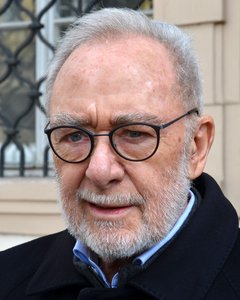
Герхард Рихтер

Герхард Рихтер

1932 - , Германия

Бързи факти за Герхард Рихтер

  • Artistic Movement Or Style:
    • Фотореализъм
    • Абстракция
  • Artists Or Movements Influenced By This Artist: ['Съвременни художници']
  • Artists Who Influenced This Artist:
    • Пикасо
    • Арп
  • Date Of Birth: 9 февруари 1932
  • Full Name: Gerhard Richter
  • Nationality: Германец
  • Notable Artworks:
    • Abstraktes Bild
    • Gilbert
  • Place Of Birth: Дрезден, Германия

Биография на художника

A Life Shaped by Division: The Early Years and Artistic Formation of Gerhard Richter

Gerhard Richter’s life story is inextricably woven into the complex tapestry of 20th-century Germany, a nation perpetually grappling with its past. Born in Dresden in 1932, his childhood unfolded under the looming shadow of rising National Socialism, an experience that profoundly shaped his artistic sensibility and worldview. The displacement inherent to wartime – his family’s repeated moves during those turbulent years – instilled within him a deep-seated sense of uncertainty and a questioning spirit, qualities that would consistently inform his art for decades. The idyllic landscapes he first knew in Reichenau and Waltersdorf were soon shattered by conflict, leaving an indelible mark on his psyche. His father, while not actively involved in the Nazi party, navigated the challenging realities of life under authoritarian rule as a schoolteacher, while his mother nurtured within him a love for literature and music – a counterpoint to the prevailing ideological pressures. This duality—a pragmatic acceptance of circumstance alongside a yearning for cultural expression—became a defining characteristic of Richter’s artistic approach, a tension he continually explored in his work. He began formal training at the Dresden Academy of Fine Arts in 1951, initially immersed in the rigid tradition of socialist realism mandated by the East German state. Even within this constrained environment, however, a quiet rebellion simmered beneath the surface, fueled by a growing dissatisfaction with ideological constraints and a desire to push beyond prescribed boundaries.

Escaping Constraints: Düsseldorf and the Exploration of Style

A pivotal moment arrived in 1961. Alongside his wife, Marianne Eufinger, Richter made the courageous decision to flee East Germany, seeking refuge in the vibrant and experimental art scene of Düsseldorf. This move represented a radical transformation in his artistic trajectory. The West German landscape offered an environment where experimentation wasn’t merely tolerated but actively encouraged – a stark contrast to the stifling control he had experienced in the East. In Düsseldorf, Richter encountered a dynamic community of artists, each grappling with their own questions about identity, representation, and the legacy of history. He quickly began dismantling the conventions of socialist realism, embarking on a period of intense exploration that would define his early mature work. This era was characterized by a fascinating oscillation between seemingly disparate approaches: from meticulously detailed photorealism, painstakingly recreating photographic images with astonishing precision, to abstract compositions bursting with bold colors and dynamic brushstrokes. Crucially, he collaborated closely with Sigmar Polke, forging a powerful artistic partnership that resulted in the coining of the term ‘Capitalist Realism’ – a deliberately ambiguous label reflecting their shared skepticism towards established artistic norms and their fascination with imagery from advertising and mass media. This period wasn't about finding *a* style; it was about questioning the very concept of stylistic coherence, embracing contradiction as a fundamental element of artistic expression.

Blurring Boundaries: Photorealism, Abstraction, and the Power of Chance

Richter’s artistic vocabulary expanded dramatically throughout the 1960s and beyond, encompassing an astonishing range of techniques and themes. His photorealistic paintings – often based on family photographs or images from newspapers – are not simply copies of reality; they are intricate investigations into the nature of perception and representation. By rendering these images with a clinical detachment, he forces viewers to confront the inherent ambiguity of photographic truth—is it a faithful record, or merely an interpretation? Simultaneously, Richter delved deeper into abstraction, creating canvases layered with vibrant colors and gestural marks. These abstract works are often produced using a unique technique involving squeegees – tools typically used for cleaning windows – which he drags across the surface of the canvas, manipulating the paint in unpredictable ways. This embrace of chance and spontaneity became central to his artistic philosophy, allowing him to relinquish control and invite unexpected outcomes. His ‘Color Charts,’ systematic arrangements of colored squares, further challenged traditional notions of artistic expression, questioning the very definition of painting itself—is it about individual aesthetic preferences, or simply about exploring the inherent properties of color? Throughout this period, Richter consistently sought to disrupt established visual conventions, pushing the boundaries of what was considered “art.”

The Weight of History and the Search for Meaning

Richter’s work is profoundly shaped by his personal history and the tumultuous events that unfolded in Germany during his formative years. The war left an indelible mark on his family—his aunt and uncles perished, and his father struggled to find employment after returning from imprisonment. This experience instilled within him a deep awareness of loss, displacement, and the fragility of human existence. He frequently revisited these themes in his art, not through overt political statements, but through subtle gestures and evocative imagery. His early photographs of Dresden—often depicting the ruins of the city—are particularly poignant, capturing both the devastation and the resilience of its inhabitants. Later works, such as his ‘Self-Portraits,’ explore the complexities of identity and memory, grappling with questions about personal history and collective trauma. Richter’s art is not simply a reflection of historical events; it's an attempt to grapple with their enduring impact on the human psyche—a constant negotiation between remembrance and oblivion.

A Lasting Legacy: Influence and Critical Acclaim

Gerhard Richter’s influence on contemporary art is undeniable, solidifying his position as one of the most important artists of our time. His willingness to challenge conventions, his relentless experimentation with technique, and his profound engagement with historical and political themes have established him as a towering figure in the 20th and 21st centuries. He has consistently resisted easy categorization, defying attempts to confine his work within a single stylistic framework—a testament to his intellectual rigor and artistic independence. Richter’s paintings regularly command record prices at auction, reflecting not only their aesthetic value but also their cultural significance. Beyond the market, however, lies a deeper resonance: Richter's art speaks to the complexities of modern existence, grappling with issues of memory, identity, and the search for meaning in an increasingly fragmented world. He doesn’t offer easy answers; instead, he poses challenging questions, prompting viewers to confront their own preconceptions and engage in critical dialogue. His legacy is not simply about creating beautiful objects; it's about expanding the possibilities of painting itself—a constant exploration of perception, representation, and the very nature of art.

§ 5Подобни произведения

§ 6Въпроси

Бърза информация

  • Location: SFMOMA
  • Subject or theme: Urban landscape
  • Movement: Conceptual Art
  • Notable elements or techniques: Photorealism, Monochrome palette
  • Influences: Photography
  • Dimensions: 109 × 115 in.

Тест за познания по изкуство

За всеки въпрос има само един верен отговор.

Въпрос 1:
What artistic movement is Gerhard Richter primarily associated with?
Въпрос 2:
The painting "Townscape Madrid" utilizes what technique to create a sense of depth?
Въпрос 3:
What is the dominant color palette employed in "Townscape Madrid", and how does it contribute to the painting's mood?
Въпрос 4:
The painting depicts a cityscape devoid of human activity. Why is this significant in the context of Richter's artistic exploration?
Въпрос 5:
How does "Townscape Madrid" compare to other urban landscapes like Huguette El Khoury's "City II", and Widad Al-Orfali’s “View From Abbasid Baghdad”?

§ 7Цитирайте този запис

AllPaintingsStore.com, “Герхард Рихтер, Townscape Madrid (1968)”, https://allpaintingsstore.com/bg/art/gerhard-richter-townscape-madrid-8XY4LC-en/ArtistReproduction/ (достъпен на 9 Октомври 2026).

§ 8Репродукцията

Ръчно изработена маслена репродукция

Ръчно рисувана маслена картина върху платно във вашия размер и рамка, изработена по поръчка от нашите художници. ( Превключване към принт Превключване към дигитално изображение)

Това е посочено в полето на края на формуляра за поръчка; настоящото състояние на този формуляр е следното.

Townscape Madrid

Вид репродукция

Размер на репродукцията

-

Елитен старши художник

Повече детайлност, изящество и допълнително време за производство

-

Рамка за репродукция

-

-

За произведения на изкуството или репродукции, чийто размер е над 105 см (приблизително 41 инча) във всяка страна, рамката ще бъде изпратена в разглобен вид като комплект за сглобяване. Този метод гарантира безопасна доставка и предотвратява повреди по време на транспортиране.

Изисква се професионално сглобяване – това не е продукт за самостоятелна изработка (DIY).
Комплектът трябва да бъде сглобен, а платното – опънато от опитен професионален багер, като се използва дървено лепило (не е включено в комплекта), клещи за опъване на платно и затягащи скоби, за да се поддържа правотата на подрамника, докато лепилото изсъхне. Неправилното сглобяване или неравномерното опъване на платното може трайно да повреди произведението и не е покрито от нашата гаранция.

  • Всички елементи от масивна дървесина са включени, прецизно изрязани по размер.

  • Сглобява се с предоставените винтове, както и с лепило за дърво за ъгловите връзки, което не е включено в комплекта и трябва да бъде осигурено от вашия рамкар.

  • Изискват се професионални инструменти, които не са включени: щипка за опъване на платно (натягач) и скоби за фиксиране на подрамниците под прав ъгъл, докато лепилото изсъхне.

Важно:
За сглобяването на ъглите е необходимо лепило за дърво, рейките трябва да се фиксират с клещи (затягащи скоби, докато лепилото изсъхне напълно, а за опъването на платното върху готовата рамка е необходим инструмент за опъване на платно. Нито един от тези артикули не е включен в комплекта. Моля, осигурете услугите на опитен професионалист по багетно окантоване, преди да поръчате този размер.

Етикет с име

-

-

Защитен лак

Гланцов лак (подсилва цветовете и предпазва от светлина и влага)

-

Персонализирай моето произведение

Примери за възможности за персонализация: Заменете лицето със снимка на клиента; Добавете домашен любимец (например, заменете котка с куче); Включете скрито съобщение във фона; Променете пейзажа или елементите на фона.

-

Спешно

Доставка по целия свят () в рамките на 3-4 седмици вместо стандартните 5 седмици. (6 Ноември). Без компромис с качеството.

-

Експресна доставка

Доставка по целия свят () в рамките на 5 седмици. (13 Ноември).

Включена

Обща цена

€ 230

Включено във всяка поръчка

  • Безплатна експресна доставка по целия свят
  • Висококачествено ленено платно
  • Пълно застраховане на доставката
  • Гаранция за възстановяване на митнически такси
  • Гаранция за пълно съответствие на цветовете
  • Политика за връщане в рамките на 100 дни (само при дефекти)
  • 100% Гаранция за връщане на сумата
  • Оферта за отстъпка при поръчка на повече бройки
Форма за поръчка