Гаранция за връщане на сумата · 100 дни Безплатна доставка по целия свят
449564произведения на изкуството 30613художници 4660музеи 32езици
Catalogue entry

Saint Christopher

Acrylic On Canvas.

Fig. 1. Херонимъс Бош, Saint Christopher. Shown as the reproduction you are specifying: , .

§ 1Catalogue data

§ 2Abstract

Описание на колекционерския предмет

Биография на художника

Хиеронимъс Бош (1450-1516) е гениален нидерландски художник, известен със сюрреалистичните и символични картини, които изследват човешката природа и духовните борби. Неговите произведения са вдъхновение за поколения артисти.

§ 3Commentary

Saint Christopher Carrying the Christ Child – A Vision of Faith and Suffering

Hieronymus Bosch’s “Saint Christopher Carrying the Christ Child” stands as a haunting testament to the anxieties of late medieval Europe, rendered in his signature style—a meticulously detailed depiction brimming with unsettling symbolism that continues to fascinate scholars and artists alike. Painted sometime between 1490 and 1516 during Bosch's prolific artistic output, this monumental artwork transcends mere religious iconography; it delves into profound psychological explorations of morality, temptation, and the human condition.

  • Subject Matter: The painting portrays Saint Christopher, venerated as a martyr who carried Jesus across the Jordan River, embodying selfless devotion and unwavering faith. Alongside him is the infant Jesus, symbolizing divine innocence and vulnerability – a juxtaposition that immediately establishes a tension between earthly duty and spiritual purity.
  • Style & Technique: Bosch’s distinctive style—characterized by fantastical imagery, grotesque figures, and meticulous realism—is evident throughout the composition. The artist employs hatching and cross-hatching techniques to create depth and texture, meticulously rendering every element of the scene with astonishing precision. This painstaking attention to detail contributes to the unsettling atmosphere of the artwork.
  • Historical Context: Bosch’s work emerged during a period marked by religious upheaval and societal anxieties surrounding papal authority and demonic influence. The painting reflects the pervasive preoccupation with sin, judgment, and the eternal afterlife prevalent in the intellectual climate of his time—a reflection of the broader artistic trends of the Northern Renaissance.

Symbolism: Layers of Meaning Beyond Appearances

Bosch’s genius lies not merely in his technical prowess but also in his masterful use of symbolism. The three birds circling above represent various aspects of human nature—one perched on a skull signifies mortality, another embodies temptation and deceit, while the third symbolizes divine grace. These avian figures are strategically positioned to dominate the visual field, emphasizing the omnipresent influence of spiritual forces.

  • The Boat: The humble boat traversing the river serves as a metaphor for humanity’s journey through life—a perilous voyage fraught with obstacles and uncertainties. Its weathered appearance underscores the hardships endured by pilgrims seeking salvation.
  • Detailed Figures: Bosch meticulously portrays each individual in the scene, imbuing them with psychological complexity. The figures are rendered with exaggerated proportions and expressions, conveying emotions of fear, compassion, and piety—reflecting the artist’s fascination with human psychology and his ability to capture inner turmoil.

Emotional Impact: A Disturbingly Beautiful Revelation

"Saint Christopher Carrying the Christ Child" compels viewers to confront uncomfortable truths about human morality and spiritual aspiration. Bosch's unsettling depiction evokes a visceral reaction—a blend of fascination, apprehension, and profound contemplation. The artwork’s beauty resides precisely in its disturbing quality, prompting reflection on themes of suffering, redemption, and the eternal struggle between good and evil.

This extraordinary piece continues to inspire artists and scholars alike, cementing Bosch's place as one of the most influential figures in European art history. Its enduring power stems from Bosch’s ability to distill complex theological concepts into unforgettable visual imagery—a testament to his unparalleled artistic vision.

Въпроси и отговори

Кой размер на принта от „Saint Christopher“ на Херонимъс Бош е подходящ за препоръчаната стая?

За Living Room се препоръчва печат на „Saint Christopher“ с размер Large.

Каква емоция предава „Saint Christopher“ на Херонимъс Бош?

Емоционалният тон, отбелязан за „Saint Christopher“ на Херонимъс Бош, е Dramatic. Той обобщава усещането, което произведението изразява.

Как се съчетават контрастът и хармонията в "Saint Christopher"?

Цветовата композиция на „Saint Christopher“ на Херонимъс Бош съчетава Statement контраст с Discordant Palette хармония.
§ 4The artist

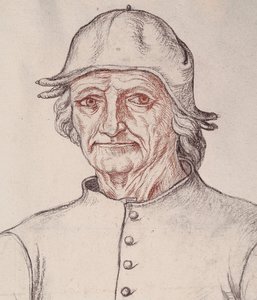
Херонимъс Бош

Херонимъс Бош

1450 - 1516, Нидерландия

Quick facts about Херонимъс Бош

  • Artistic Movement Or Style: Сюрреализъм, Символизъм
  • Artists Or Movements Influenced By This Artist: ['Питер Брюгхел старши']
  • Date Of Birth: c. 1450
  • Date Of Death: 1516
  • Full Name: Hieronymus Bosch
  • Nationality: Нидерландски
  • Notable Artworks:
    • Градина на земните удоволствия
    • Последното съждение
    • Изкачването на благочестивите
  • Place Of Birth: Den Bosch, Нидерландия

Биография на художника

Hieronymus Bosch: A Netherlandish Enigma

Born around 1450 in the vibrant, bustling town of ’s-Hertogenbosch in the Netherlands—then part of Brabant—Hieronymus Bosch, originally Jheronimus van Aken, remains one of art history’s most compelling and mysterious figures. His world was steeped in late medieval religious fervor, folklore, and a growing sense of societal unease, all of which would profoundly shape his uniquely unsettling artistic vision. Coming from a family with a long tradition of painting—his grandfather, Jan van Aken, and father, Anthonius van Aken, were both artists—Bosch likely received his earliest training within the family workshop, absorbing the techniques and conventions of Netherlandish painting. However, even in his formative years, he began to diverge from established norms, hinting at the extraordinary imagination that would define his career. Biographical details are frustratingly scarce; records are fragmented, leaving much open to speculation and interpretation, adding to the aura of mystique surrounding both the man and his work. He married Aleyt Goyaerts van den Meerveen sometime before 1481, a union that provided him with some financial security through her family’s holdings, but little else is known about their personal life.

Fantastical Visions and Symbolic Depths

Bosch's artistic style is instantly recognizable—a captivating blend of meticulous detail and wildly imaginative imagery. He primarily worked with oil on oak panels, demonstrating a masterful command of the medium, achieving luminous colors and intricate textures. While his early works show influences from traditional Netherlandish painting, particularly in their realism and attention to detail, he quickly moved beyond mere imitation, developing a profoundly original vision. His paintings are not simply representations of reality; they are allegorical landscapes populated by bizarre creatures, hybrid beings, and unsettling scenes that seem plucked from dreams—or nightmares. Religious themes form the core of much of his work, but these are rarely straightforward depictions of biblical stories. Instead, Bosch uses symbolism to explore complex moral and theological concepts, often focusing on the dangers of sin, the fragility of earthly pleasures, and the inevitability of divine judgment. His creatures—grotesque demons, fantastical animals, and strangely human figures—are not merely decorative elements; they are embodiments of vice, temptation, and spiritual corruption. The blending of the sacred and the profane, the beautiful and the grotesque, creates a uniquely unsettling effect that continues to captivate viewers centuries later.

Masterpieces of Moral Allegory

Among Bosch’s most celebrated achievements is The Garden of Earthly Delights (c. 1490-1510), a triptych that remains one of the most enigmatic and debated works in art history. When opened, it presents a panoramic vision of paradise, earthly life, and hell—a complex allegorical representation of humanity’s fall from grace. The left panel depicts the Garden of Eden, teeming with fantastical creatures and lush vegetation; the central panel portrays a world consumed by sensual pleasure and unrestrained desire; and the right panel offers a terrifying glimpse into the torments of hell. The Triptych of the Last Judgement (c. 1480-1490) is another powerful example of his skill in portraying both heavenly bliss and infernal torment, while The Ascent of the Blessed (c. 1480-1490) demonstrates his ability to create ethereal and dreamlike scenes. Even smaller works like Epiphany (c. 1495) showcase his innovative use of oil on wood and complex symbolism, revealing a mind constantly grappling with profound questions about faith, morality, and the human condition.

Influences and Artistic Development

Identifying Bosch’s direct influences is a challenging task, given the originality of his vision. Scholars suggest possible connections to medieval folklore, religious texts—particularly those emphasizing apocalyptic themes—and the prevailing anxieties of the time, including fears of heresy and social upheaval. However, it's clear that he synthesized these elements into something entirely new and uniquely his own. His style evolved over time, moving from more conventional Netherlandish painting towards a highly personalized and symbolic language. Early works show influences from artists like Rogier van der Weyden and Robert Campin, but as Bosch matured, he developed a distinctive approach characterized by meticulous detail, complex compositions, and a fascination with the grotesque. The influence of his family’s artistic legacy is undeniable, but Bosch ultimately forged his own path, creating an oeuvre that defies easy categorization.

Legacy and Enduring Influence

Bosch's work has had a profound and lasting impact on art history. He is considered one of the pioneers of Surrealism, inspiring generations of artists with his dreamlike imagery and exploration of the subconscious. Artists like Salvador Dalí and Max Ernst openly acknowledged their debt to his unsettling visions. His paintings continue to be studied and debated by scholars today, offering valuable insights into the religious, social, and psychological climate of the late 15th and early 16th centuries. Bosch’s legacy extends far beyond the art world; his images have become iconic symbols of human folly, moral corruption, and the eternal struggle between good and evil. His paintings serve as a powerful reminder of the complexities of the human condition and the enduring power of art to provoke thought and inspire wonder.

§ 5Comparanda

§ 6Questions

Бърза информация

  • Notable elements or techniques: Detailed depiction of biblical scene; Symbolism.
  • Medium: Oil on panel
  • Artistic style: Fantastic realism
  • Location: Museum Boijmans Van Beuningen, Rotterdam
  • Subject or theme: Religious iconography; Charity

Тест за познания по изкуство

За всеки въпрос има само един верен отговор.

Въпрос 1:
What biblical figure is depicted in Hieronymus Bosch’s Saint Christopher?
Въпрос 2:
The painting portrays Saint Christopher carrying Jesus across what type of landscape?
Въпрос 3:
How many birds are included in the composition of Saint Christopher?
Въпрос 4:
Saint Christopher is depicted alongside other figures, including a man holding Jesus. What role does this figure likely represent?
Въпрос 5:
Hieronymus Bosch’s Saint Christopher is considered a masterpiece of what artistic movement?

§ 7Cite this entry

AllPaintingsStore.com, “Херонимъс Бош, Saint Christopher”, https://allpaintingsstore.com/bg/art/hieronymus-bosch-saint-christopher-8XY848-en/ArtistReproduction/ (accessed 5 Октомври 2026).

§ 8The reproduction

Ръчно изработена маслена репродукция

Ръчно рисувана маслена картина върху платно във вашия размер и рамка, изработена по поръчка от нашите художници. ( Превключване към принт Превключване към дигитално изображение)

It is specified on the order sheet in the margin; the present state of that sheet reads as follows.

Saint Christopher

Вид репродукция

Размер на репродукцията

-

Елитен старши художник

Повече детайлност, изящество и допълнително време за производство

-

Рамка за репродукция

-

-

За произведения на изкуството или репродукции, чийто размер е над 105 см (приблизително 41 инча) във всяка страна, рамката ще бъде изпратена в разглобен вид като комплект за сглобяване. Този метод гарантира безопасна доставка и предотвратява повреди по време на транспортиране.

Изисква се професионално сглобяване – това не е продукт за самостоятелна изработка (DIY).
Комплектът трябва да бъде сглобен, а платното – опънато от опитен професионален багер, като се използва дървено лепило (не е включено в комплекта), клещи за опъване на платно и затягащи скоби, за да се поддържа правотата на подрамника, докато лепилото изсъхне. Неправилното сглобяване или неравномерното опъване на платното може трайно да повреди произведението и не е покрито от нашата гаранция.

  • Всички елементи от масивна дървесина са включени, прецизно изрязани по размер.

  • Сглобява се с предоставените винтове, както и с лепило за дърво за ъгловите връзки, което не е включено в комплекта и трябва да бъде осигурено от вашия рамкар.

  • Изискват се професионални инструменти, които не са включени: щипка за опъване на платно (натягач) и скоби за фиксиране на подрамниците под прав ъгъл, докато лепилото изсъхне.

Важно:
За сглобяването на ъглите е необходимо лепило за дърво, рейките трябва да се фиксират с клещи (затягащи скоби, докато лепилото изсъхне напълно, а за опъването на платното върху готовата рамка е необходим инструмент за опъване на платно. Нито един от тези артикули не е включен в комплекта. Моля, осигурете услугите на опитен професионалист по багетно окантоване, преди да поръчате този размер.

Етикет с име

-

-

Защитен лак

Гланцов лак (подсилва цветовете и предпазва от светлина и влага)

-

Персонализирай моето произведение

Примери за възможности за персонализация: Заменете лицето със снимка на клиента; Добавете домашен любимец (например, заменете котка с куче); Включете скрито съобщение във фона; Променете пейзажа или елементите на фона.

-

Спешно

Доставка по целия свят () в рамките на 3-4 седмици вместо стандартните 5 седмици. (3 Ноември). Без компромис с качеството.

-

Експресна доставка

Доставка по целия свят () в рамките на 5 седмици. (10 Ноември).

Включена

Обща цена

€ 229

Included with every order

  • Безплатна експресна доставка по целия свят
  • Висококачествено ленено платно
  • Пълно застраховане на доставката
  • Гаранция за възстановяване на митнически такси
  • Гаранция за пълно съответствие на цветовете
  • Политика за връщане в рамките на 100 дни (само при дефекти)
  • 100% Гаранция за връщане на сумата
  • Оферта за отстъпка при поръчка на повече бройки
Разгледайте произведения на изкуството, организирани по теми, стилове и характеристики.
Order sheet