Гаранция за връщане на сумата · 100 дни Безплатна доставка по целия свят
449564произведения на изкуството 30613художници 4658музеи 32езици
Експонатно описание

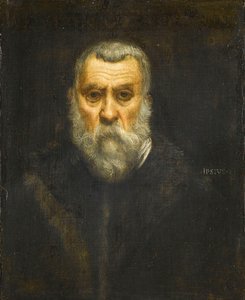
A Philosopher

1570. Oil On Canvas. Biblioteca Marciana.

Фиг. 1. Джакопо Тиньорето, A Philosopher, 1570. Показано като репродукцията, която посочвате: , .

§ 1Каталожни данни

§ 2Абстракция

Описание на колекционерския предмет

Explore Tintoretto’s ‘A Philosopher,’ a dramatic Renaissance oil painting showcasing chiaroscuro, symbolism & classical composition. Discover Venetian art at its finest!

Биография на художника

Джакопо Тинторето е венециански художник от Ренесанса и Барок, известен с драматичните си композиции, експресивни мастила и новаторския подход към светлината и перспективата. Разгледайте неговото наследство!

§ 3Коментар

A Vision of Wisdom: Exploring Tintoretto’s “A Philosopher”

This captivating oil painting by Jacopo Tintoretto, created in 1570, presents a compelling portrait of an elderly scholar – a *philosopher* immersed in thought and surrounded by the tools of his trade. The work exemplifies Tintoretto's mastery of Venetian Renaissance style, blending meticulous detail with dramatic lighting and a palpable sense of intellectual depth.

Style & Historical Context

Tintoretto (1518-1594), known as *Il Furioso* (“the furious one”) for his energetic brushwork, was a pivotal figure in the Venetian School. He moved beyond the High Renaissance classicism of earlier masters like Titian, embracing a more dynamic and emotionally charged Mannerist style. This painting reflects that transition – while adhering to classical proportions and realistic representation, it foreshadows the Baroque period with its dramatic use of light and shadow (*chiaroscuro*) and heightened emotional intensity. Venice in the 16th century was a thriving center of commerce and culture, fostering an environment where intellectual pursuits were highly valued. This work likely reflects that societal reverence for knowledge and learning.

Composition & Technique

The composition is powerfully centered on the figure, framed by an arched doorway that draws the viewer’s eye inward. Tintoretto's technique is characterized by layered thin glazes of oil paint, building up color and luminosity to create a rich, textured surface. The linear quality of the architecture and drapery contrasts beautifully with the organic forms created by the folds in the robe and the scattered books and scrolls. Notice how the light dramatically illuminates the philosopher’s face and hands, highlighting his age and wisdom while casting much of the background into deep shadow – a technique that heightens the sense of mystery and contemplation.

Symbolism & Meaning

The painting is rich in symbolic elements. The globe represents knowledge, exploration, and the vastness of the world; the scrolls symbolize accumulated wisdom and learning; and the aged figure himself embodies experience, contemplation, and the pursuit of truth. These objects aren’t merely props but integral components that speak to the philosopher's life dedicated to intellectual inquiry. The doorway itself can be interpreted as a threshold – a passage between the known and the unknown, or perhaps even a symbolic representation of mortality.

Emotional Impact & Interpretation

“A Philosopher” evokes a sense of quiet dignity and profound contemplation. The subject’s gaze is directed inward, suggesting deep thought and introspection. The warm color palette – dominated by golds, ochres, and ambers – creates an atmosphere of warmth and intellectual stimulation. This isn't simply a portrait; it’s a meditation on the power of knowledge, the weight of experience, and the enduring human quest for understanding. It invites viewers to reflect on their own pursuit of wisdom and meaning.

For Collectors & Designers

This painting – or a high-quality reproduction – would be a stunning addition to any collection. Its classic composition and rich color palette make it versatile enough to complement a variety of interior design styles, from traditional libraries to modern living spaces. The artwork’s intellectual gravitas adds a touch of sophistication and timeless elegance to any room. It serves as both a beautiful aesthetic object and a powerful symbol of the enduring human spirit.

Въпроси и отговори

Кога и с какви материали е създадено "A Philosopher"?

„A Philosopher“ е създадена през 1570 г. с Oil On Canvas.

Кой е художникът зад "A Philosopher"?

Художникът зад "A Philosopher" е Джакопо Тиньорето. Произведението е каталогизирано под името на Джакопо Тиньорето.

Какво чувство създават цветовете на „A Philosopher“ на Джакопо Тиньорето?

В „A Philosopher“ цветовете на Earthy придружават Reflective усещане.
§ 4Художникът

Джакопо Тиньорето

Джакопо Тиньорето

1518 - 1594, Италия

Бързи факти за Джакопо Тиньорето

  • Artistic Movement Or Style: Ренесанс, Маниеризъм
  • Artists Or Movements Influenced By This Artist:
    • Карважо
    • Барок
  • Artists Who Influenced This Artist:
    • Титациано
    • Микеланджело
  • Date Of Birth: 1518
  • Date Of Death: 1594
  • Full Name: Jacopo Robusti
  • Nationality: Италианец
  • Notable Artworks:
    • Чудо на св. Марк
    • Последна трапеза
    • Възнесение Девичи
  • Place Of Birth: Венеция, Италия

Биография на художника

A Venetian Master of Drama and Light

Jacopo Tintoretto, born Jacopo Robusti in Venice around 1518, remains one of the most compelling and enigmatic figures of the High Renaissance and early Baroque periods. His very nickname, “Tintoretto” – little dyer – speaks to his family’s trade, yet it belies the immense artistry that would distinguish him from all others. Unlike many artists who benefited from structured apprenticeships, Tintoretto's path was largely self-directed, fueled by an insatiable curiosity and a relentless drive for innovation. While accounts suggest a brief and unsuccessful stint under Titian, the acknowledged master of Venetian colorism, it seems the experience proved more contentious than formative. Titian’s alleged dismissal of the young Jacopo – whether due to jealousy or artistic disagreement – spurred Tintoretto toward an independent course, one characterized by audacious experimentation and a uniquely dynamic style. He immersed himself in anatomical study, reportedly through dissection, and honed his skills by meticulously copying classical sculpture and the works of other masters. This dedication laid the foundation for a career that would redefine Venetian painting.

Forging a Distinctive Style: *Il Furioso*

Tintoretto’s artistic development was marked by an almost feverish energy, earning him another evocative nickname: *Il Furioso* – “the Furious One.” This moniker wasn't merely descriptive of his working pace but also captured the intensity and emotional charge that permeated his canvases. His early works already hinted at a departure from traditional Venetian conventions. While acknowledging Titian’s influence in color, Tintoretto gravitated towards Michelangelo’s powerful figures and dramatic compositions. He synthesized these influences into something entirely new: a style characterized by elongated forms, swirling draperies, and an innovative use of perspective that often created a sense of dizzying depth and movement. He abandoned the meticulous finish favored by his contemporaries, opting instead for a rapid, almost sketch-like brushstroke that conveyed immediacy and raw emotion. This technique, combined with his masterful manipulation of light and shadow – *chiaroscuro* – allowed him to create scenes of unparalleled drama and psychological intensity. He wasn’t simply depicting events; he was conveying their emotional core. His compositions were often asymmetrical and dynamic, creating a sense of movement and instability that reflected the turbulent spirit of the age.

Monumental Achievements: San Rocco and Beyond

Tintoretto's prodigious output spanned decades, encompassing religious narratives, historical allegories, and portraits. However, his most significant achievement lies in the cycle of paintings he created for the Scuola Grande di San Rocco, a Venetian confraternity dedicated to Saint Roch. Over a period of more than fifty years, Tintoretto adorned the Scuola’s halls with over sixty canvases, transforming it into a breathtaking visual testament to faith and human experience. Works like “The Last Supper,” completed late in his life, demonstrate his continued experimentation with perspective and composition. Departing from traditional depictions, Tintoretto placed the scene in a dramatically lit, architecturally unstable space, emphasizing the emotional turmoil of Christ’s final meal with his disciples. Other notable works include “The Miracle of St Mark Freeing the Slave,” a powerful display of dynamic composition and foreshortening, and numerous paintings for Venetian churches and palaces that showcase his mastery of scale and narrative storytelling. These monumental projects cemented Tintoretto's reputation as one of Venice’s most important artists.

Influences and Artistic Connections

Tintoretto’s artistic journey was shaped by a complex interplay of influences. As mentioned, Titian undoubtedly provided an initial foundation in color and technique, though their relationship remained strained. Michelangelo’s dynamism and anatomical precision served as another crucial inspiration, while the works of classical sculpture profoundly impacted his understanding of form and composition. He also studied the works of other Venetian masters, such as Paolo Veronese, absorbing their techniques and stylistic approaches. However, Tintoretto ultimately forged a unique path, developing a style that was distinctly his own—a synthesis of these diverse influences into something powerfully original. His work reflects not only the religious fervor and political tensions of his time but also a uniquely personal vision that continues to resonate with audiences today.

Legacy and Historical Significance

Jacopo Tintoretto died in Venice in 1594, leaving behind a vast and influential body of work. He bridged the gap between the High Renaissance and the Baroque period, anticipating many of the stylistic innovations that would define the latter. His dramatic compositions, expressive brushwork, and innovative use of light and shadow profoundly influenced artists such as Caravaggio, Rembrandt, and Delacroix. He wasn’t merely a painter; he was a visual storyteller who understood how to harness the power of art to evoke emotion and inspire awe. As one of the three great Venetian painters of the 16th century – alongside Titian and Paolo Veronese – Tintoretto played a crucial role in shaping the artistic landscape of Venice during its golden age. His work reflects not only the religious fervor and political tensions of his time but also a uniquely personal vision that continues to resonate with audiences today, solidifying his place as one of history’s most important and captivating artists. His legacy is a testament to the enduring power of artistic innovation and the transformative potential of human creativity.

§ 5Подобни произведения

§ 6Въпроси

Бърза информация

  • style: Realistic, Dramatic Chiaroscuro
  • medium: Oil on canvas
  • year: 1570
  • title: A Philosopher
  • movement: Mannerism, Venetian School, Renaissance

Тест за познания по изкуство

За всеки въпрос има само един верен отговор.

Въпрос 1:
To which artistic period does 'A Philosopher' primarily belong?
Въпрос 2:
What is a prominent technique used in this painting to create dramatic contrast and depth?
Въпрос 3:
Which of the following symbolic elements appears in 'A Philosopher' and often represents knowledge and exploration?
Въпрос 4:
Tintoretto was known for his painting speed and bold brushwork, earning him what nickname?

§ 7Цитирайте този запис

AllPaintingsStore.com, “Джакопо Тиньорето, A Philosopher (1570)”, https://allpaintingsstore.com/bg/art/jacopo-tintoretto-a-philosopher-8Y3JU5-en/ArtistReproduction/ (достъпен на 11 Октомври 2026).

§ 8Репродукцията

Ръчно изработена маслена репродукция

Ръчно рисувана маслена картина върху платно във вашия размер и рамка, изработена по поръчка от нашите художници. ( Превключване към принт Превключване към дигитално изображение)

Това е посочено в полето на края на формуляра за поръчка; настоящото състояние на този формуляр е следното.

A Philosopher

Вид репродукция

Размер на репродукцията

-

Елитен старши художник

Повече детайлност, изящество и допълнително време за производство

-

Рамка за репродукция

-

-

За произведения на изкуството или репродукции, чийто размер е над 105 см (приблизително 41 инча) във всяка страна, рамката ще бъде изпратена в разглобен вид като комплект за сглобяване. Този метод гарантира безопасна доставка и предотвратява повреди по време на транспортиране.

Изисква се професионално сглобяване – това не е продукт за самостоятелна изработка (DIY).
Комплектът трябва да бъде сглобен, а платното – опънато от опитен професионален багер, като се използва дървено лепило (не е включено в комплекта), клещи за опъване на платно и затягащи скоби, за да се поддържа правотата на подрамника, докато лепилото изсъхне. Неправилното сглобяване или неравномерното опъване на платното може трайно да повреди произведението и не е покрито от нашата гаранция.

  • Всички елементи от масивна дървесина са включени, прецизно изрязани по размер.

  • Сглобява се с предоставените винтове, както и с лепило за дърво за ъгловите връзки, което не е включено в комплекта и трябва да бъде осигурено от вашия рамкар.

  • Изискват се професионални инструменти, които не са включени: щипка за опъване на платно (натягач) и скоби за фиксиране на подрамниците под прав ъгъл, докато лепилото изсъхне.

Важно:
За сглобяването на ъглите е необходимо лепило за дърво, рейките трябва да се фиксират с клещи (затягащи скоби, докато лепилото изсъхне напълно, а за опъването на платното върху готовата рамка е необходим инструмент за опъване на платно. Нито един от тези артикули не е включен в комплекта. Моля, осигурете услугите на опитен професионалист по багетно окантоване, преди да поръчате този размер.

Етикет с име

-

-

Защитен лак

Гланцов лак (подсилва цветовете и предпазва от светлина и влага)

-

Персонализирай моето произведение

Примери за възможности за персонализация: Заменете лицето със снимка на клиента; Добавете домашен любимец (например, заменете котка с куче); Включете скрито съобщение във фона; Променете пейзажа или елементите на фона.

-

Спешно

Доставка по целия свят () в рамките на 3-4 седмици вместо стандартните 5 седмици. (9 Ноември). Без компромис с качеството.

-

Експресна доставка

Доставка по целия свят () в рамките на 5 седмици. (16 Ноември).

Включена

Обща цена

€ 230

Включено във всяка поръчка

  • Безплатна експресна доставка по целия свят
  • Висококачествено ленено платно
  • Пълно застраховане на доставката
  • Гаранция за възстановяване на митнически такси
  • Гаранция за пълно съответствие на цветовете
  • Политика за връщане в рамките на 100 дни (само при дефекти)
  • 100% Гаранция за връщане на сумата
  • Оферта за отстъпка при поръчка на повече бройки
Форма за поръчка