Гаранция за връщане на сумата · 100 дни Безплатна доставка по целия свят
449564произведения на изкуството 30613художници 4660музеи 32езици
Експонатно описание

After love

1968. Acrylic On Canvas.

Фиг. 1. Марсел Дюшан, After love, 1968. Показано като репродукцията, която посочвате: , .

§ 1Каталожни данни

§ 2Абстракция

Описание на колекционерския предмет

Marcel Duchamp's 'After Love,' a minimalist drawing capturing intimacy with delicate black lines on textured paper—a poignant exploration of vulnerability and connection embodying Dadaist principles.

Биография на художника

Марсел Дюшан: Революционен художник, който предизвика определението за изкуство с Дадаизъм и редимейд обекти като "Фонтан". Разгледайте неговите емблематични творби и философско влияние.

§ 3Коментар

After love

Marcel Duchamp’s “After love” presents a deceptively simple visual statement—a pair of figures embracing—yet it encapsulates profound ideas about intimacy, vulnerability, and the very essence of artistic expression. Executed in 1968, this drawing exemplifies Duchamp's signature minimalist style, prioritizing essential forms conveyed through delicate linework on textured paper.

  • Composition: The image centers around the intertwined bodies, positioned slightly off-center to create a dynamic balance. Negative space amplifies the connection between the figures while subtly demarcating their isolation—a deliberate tactic mirroring Duchamp’s exploration of spatial relationships and perceptual experience.
  • Color Palette: Stripped bare of vibrant hues, the artwork utilizes shades of beige/cream for the paper background and black ink for precise linework. This restrained palette underscores the emotional core of the piece, prioritizing form over color to heighten its impact.
  • Use of Lines: The drawing’s strength lies in its meticulous execution—fine, continuous lines define the contours of the figures with remarkable fluidity. Rejecting shading or cross-hatching, Duchamp achieves a textural effect that mimics the subtle nuances of human anatomy and embodies his commitment to capturing form through pure line.

Historical Context: Created in the twilight years of Duchamp’s career, “After love” reflects the artist's ongoing preoccupation with conceptual art—a movement that questioned traditional artistic conventions by elevating ideas over visual representation. It stands as a testament to Duchamp’s unwavering belief that art could transcend mere aesthetic pleasure and engage viewers on an intellectual level.

Symbolic Significance: The artwork speaks volumes about human connection and emotional vulnerability. Its minimalist style—a hallmark of Duchamp's oeuvre—amplifies the feeling of quiet intimacy, inviting contemplation on themes of affection and tenderness. Like many of his works, “After love” eschews explicit narrative, allowing viewers to interpret its symbolism through their own experiences.

Style & Technique: Duchamp’s approach aligns perfectly with the principles of Conceptual Art—a movement he profoundly influenced. The drawing technique prioritizes capturing fundamental forms with effortless lines, mirroring his fascination with geometric abstraction and challenging notions of artistic skill. It's a deliberate rejection of representational art in favor of exploring conceptual ideas.

Materials Used: Crafted from handmade or textured paper and black ink, “After love” exemplifies Duchamp’s dedication to utilizing readily available materials—a characteristic that underscores the artwork’s simplicity and its grounding in tangible reality. This understated materiality contributes to the piece's contemplative mood.

Въпроси и отговори

Как мога да купя цифров файл на „After love“ на Марсел Дюшан?

Дигитален образ на „After love“ на Марсел Дюшан може да бъде закупен на неговата страница Дигитален образ: дигитално изтегляне на изображение с висока резолюция.

Каква е темата на "After love"?

Обектите на "After love" са embrace, minimalism, line drawing, texture, abstraction, relationship, quiet intimacy.

Намира ли се произведението „After love“ на Марсел Дюшан в общественото достояние и защо?

„After love“ на Марсел Дюшан е в все още е защитено с авторско право. Срокът на авторско право се изчислява от годината на смъртта на творца, а Марсел Дюшан почина през 1968.
§ 4Художникът

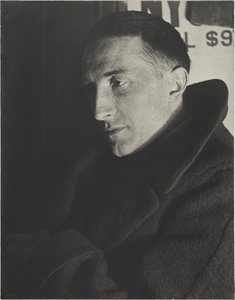
Марсел Дюшан

Марсел Дюшан

1887 - 1968, Франция

Бързи факти за Марсел Дюшан

  • Artistic Movement Or Style:
    • Кубизъм
    • Дадаизъм
    • Концептуален изкуство
  • Artists Or Movements Influenced By This Artist:
    • Концептуално изкуство
    • Поп арт
    • Минимализъм
  • Date Of Birth: Юли 28, 1887
  • Date Of Death: Октомври 2, 1968
  • Full Name: Marcel Duchamp
  • Nationality: Френски-Американски
  • Notable Artworks:
    • Фонтан
    • Л.Х.О.О.К.
    • Голям стъкло
  • Place Of Birth: Блейнвил, Франция

Биография на художника

Marcel Duchamp (1887–1968): A Revolutionary Spirit

Marcel Duchamp, Henri-Robert-Marcel Duchamp, was born in Blainville-sur-Mer, Normandy, France, on July 28, 1887. His artistic lineage traced back to his father, a notary, and his brother Jacques Villon, who established himself as a successful painter – a familial encouragement that nevertheless wouldn’t fully encapsulate the rebellious spirit that would define Duchamp's life and career. Initially drawn to formal training in Paris, he mastered traditional techniques and experimented with Post-Impressionist styles, absorbing influences from artists like Cézanne and Gauguin. However, this grounding in academic art served as a crucial catalyst for his profound questioning of artistic conventions. He recognized that mere visual representation wasn’t sufficient to grapple with the existential anxieties of the era—specifically, the devastating impact of World War I on European society. This disillusionment fueled his embrace of Dadaism, a movement born from utter rejection of logic and reason, marking a decisive break from established artistic paradigms.

Early Artistic Explorations: Cubism and Impressionism

Duchamp’s initial foray into art began with an exploration of Cubism alongside Jacques Villon. Their collaborative efforts yielded works like *Portrait of Chess Players* (1911), demonstrating a fascination for fragmented forms and multiple perspectives—a radical departure from the single viewpoint championed by earlier artistic traditions. While acknowledging the aesthetic merits of Cubist principles, Duchamp swiftly transcended purely visual concerns, perceiving that artistic expression demanded more than just rearranging elements on canvas. He sought to engage with deeper philosophical questions about perception and reality. This intellectual curiosity would propel him toward Dadaism and beyond.

The Dadaist Rebellion: Challenging Artistic Boundaries

Duchamp’s involvement in Dadaism solidified his commitment to dismantling conventional notions of art. Rejecting the values of beauty, craftsmanship, and emotional expression—characteristics deemed paramount by mainstream artistic circles—he championed a stance of deliberate provocation. Dada artists aimed not to create aesthetically pleasing objects but rather to disrupt established hierarchies and expose the absurdity inherent in societal norms. Duchamp’s Dadaist output included provocative collages and assemblages that questioned accepted standards of taste and challenged viewers to confront uncomfortable truths. The movement's manifesto proclaimed “Anti-art,” asserting that art should be conceived as a negation of everything it represented.

The Birth of Conceptual Art: ‘Ready-Made’ Sculpture

Duchamp’s most enduring contribution to the history of art arrived in 1917 with his groundbreaking concept of the ‘ready-made.’ Recognizing that artistic creativity extended beyond mere manual skill, he questioned whether an object could be considered art if it was simply presented as such—without any transformative intervention. His seminal work, *Fountain* (1917), consisted of a porcelain urinal signed “R. Mutt,” submitted anonymously to Marcel Duchamp’s own exhibition in New York City. This audacious act deliberately undermined the distinction between artwork and everyday object, sparking intense debate about authorship, originality, and the very definition of artistic value. It established Conceptual Art as a dominant force in postwar art, prioritizing ideas over visual form.

Later Works: The Large Glass and Beyond

Duchamp continued to push boundaries throughout his career, culminating in *The Large Glass* (1915–1923), an ambitious multi-faceted project incorporating glass panels, enamel paint, and intricate sculptural elements. This monumental artwork explored themes of illusion, perception, and the subconscious—reflecting Duchamp’s lifelong fascination with psychoanalysis and his desire to delve into the complexities of human consciousness. His later explorations encompassed film, poetry, and graphic design, demonstrating a multifaceted artistic sensibility that defied categorization. Marcel Duchamp died October 2, 1968, leaving behind an unparalleled legacy as one of the most influential figures in modern art—a testament to his unwavering conviction that art should provoke thought and challenge accepted conventions. His influence persists today, inspiring artists to question assumptions about creativity and artistic expression.

§ 5Подобни произведения

§ 6Въпроси

Бърза информация

  • Title: After love
  • Year: 1968
  • Artist: Marcel Duchamp
  • Movement: Expressionism
  • Subject or theme: Intimacy, Affection

§ 7Цитирайте този запис

AllPaintingsStore.com, “Марсел Дюшан, After love (1968)”, https://allpaintingsstore.com/bg/art/marcel-duchamp-after-love-D2Q5EX-en/ArtistReproduction/ (достъпен на 10 Октомври 2026).

§ 8Репродукцията

Ръчно изработена маслена репродукция

Ръчно рисувана маслена картина върху платно във вашия размер и рамка, изработена по поръчка от нашите художници. ( Превключване към принт Превключване към дигитално изображение)

Това е посочено в полето на края на формуляра за поръчка; настоящото състояние на този формуляр е следното.

After love

Вид репродукция

Размер на репродукцията

-

Елитен старши художник

Повече детайлност, изящество и допълнително време за производство

-

Рамка за репродукция

-

-

За произведения на изкуството или репродукции, чийто размер е над 105 см (приблизително 41 инча) във всяка страна, рамката ще бъде изпратена в разглобен вид като комплект за сглобяване. Този метод гарантира безопасна доставка и предотвратява повреди по време на транспортиране.

Изисква се професионално сглобяване – това не е продукт за самостоятелна изработка (DIY).
Комплектът трябва да бъде сглобен, а платното – опънато от опитен професионален багер, като се използва дървено лепило (не е включено в комплекта), клещи за опъване на платно и затягащи скоби, за да се поддържа правотата на подрамника, докато лепилото изсъхне. Неправилното сглобяване или неравномерното опъване на платното може трайно да повреди произведението и не е покрито от нашата гаранция.

  • Всички елементи от масивна дървесина са включени, прецизно изрязани по размер.

  • Сглобява се с предоставените винтове, както и с лепило за дърво за ъгловите връзки, което не е включено в комплекта и трябва да бъде осигурено от вашия рамкар.

  • Изискват се професионални инструменти, които не са включени: щипка за опъване на платно (натягач) и скоби за фиксиране на подрамниците под прав ъгъл, докато лепилото изсъхне.

Важно:
За сглобяването на ъглите е необходимо лепило за дърво, рейките трябва да се фиксират с клещи (затягащи скоби, докато лепилото изсъхне напълно, а за опъването на платното върху готовата рамка е необходим инструмент за опъване на платно. Нито един от тези артикули не е включен в комплекта. Моля, осигурете услугите на опитен професионалист по багетно окантоване, преди да поръчате този размер.

Етикет с име

-

-

Защитен лак

Гланцов лак (подсилва цветовете и предпазва от светлина и влага)

-

Персонализирай моето произведение

Примери за възможности за персонализация: Заменете лицето със снимка на клиента; Добавете домашен любимец (например, заменете котка с куче); Включете скрито съобщение във фона; Променете пейзажа или елементите на фона.

-

Спешно

Доставка по целия свят () в рамките на 3-4 седмици вместо стандартните 5 седмици. (8 Ноември). Без компромис с качеството.

-

Експресна доставка

Доставка по целия свят () в рамките на 5 седмици. (15 Ноември).

Включена

Обща цена

€ 253

Включено във всяка поръчка

  • Безплатна експресна доставка по целия свят
  • Висококачествено ленено платно
  • Пълно застраховане на доставката
  • Гаранция за възстановяване на митнически такси
  • Гаранция за пълно съответствие на цветовете
  • Политика за връщане в рамките на 100 дни (само при дефекти)
  • 100% Гаранция за връщане на сумата
  • Оферта за отстъпка при поръчка на повече бройки
Форма за поръчка