

1949. Oil, 646.0 x 1070.0 cm. Национална галерия за модерно изкуство.

§ 1Catalogue data
 Oil
Oil- WallArt
- Modern Indian Art
 1949
1949 646.0 x 1070.0 cm
 Национална галерия за модерно изкуство
Това произведение е защитено от авторско право
Изкуството, представено на тази страница, е защитено от законите за авторско право, което означава, че не можем законно да създаваме или продаваме идентични репродукции. Тази защита се прилага съгласно международни споразумения като Бернска конвенция и от националното законодателство, включително разпоредбите на Закон за авторското право на САЩ – Раздел 17.
Като уважителна и законна алтернатива, ние предлагаме изработени по поръчка, ръчно рисувани произведения на изкуството, вдъхновени от оригинала. Нашите умени и професионални артисти внимателно изучават стила, настроението и артистичната същност на оригиналното произведение, за да създадат ново, уникално творческо произведение, което предизвиква същото чувство – оставайки в същото време самостоятелно оригинално творение.
Този метод е напълно съвместим с законите за авторско право, тъй като не включва копиране или дублиране на защитеното произведение. Вместо това става въпрос за творческа реинтерпретация – нова картина, която е вдъхновена от оригинала, но не е идентична с него.
 Прочетете повече
§ 2Abstract
Описание на колекционерския предмет
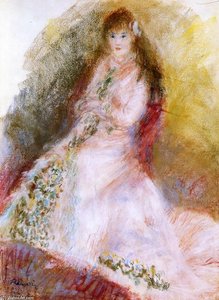
Experience the captivating inner conflict of Binodini, a striking portrait by Ramkinkar Baij (1949), whose textured oil work invites you to discover its depth.
Биография на художника
Ramkinkar Baij (1906-1980) was a pioneering Indian sculptor & painter, considered the father of modern Indian sculpture. Known for contextual modernism and blending Western & Indian styles in works like 'Santal Family'. Explore his legacy at AllPaintingsStore
§ 3Commentary
The Enigma in White: Exploring Ramkinkar Baij's 'Binodini'
To stand before Binodini is not merely to observe a portrait; it is to step into a moment of profound, suspended contemplation. This masterful work by Ramkinkar Baij captures the essence of an inner life—a beautiful young woman from Manipur’s aristocratic lineage, caught in what seems to be a delicate confluence of thought and emotion. The painting transcends simple representation, offering instead a window into the complexities of the human spirit. Baij, whose genius was rooted in his ability to perceive the soul beneath the surface, has gifted us an image that resonates with both timeless elegance and modern psychological depth.
Technique and Tactility: A Masterclass in Medium
What immediately draws the eye is the remarkable texture achieved by Baij. Executed in oil upon gunny cloth—a material choice that speaks to his daring experimentation—the surface itself becomes a participant in the artwork’s narrative. He has not simply painted; he has built up layers of pigment, creating a palpable, almost sculptural quality to the paint. This thick application gives the slim figure an undeniable volume, making the portrait feel intensely present. The artist's handling is both tender and robust, allowing the viewer to sense the physical weight of the subject while simultaneously feeling the lightness of her dilemma.
Symbolism and the Gaze: Capturing Inner Conflict
The subject’s gaze is perhaps the most arresting element. Her eyes, wide and directed straight out of the canvas, meet the viewer's scrutiny with an unnerving directness. It is a look that seems to ask questions without uttering a single word. The flowing white dress enhances this sense of ethereal vulnerability, contrasting beautifully with the warm, yellowish embrace of the background. Noticeable details, such as the books placed near her—one in the lower left and another toward the upper right—suggest themes of knowledge, study, or perhaps conflicting narratives vying for her attention. These elements anchor the emotional ambiguity, suggesting that her internal conflict is intellectual as much as it is emotional.
Historical Resonance and Enduring Appeal
Painted in 1949, Binodini stands at a pivotal moment in Indian modern art. Ramkinkar Baij was not content with tradition; he was forging a new visual language for India. This portrait exemplifies his lifelong fascination with capturing the subject’s inner self rather than merely documenting her outward appearance. For collectors and designers alike, this piece offers more than mere decoration; it is an heirloom of artistic revolution. Reproducing this work allows one to bring home not just a painting, but a tangible connection to the pioneering spirit of modern Indian art.
Въпроси и отговори
Защо статусът на авторското право върху "Binodini" е такъв?
„Binodini“ на Ramkinkar Baij е в все още е защитено с авторско право. Срокът на авторското право се изчислява от годината на смъртта на художника, която е през 1980.
Как се вписва „Binodini“ в цялостното творчество на Ramkinkar Baij?
"Binodini" споделя със другите творби на Ramkinkar Baij своя Modern Indian Art стил и заложените теми: santiniketan art school influence, study of inner self, manipur aristocratic life depiction, exploration of human emotion.
Как се съчетават контрастът и хармонията в "Binodini"?
В „Binodini“ Gentle контрастът е съчетат с Unified Palette хармония.




 Превключване към принт


 За произведения на изкуството или репродукции, чийто размер е над 105 см (приблизително 41 инча) във всяка страна, рамката ще бъде изпратена в разглобен вид като комплект за сглобяване. Този метод гарантира безопасна доставка и предотвратява повреди по време на транспортиране.


