Acrylic On Canvas.

§ 1Каталожни данни

§ 2Абстракция
Описание на колекционерския предмет
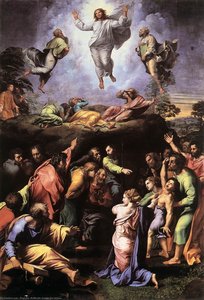
Explore Raphael’s ‘Studies for the Transfiguration,’ a stunning black & white drawing showcasing Renaissance realism & anatomical detail. A masterpiece of drypoint technique.
 Прочети повече
Биография на художника
Майстор от Високата ренесансна школа на Атинската школа. Открийте неговите легендарни Мадони и зашеметяващи ватикански фрески днес.
§ 3Коментар
A Study in Contemplation: Raphael’s ‘Studies for the Transfiguration’
The Ashmolean Museum’s exquisite reproduction of Raphael’s “Studies for the Transfiguration” offers a glimpse into the mind of one of Renaissance art’s most celebrated masters. This deceptively simple drawing—a black and white depiction of two male heads in profile—holds within it layers of artistic brilliance and profound symbolic resonance, reflecting the intellectual fervor of Urbino during Raphael's formative years. It wasn’t merely a sketch; it was an exercise in observation, a distillation of anatomical understanding, and a testament to Raphael’s unparalleled draughtsmanship.- Subject Matter: The drawing presents two male faces—likely idealized representations—in repose, their hands outstretched in a gesture that invites interpretation. Scholars believe this posture embodies supplication or perhaps an attempt to grasp something beyond the visible realm – mirroring themes prevalent in Christian iconography of the time.
- Style & Technique: Raphael’s style is unmistakably Renaissance portraiture, prioritizing realism and meticulous detail. The drawing exemplifies drypoint etching—a technique demanding precision and patience—where a needle meticulously scratches lines into paper to create tonal variations and define contours. This method captures the subtle nuances of skin texture and musculature with remarkable accuracy.
- Historical Context: Created during Raphael’s early career, “Studies for the Transfiguration” speaks to the humanist ideals championed by Federico Montefeltro—Raphael's patron—who fostered an environment conducive to artistic innovation and scholarly pursuits. It stands as a cornerstone of Florentine Renaissance art, demonstrating the influence of Leonardo da Vinci’s anatomical studies on Raphael’s approach.
- Symbolism: The gesture of the hands is particularly significant. Often interpreted as representing faith or aspiration, it underscores the spiritual dimension inherent in Raphael's artistic vision—a reflection of the humanist values that underpinned the Renaissance spirit.
Technical Mastery: The Art of Drypoint
The drawing's remarkable tonal range and textural depth are achieved through masterful use of drypoint etching—a technique favored by Raphael for its ability to produce subtle shading effects. Unlike engraving, which relies on incising lines into metal plates, drypoint involves scratching a needle directly onto paper, creating tiny pits that hold ink. This process yields an unparalleled level of tonal gradation and allows for the creation of incredibly delicate textures – mirroring the meticulous observation evident in Raphael’s preparatory sketches.Emotional Resonance: A Window Into Raphael's Mind
“Studies for the Transfiguration” transcends mere technical proficiency; it embodies Raphael’s contemplative spirit—a reflection of Urbino’s intellectual climate and his engagement with humanist ideals. The drawing invites viewers to contemplate the human form, mirroring the Renaissance fascination with anatomy and striving for idealized beauty. It serves as a poignant reminder of Raphael's dedication to capturing not just appearances but also inner states of mind – an achievement that cements its place among the greatest drawings of all time.Въпроси и отговори
„Studies for the Transfiguration“ едно от най-популярните произведения на Рафаело Санцио?
„Studies for the Transfiguration“ на Рафаело Санцио има Iconic ниво на популярност. Тази класификация отразява до каква степен произведението е разпознаваемо.
Свободен ли е от авторско право "Studies for the Transfiguration"?
Статусът на авторското право за „Studies for the Transfiguration“ на Рафаело Санцио: произведението е в обществено достояние – авторското право е изтекло. Това определя дали могат да се правят свободно репродукции на изображението.
От коя страна произлиза произведението на High Renaissance "Studies for the Transfiguration"?
Произведението в стил High Renaissance „Studies for the Transfiguration“ е създадено от художник, роден в Италия.



 Превключване към принт


 За произведения на изкуството или репродукции, чийто размер е над 105 см (приблизително 41 инча) във всяка страна, рамката ще бъде изпратена в разглобен вид като комплект за сглобяване. Този метод гарантира безопасна доставка и предотвратява повреди по време на транспортиране.