


 Преглед в реален мащаб

 Изпрати
 Сподели
 Детайли
 Информационен лист


 Изтегляне
 Подобни артикули
 Рентгенова снимка
 Слайдшоу
 Въпроси и отговори

 Статистика
Joshua Brookes


 Прочети повече
Получете файл, готов за печат, който предлага много по-високо качество от уеб прегледа. Всяко дигитално изображение, което предлагаме, е извлечено от висококачествен оригинал в нашата база данни — обикновено с ширина между 5 000 и 15 000 пиксела — така че със сигурност да можете да принтирате в голям формат, да кадрирате тесно или да възпроизведете фините детайли.
Нито един файл не напуска нашето студио без внимание. Дигитален експерт проверява цветовете спрямо оригиналната картина и ги коригира при необходимост, след което подобрява яснотата и детайлите с професионални инструменти за ретуш — винаги оставайки верен на мазките и стила на художника. Резултатът е изображение, което изглежда като самата картина, а не като сканиран образ с филтър.
Одобрявате преди финализиране: нашият експерт ще изпрати изображението по имейл в рамките на 72 часа за ваш преглед. Не сте доволни? Можете да поискате подобрения или корекции, или пълно възстановяване на сумата, ако качеството не отговаря на очакванията ви.
Това е качеството, на което разчитат издателства, дизайн студиа, галерии и печатници.
Дигитално изображение
Изтеглете файл с висока резолюция за лично съхранение, принтиране и творчески проекти. ( Принтирана репродукция Картина с маслени бои
)
Включено във всяка поръчка за дигитални изображения
Гарантирана експертна дигитална доставка
Избирайки AllPaintingsStore.com, вие не получавате просто изображение – вие придобивате професионално обработена дигитална творба, създадена с прецизност и подкрепена от гаранция за удовлетворение. Ето какво автоматично е включено във вашата поръчка:

Бърза доставка по имейл
Вашето дигитално изображение с висока резолюция ще бъде изпратено по имейл в рамките на 72 часа от поръчката – готово за незабавно използване.

Дигитален файл с подобрено качество чрез ИИ
Вашата картина е професионално оптимизирана чрез усъвършенствани инструменти с изкуствен интелект и ръчна редакция, което гарантира максимална детайлност, яснота и точност на цветовете.

Безплатна доживотна повторна доставка
Изгубили сте или сте изтрили файла си по погрешка? Не се притеснявайте – ще го изпратим отново на Вас по всяко време, безплатно.

Без митнически такси – завинаги
Насладете се на вашето произведение незабавно, без мита, такси или разходи за доставка – дигиталните изтегляния винаги са освободени от данъци.

Гаранция за цветово съответствие
Гарантираме, че вашето дигитално изображение отразява оригиналните цветове възможно най-точно чрез използването на професионални инструменти и системи за управление на цветовете.

100-дневна гаранция за удовлетвореност
Ако не сте доволни от вашето дигитално изображение, ще го преработим или ще възстановим 100% от сумата в рамките на 100 дни – без излишни въпроси.

100% Гаранция за връщане на сумата
Не сте доволни? Получете пълен възврат на сумата в рамките на 100 дни от получаването на вашия цифров файл – без излишни въпроси.

Отстъпки за големи поръчки
Купете 3 изображения, спестете 10% - Купете 5, спестете 15% - Купете 10+, спестете 20%. Идеално за творчески проекти, галерии и агенства.
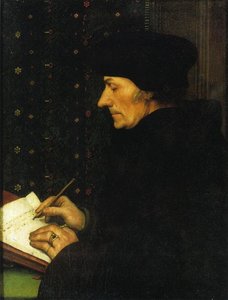
The Portrait of Joshua Brookes by Thomas Phillips
The portrait of Joshua Brookes by Thomas Phillips depicts the English anatomist and naturalist in a moment of quiet study. Painted in 1815, the work was created at the request of the students who studied under Brookes. The subject is shown seated at a desk within a dark interior, where a single light source casts shadows against the wall behind him. He is dressed in a dark coat with a high collar, consistent with the formal attire of the early nineteenth century. His white hair and serious expression are rendered with a focus on physical likeness and the specific textures of his clothing.
Thomas Phillips utilized a realistic style to capture the sitter's features and the immediate environment. The composition places the man in a state of concentration, with an open book and a quill pen positioned on the desk before him. The lighting is directed to emphasize the man's face and hands, leaving the periphery of the room in relative darkness. On the wall in the background, two framed items are visible, though they remain indistinct due to the angle of the light and the surrounding shadows. The palette relies on deep tones and controlled light to define the space.
Composition and Visual Details of the Work
The composition is centered on a man seated at a desk within a dark room. A single light source originates from the side, casting dramatic shadows across the wall behind the figure. This lighting creates a high-contrast environment, leaving much of the surrounding space in relative darkness. The subject is depicted with white hair and a serious expression, his gaze directed off to the side rather than toward the viewer. He wears a dark coat characterized by a high collar, consistent with formal attire from the late 18th or early 19th century.
On the desk before the man lies an open book and a quill pen. The painting style is realistic, emphasizing fine details in the subject's facial features and the texture of his clothing. The use of color and shadow establishes a sense of depth within the interior setting. Two framed items are visible on the wall in the background, though they remain indistinct due to the angle of the light and the heavy shadows present in the room.
The Subject and His Scientific Legacy
Joshua Brookes was an English anatomist, surgeon, and naturalist who operated within the scientific circles of London. He functioned as a teacher of anatomy, providing instruction to various students in the city. His professional focus included comparative osteology and the development of methods for preserving anatomical subjects for use in lectures and class dissections. In 1819, he was elected a Fellow of the Royal Society.
A significant part of his career involved the development of the Brookesian Museum. This institution housed a major private collection consisting of anatomical and zoological specimens. The collection was noted for its scale, being regarded as second only to the collection of John Hunter. His work in this field involved the study of various species, including the use of the name Megalocerus for certain giant deer specimens.
Brookes died suddenly on 10 January 1833 in London. Following his death, his anatomical school in Blenheim Street reopened on 1 October 1833. His scientific legacy is also linked to the genus Brookesia, which was named in his honor by John Edward Gray in 1864.
The Artistic Career of Thomas Phillips
Born in Dudley, Worcestershire, in 1770, Thomas Phillips began his professional development through the craft of glass-painting. This early training under Francis Eginton in Birmingham established a foundation in the precise application of color and light. After moving to London in 1790, he received guidance from Benjamin West and secured work on the painted-glass windows of St George's Chapel at Windsor Castle. He formally enrolled as a student at the Royal Academy in 1791, eventually specializing in portrait painting.
His ascent within the British art establishment was marked by several formal recognitions. In 1804, he was elected an associate of the Royal Academy. He achieved full academician status in 1808. His professional standing continued to grow as he attracted a diverse clientele, including members of the royal family and the aristocracy. In 1825, he was appointed Professor of Painting at the Royal Academy, a position he held until 1832.
Phillips maintained a studio at 8 George Street, Hanover Square, London, for four decades. He remained active in the art community, contributing to the development of British portraiture through his technical skill and his 1833 publication, Lectures on the History and Principles of Painting. He died in 1845 at his residence in London.
Въпроси и отговори
Към кой период от кариерата на Томас Филипс принадлежи „Joshua Brookes“?
„Joshua Brookes“ принадлежи към Mature Period от кариерата на Томас Филипс. Тази класификация свързва творбата с развитието на художника.
„Joshua Brookes“ на Томас Филипс картина ли е, рисунка или принт?
"Joshua Brookes" е WallArt произведение.
Мога ли да прегледам „Joshua Brookes“ на Томас Филипс, преди да поръчам?
Предварителен преглед на „Joshua Brookes“ на Томас Филипс можете да видите на страницата за преглед на произведението Преглед на произведението.
Подобни произведения


Биография на художника
Early Life and Artistic Foundations
Thomas Phillips, born in Dudley, Worcestershire, in 1770, emerged from relatively modest beginnings to become a prominent figure in the British art scene of the late 18th and early 19th centuries. His initial artistic training wasn’t within the traditional confines of painting, but rather in the craft of glass-painting under Francis Eginton in Birmingham. This foundational experience instilled in him a meticulous attention to detail and an understanding of color and light – skills that would prove invaluable when he later transitioned to portraiture. The intricate designs and vibrant hues of stained glass demanded precision and a keen eye for composition, qualities Phillips carried with him throughout his career. A pivotal moment arrived in 1790 when Phillips journeyed to London, armed with an introduction to Benjamin West, a leading artist of the time and a key figure in the Royal Academy. West’s guidance proved transformative, opening doors to opportunities within the established art world and providing a crucial mentorship that shaped his artistic development. He was immediately immersed in the atmosphere of the Royal Academy, observing the techniques and practices of other artists and absorbing the prevailing aesthetic sensibilities of the era. This early exposure to grand architectural projects – specifically the painted-glass windows of St George’s Chapel at Windsor Castle – allowed him to hone his skills within a large-scale decorative context, developing a sophisticated understanding of composition and narrative storytelling through visual means.A Rising Portraitist: Style and Subject Matter
Phillips quickly found his niche in portraiture, though not without navigating a competitive landscape already populated by renowned artists like Thomas Lawrence and John Hoppner. Initially, his sitters were largely unknown individuals – tradesmen, clergymen, and members of the gentry who sought to capture their likenesses for posterity. However, through dedication, talent, and an increasingly discerning eye, he steadily ascended the social ladder, attracting increasingly prominent figures to his studio. His style was characterized by a remarkable realism, reflecting both the influence of his early training in glass-painting – particularly his understanding of light and color – and the prevailing artistic tastes of the era. He possessed an ability to capture not just physical likeness, but also something of the sitter’s character, intellect, and social standing. This talent extended beyond mere replication; he sought to convey a sense of personality and presence, imbuing each portrait with a unique atmosphere. His portraits were often meticulously detailed, showcasing his mastery of brushwork and his ability to render textures – from the sheen of silk to the wrinkles of age – with astonishing accuracy. He was particularly adept at capturing subtle expressions, conveying emotions through minute shifts in posture and gaze.Royal Patronage and Academic Recognition
The year 1804 marked a significant turning point in Phillips’ career with his election as an associate of the Royal Academy, alongside William Owen. This recognition solidified his position within the artistic establishment and signaled a period of increased prestige and demand for his services. Shortly thereafter, he relocated to 8 George Street, Hanover Square – a prestigious address that would remain his home and studio for the next four decades. This move reflected his growing success and provided him with a more suitable environment for conducting his business. His clientele continued to expand dramatically, encompassing members of the royal family, including the Prince of Wales (later George IV), as well as prominent figures from across British society – aristocrats, politicians, scientists, writers, poets, and explorers. He painted portraits of these diverse subjects, capturing their individual personalities and reflecting the social and cultural dynamics of the time. The commissions he received were often highly demanding, requiring him to master a wide range of styles and techniques in order to meet the specific needs of his patrons. His ability to adapt to different requests while maintaining his distinctive artistic voice was a testament to his versatility and professionalism.Major Achievements and Artistic Legacy
Phillips’s most celebrated works include portraits of William Blake, capturing the poet's intense gaze and visionary spirit; Lord Byron, embodying the Romantic poet’s brooding intensity; and Sir Joseph Banks, the renowned botanist whose portrait reflects his scientific curiosity and adventurous spirit. His diploma work at the Royal Academy in 1808 – *Venus and Adonis* – demonstrated a departure from purely portraiture into more ambitious narrative painting, showcasing his artistic range and technical skill. This allegorical composition, rendered with meticulous detail and vibrant color, established him as a master of both realistic portraiture and imaginative storytelling. Throughout his career, Phillips’s portraits were exhibited at the Royal Academy and in private collections, earning critical acclaim and solidifying his reputation as one of Britain's leading artists. His work continues to be admired for its realism, sensitivity, and ability to capture the essence of his subjects. He left behind a substantial body of work that reflects both the technical skill and the intellectual curiosity of an artist deeply engaged with the cultural landscape of his era.Historical Significance
Thomas Phillips’s career coincided with a period of significant social and artistic change in Britain, particularly during the Romantic era. His portraits offer valuable insights into the personalities and aspirations of the individuals who shaped British society at the time. He played a crucial role in documenting the lives and achievements of prominent figures, preserving their likenesses for posterity. Furthermore, his work exemplifies the prevailing aesthetic sensibilities of the early 19th century – a blend of realism, elegance, and emotional intensity. Phillips’s influence extended beyond his own artistic output; he also served as a teacher and mentor to aspiring artists, contributing to the development of British portraiture and shaping the careers of future generations. His legacy is secured not only through his paintings but also through his contributions to the art world and his enduring appeal as one of Britain's most accomplished portraitists.
Томас Филипс
1770 - 1845 , Обединено кралство
Основни характеристики
- Artistic Movement Or Style: Романтизъм
- Artists Or Movements Influenced By This Artist: ['Романтизъм']
- Artists Who Influenced This Artist: ['Джонатан Уест']
- Date Of Birth: 1770
- Date Of Death: 1845
- Full Name: Thomas Phillips
- Nationality: Британски
- Notable Artworks:
- Венера и Адонис
- Лорд Ба Byron
- Канон Гизборн
- Place Of Birth: Дъди, Великобритания