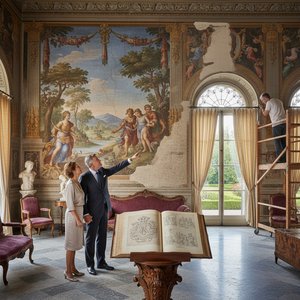
1509. Acrylic, 212.0 x 346.0 cm.

§ 1Catalogue data
 Acrylic
- WallArt
- Renaissance
 1509
1509 212.0 x 346.0 cm
§ 2Abstract
Описание на колекционерския предмет
Discover Titian’s iconic "Judith" masterpiece! A stunning 1509 fresco showcasing Venetian Renaissance beauty & dramatic emotion. Explore its rich history & vibrant colors.
 Прочети повече
Биография на художника
Титаничен художник на Ренесанса! Тициан е известен с ярките си цветове, портретите и влиянието си върху европейската живопис. Разгледайте живота и творбите му!
§ 3Commentary
A Portrait Steeped in Sorrow and Splendor: Examining Titian’s Judith
The fresco depicting Judith, commissioned by Emperor Charles V in Augsburg in 1548, represents more than just a likeness of Isabella of Portugal; it embodies the profound grief surrounding her untimely demise and simultaneously celebrates her enduring grace. This monumental artwork, executed by Titian during his peak creative period, transcends mere representation to become a masterful exploration of color, texture, and psychological nuance—elements that continue to captivate audiences centuries later. The painting’s genesis lies in the tragic death of Isabella, Charles V's beloved wife, just months after their marriage, leaving him heartbroken and prompting him to commission Titian to immortalize her memory.- Style & Technique: Titian’s signature Venetian style is evident throughout Judith—characterized by a luminous palette and an unparalleled ability to capture the subtleties of human emotion. He employed tempera paint on wet plaster, a technique favored during the Renaissance for its durability and tonal richness. The resulting matte finish lends itself beautifully to capturing the delicate nuances of Isabella's complexion and drapery folds, creating a textural tapestry that invites contemplation.
- Historical Context: The painting emerged from the intellectual fervor of the High Renaissance, reflecting humanist ideals that prioritized observation and psychological realism. Charles V’s patronage underscored the importance of artistic excellence within the Habsburg court—a testament to the enduring power of art as a vehicle for conveying profound emotion and commemorating significant figures.
- Composition & Symbolism: Judith’s central pose, draped in sumptuous fabrics against a backdrop of stylized Venetian landscape, speaks volumes about Renaissance iconography. The figure's pale face – meticulously rendered by Titian—is deliberately positioned to emphasize her vulnerability and sorrow, mirroring the emotional weight of Isabella’s passing. The careful arrangement of drapery creates diagonal lines that draw the eye inward, reinforcing the sense of intimacy and conveying a palpable feeling of melancholy.
- Color Harmony & Emotional Impact: Titian's masterful use of color is arguably Judith’s most striking achievement. Dominating hues of red, white, and gold—symbols of royalty and purity—are juxtaposed against cool blues and greens from the landscape, generating a harmonious visual dialogue that underscores the painting’s emotional core. The artist skillfully captures Isabella’s gaze, conveying an expression of quiet dignity amidst profound grief.
Въпроси и отговори
Към кой период от кариерата на Титян принадлежи „Judith“?
„Judith“ принадлежи към Mature Period от кариерата на Титян. Тази класификация свързва творбата с развитието на художника.
Какъв е емоционалният тон на „Judith“ на Титян?
"Judith" е свързано с Melancholic чувство. Емоционалният тон описва впечатлението, което произведението внушава.
Кой цвят доминира в композицията на „Judith“ на Титян?
Цветът, който се отличава най-силно в „Judith“, е Espresso (#61534a). Доминиращият цвят е полезен при съчетаването на произведение на изкуството с интериора.


 Превключване към принт


 За произведения на изкуството или репродукции, чийто размер е над 105 см (приблизително 41 инча) във всяка страна, рамката ще бъде изпратена в разглобен вид като комплект за сглобяване. Този метод гарантира безопасна доставка и предотвратява повреди по време на транспортиране.