Гаранция за връщане на сумата · 100 дни Безплатна доставка по целия свят
449587произведения на изкуството 30613художници 4660музеи 32езици
Catalogue entry

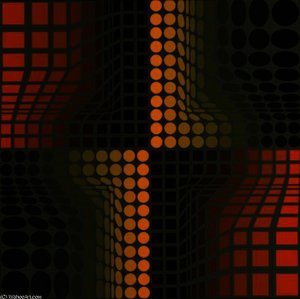
Abstract Composition 26

Acrylic On Canvas.

Fig. 1. Виктор Васарели, Abstract Composition 26. Shown as the reproduction you are specifying: , .

§ 1Catalogue data

§ 2Abstract

Описание на колекционерския предмет

Vibrant Victor Vasarely’s Abstract Composition 26 explodes with kaleidoscopic geometric patterns in red, yellow, and black, a classic Op Art piece from the 1960s. Explore this dynamic artwork and bring its captivating visual illusion into your space.

Биография на художника

Разгледайте завладяващия свят на Виктор Вазарели (1906-1997)! От геометрични абстракции до оптически илюзии и трайно влияние върху модерното изкуство и дизайна. Експериментирайте с формите и цветовете на репродукции!

§ 3Commentary

A Kaleidoscope of Perception: Exploring Victor Vasarely’s Abstract Composition 26

Victor Vasarely's "Abstract Composition 26" is more than just a colorful painting; it’s an invitation to question the very nature of visual perception. Born in Pécs, Croatia – then part of Austria-Hungary – in 1906, Vasarely embarked on a radical artistic journey, driven by a desire to translate mathematical principles into tangible forms. His early medical studies were abruptly abandoned in favor of exploring the captivating world of art, a decision that ultimately led him to become one of the foremost figures in Op Art and kinetic art, movements dedicated to manipulating visual illusions.

  • Geometric Precision: The artwork’s core lies in its meticulously constructed geometric patterns. Circles, squares, triangles, and diamonds – fundamental shapes – are arranged with an almost obsessive precision, creating a dynamic interplay of color and form.
  • Optical Illusions: Vasarely masterfully employs techniques to generate optical illusions, drawing the viewer into a mesmerizing dance of depth and movement. The arrangement isn’t static; it seems to shift and evolve as you observe it, mirroring the way our eyes naturally process visual information.
  • Chromatic Harmony: A vibrant palette – red, yellow, purple, green, blue, orange, and black – is deployed with a considered eye for color theory. The juxtaposition of these hues amplifies the artwork’s energetic impact, contributing to its captivating allure.

The Birth of Op Art and Kinetic Vision

“Abstract Composition 26” represents a crucial moment in the development of Op Art (Optical Art), a movement that emerged in the mid-20th century. Influenced by the Bauhaus school’s emphasis on functional design and geometric abstraction, Vasarely sought to create art that directly stimulated the viewer's senses. He was fascinated by the way our brains interpret visual information – how we perceive depth, movement, and spatial relationships. This fascination led him to explore techniques like moiré patterns and forced perspective, pushing the boundaries of traditional painting.

Vasarely’s work anticipated developments in kinetic art, exploring the idea that perception itself is a dynamic process. His paintings aren't simply static images; they are invitations to actively engage with the artwork, manipulating your own visual experience.

Symbolism and Emotional Resonance

While Vasarely deliberately avoided overt symbolism in his work, the geometric patterns themselves can be interpreted as representing fundamental mathematical concepts – order, harmony, and infinity. The vibrant colors evoke a sense of energy, excitement, and perhaps even a touch of disorientation, mirroring the stimulating effect of optical illusions. The overall impression is one of controlled chaos, a beautiful paradox that reflects the complexities of human perception.

A Timeless Masterpiece – Perfect for Your Space

AllPaintingsStore offers meticulously crafted hand-painted reproductions of “Abstract Composition 26,” allowing you to bring this iconic artwork into your home or office. Each reproduction is created using traditional painting techniques, ensuring exceptional detail and color accuracy. Whether you’re an art collector, interior designer, or simply someone who appreciates striking visual experiences, this piece offers a unique opportunity to own a fragment of artistic history – a testament to Victor Vasarely's groundbreaking vision.

Въпроси и отговори

Колко е известна творбата „Abstract Composition 26“ на Виктор Васарели?

Записният ниво на популярност за „Abstract Composition 26“ на Виктор Васарели е Recognized.

„Abstract Composition 26“ на Виктор Васарели портретна, пейзажна или квадратна композиция ли е?

„Abstract Composition 26“ на Виктор Васарели е Square композиция. Пропорциите си заслужават да бъдат проверени преди избор на размер на принта.

Каква е яркостта на „Abstract Composition 26“ на Виктор Васарели?

Записаната светлост за „Abstract Composition 26“ на Виктор Васарели е Bright Balance.

§ 4The artist

Виктор Васарели

Виктор Васарели

1906 - 1997, Хърватия

Quick facts about Виктор Васарели

  • Artistic Movement Or Style: Оп арт, Кинетичен арт
  • Artists Or Movements Influenced By This Artist:
    • Графичен дизайн
    • Интериорен дизайн
  • Artists Who Influenced This Artist:
    • Пиет Мондриан
    • Казимир Малевич
  • Date Of Birth: 9 април 1906 г.
  • Date Of Death: 15 март 1997 г.
  • Full Name: Victor Vasarely
  • Nationality: Художник-френски/хърватски
  • Notable Artworks:
    • Синьо изследване
    • Зелено изследване
  • Place Of Birth: Пéч, Хърватия

Биография на художника

A Life Forged in Geometry: The World of Victor Vasarely

Victor Vasarely’s journey to becoming a pioneer of Op Art and kinetic art was anything but predetermined. Born Károly Vaszary in 1906 in Pécs, a city then nestled within Austria-Hungary (now Croatia), his early life hinted at a path far removed from the canvas; he initially pursued medical studies at Eötvös Loránd University in Budapest. However, the allure of visual expression proved too strong, leading him to abandon medicine for the world of painting in 1927, enrolling at the Podolini-Volkmann Academy. This decision marked not merely a change in vocation but the beginning of a lifelong exploration into the fundamental principles governing perception and form. A pivotal moment arrived with his enrollment in Sándor Bortnyik’s workshop – Műhely – a school deeply influenced by the Bauhaus movement. Here, Vasarely absorbed the tenets of functional design and geometric abstraction, seeds that would blossom into his signature style. These formative years weren't simply about acquiring technique; they were about dismantling traditional artistic conventions and embracing a new visual language rooted in logic and precision. He sought to move beyond representational art, focusing on pure form and color relationships – a deliberate shedding of narrative content in favor of the essential elements of visual experience.

From Early Abstraction to the Dawn of Op Art

The late 1920s and early 1930s witnessed Vasarely’s gradual departure from representational art, as he delved deeper into the realm of geometric abstraction. Works like “Blue Study” and “Green Study,” created in 1929, exemplify this transition – a deliberate shedding of narrative content in favor of pure form and color relationships. He was influenced by masters such as Piet Mondrian and Kazimir Malevich, but he wasn’t content to simply emulate their styles. Vasarely sought to transcend the static compositions of his predecessors, aiming for a dynamism that would actively engage the viewer's perception. This quest led him to Paris in 1930, where he established himself as a graphic designer and advertising artist, honing his skills while continuing to develop his unique artistic vision. It was during this period that he began experimenting with techniques that would later become hallmarks of Op Art – manipulating shapes and colors to create illusions of movement and depth. The seeds were sown for a revolution in visual experience. He developed a systematic approach, using grids and mathematical principles to generate patterns designed to stimulate the viewer's perception.

The Systematic Illusion: Defining a Movement

By the 1960s, Victor Vasarely had fully emerged as a leading figure in the burgeoning Op Art movement. Unlike many artists who relied on intuition and spontaneous expression, Vasarely approached his work with a distinctly systematic methodology. He employed grids and mathematical principles to generate patterns that created powerful optical illusions – visual vibrations, swirling effects, and sensations of depth where none physically existed. This wasn’t about trickery; it was about revealing the inherent dynamism within perception itself. He believed in reproducibility and mass appeal, aiming to democratize art by making it accessible beyond the confines of galleries and museums. His work challenged viewers to question their own visual experience, forcing them to actively participate in the creation of meaning. He wasn’t merely painting pictures; he was constructing experiences.

Historical Significance & Lasting Legacy

Vasarely's contribution to art history is multifaceted. He moved beyond traditional painting techniques to create works that actively engage the viewer’s perception. His systematic approach challenged conventional notions of artistic creativity and paved the way for computer-generated art and digital design. By embracing reproducibility and commercial applications, Vasarely blurred the boundaries between fine art and popular culture, leaving an enduring mark on both. He wasn't simply creating aesthetically pleasing objects; he was conducting visual experiments that revealed fundamental truths about how we see the world. His work continues to resonate today, reminding us of the power of abstraction, the beauty of geometry, and the endless possibilities of human creativity. His influence extends beyond painting into graphic design, fashion, interior design, and even early computer graphics, inspiring generations with his innovative vision. The establishment of the Fondation Vasarely in Aix-en-Provence ensured the preservation and promotion of his extensive body of work, while a remarkable event – the inclusion of serigraphs aboard the French-Soviet spacecraft Salyut 7 in 1982 – symbolized the global recognition of his art and its connection to the broader human endeavor of exploration. Victor Vasarely’s legacy remains a testament to the power of visual experimentation and the enduring fascination with perception itself.

§ 5Comparanda

§ 6Questions

Бърза информация

  • Movement: Op Art
  • Title: Abstract Composition 26
  • Notable elements: Geometric patterns
  • Artistic style: Kinetic, Abstract

§ 7Cite this entry

AllPaintingsStore.com, “Виктор Васарели, Abstract Composition 26”, https://allpaintingsstore.com/bg/art/victor-vasarely-abstract-composition-26-8EWRPP-en/ArtistReproduction/ (accessed 4 Октомври 2026).

§ 8The reproduction

Ръчно изработена маслена репродукция

Ръчно рисувана маслена картина върху платно във вашия размер и рамка, изработена по поръчка от нашите художници. ( Превключване към принт Превключване към дигитално изображение)

It is specified on the order sheet in the margin; the present state of that sheet reads as follows.

Abstract Composition 26

Вид репродукция

Размер на репродукцията

-

Елитен старши художник

Повече детайлност, изящество и допълнително време за производство

-

Рамка за репродукция

-

-

За произведения на изкуството или репродукции, чийто размер е над 105 см (приблизително 41 инча) във всяка страна, рамката ще бъде изпратена в разглобен вид като комплект за сглобяване. Този метод гарантира безопасна доставка и предотвратява повреди по време на транспортиране.

Изисква се професионално сглобяване – това не е продукт за самостоятелна изработка (DIY).
Комплектът трябва да бъде сглобен, а платното – опънато от опитен професионален багер, като се използва дървено лепило (не е включено в комплекта), клещи за опъване на платно и затягащи скоби, за да се поддържа правотата на подрамника, докато лепилото изсъхне. Неправилното сглобяване или неравномерното опъване на платното може трайно да повреди произведението и не е покрито от нашата гаранция.

  • Всички елементи от масивна дървесина са включени, прецизно изрязани по размер.

  • Сглобява се с предоставените винтове, както и с лепило за дърво за ъгловите връзки, което не е включено в комплекта и трябва да бъде осигурено от вашия рамкар.

  • Изискват се професионални инструменти, които не са включени: щипка за опъване на платно (натягач) и скоби за фиксиране на подрамниците под прав ъгъл, докато лепилото изсъхне.

Важно:
За сглобяването на ъглите е необходимо лепило за дърво, рейките трябва да се фиксират с клещи (затягащи скоби, докато лепилото изсъхне напълно, а за опъването на платното върху готовата рамка е необходим инструмент за опъване на платно. Нито един от тези артикули не е включен в комплекта. Моля, осигурете услугите на опитен професионалист по багетно окантоване, преди да поръчате този размер.

Етикет с име

-

-

Защитен лак

Гланцов лак (подсилва цветовете и предпазва от светлина и влага)

-

Персонализирай моето произведение

Примери за възможности за персонализация: Заменете лицето със снимка на клиента; Добавете домашен любимец (например, заменете котка с куче); Включете скрито съобщение във фона; Променете пейзажа или елементите на фона.

-

Спешно

Доставка по целия свят () в рамките на 3-4 седмици вместо стандартните 5 седмици. (1 Ноември). Без компромис с качеството.

-

Експресна доставка

Доставка по целия свят () в рамките на 5 седмици. (8 Ноември).

Включена

Обща цена

€ 229

Included with every order

  • Безплатна експресна доставка по целия свят
  • Висококачествено ленено платно
  • Пълно застраховане на доставката
  • Гаранция за възстановяване на митнически такси
  • Гаранция за пълно съответствие на цветовете
  • Политика за връщане в рамките на 100 дни (само при дефекти)
  • 100% Гаранция за връщане на сумата
  • Оферта за отстъпка при поръчка на повече бройки
Order sheet