Гаранция за връщане на сумата · 100 дни Безплатна доставка по целия свят
449564произведения на изкуството 30613художници 4660музеи 32езици
Експонатно описание

Complex-Simple

Oil.

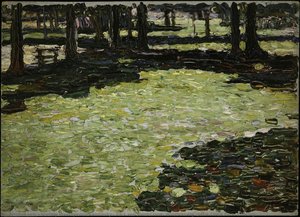
Фиг. 1. Wassily Wassilyevich Kandinsky, Complex-Simple. Показано като репродукцията, която посочвате: , .

§ 1Каталожни данни

§ 2Абстракция

Описание на колекционерския предмет

Explore Wassily Kandinsky's 'Complex-Simple,' a pivotal Neo-Minimalist masterpiece from 1939. Discover vibrant colors, geometric forms & its influence on modern art with hand-painted reproductions.

Биография на художника

Въвлюдете се в света на Василий Кандински – революционер на абстрактното изкуство! Открийте ярки емоции, духовни теми и влиянието му върху Баухаус чрез впечатляващи репродукции.

§ 3Коментар

Introduction to Neo-Minimalism and Wassily Kandinsky

Neo-Minimalism is a contemporary art movement that emerged as an evolution of minimalism, incorporating new technologies and ethical values. Wassily Kandinsky, a pioneer of abstract art, significantly contributed to the development of Neo-Minimalism. His work, including Complex-Simple, paved the way for future generations of artists to explore the emotional power of abstract art.

Complex-Simple: An Abstract Masterpiece

Complex-Simple, painted by Kandinsky in 1939, is a prime example of Neo-Minimalism. The painting features geometric forms, bold colors, and a unique composition that invites viewers to explore their emotional responses. As seen on AllPaintingsStore.com, this masterpiece is a testament to Kandinsky's innovative style.

Kandinsky's Influence on Neo-Minimalism

Kandinsky's influence on Neo-Minimalism is evident in his use of geometric forms and bold colors. His work has inspired countless artists to create their own Neo-Minimalist masterpieces. The Centre Pompidou museum has an extensive collection of Kandinsky's works, including Complex-Simple, which showcases his contribution to the development of abstract art.
  • Visit AllPaintingsStore.com to explore hand-made oil painting reproductions of Kandinsky's works, including Complex-Simple.
  • Learn more about Neo-Minimalism and its key artists on Wikipedia.
  • Discover the Musée de Grenoble's collection of modern art, featuring works by Kandinsky and other prominent artists.
Key aspects of Neo-Minimalism include the use of geometric forms, bold colors, and a focus on emotional expression. Kandinsky's work embodies these principles, making him a leading figure in the development of this art movement.
The legacy of Kandinsky continues to inspire artists and art enthusiasts alike, with his innovative style and contribution to Neo-Minimalism remaining unparalleled.

Въпроси и отговори

Каква емоция предава „Complex-Simple“ на Wassily Wassilyevich Kandinsky?

„Complex-Simple“ на Wassily Wassilyevich Kandinsky предава Reflective емоционален тон.

С каква техника е изпълнено „Complex-Simple“ на Wassily Wassilyevich Kandinsky?

"Complex-Simple" е изпълнено в Oil.

За коя стая се препоръчва „Complex-Simple“ на Wassily Wassilyevich Kandinsky?

Репродукция на „Complex-Simple“ се вписва отлично в Living Room.

§ 4Художникът

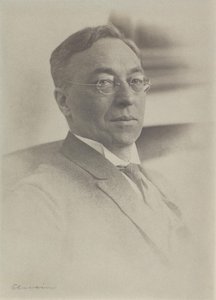
Wassily Wassilyevich Kandinsky

Wassily Wassilyevich Kandinsky

1866 - 1944, Русия

Бързи факти за Wassily Wassilyevich Kandinsky

  • Artistic Movement Or Style: Абстрактно изкуство, Експресионизъм
  • Artists Or Movements Influenced By This Artist: ['Абстрактен експресионизъм']
  • Artists Who Influenced This Artist:
    • Клод Моне
    • Ричард Вагнер
  • Date Of Birth: 1866
  • Date Of Death: 1944
  • Full Name: Wassily Wassilyevich Kandinsky
  • Nationality: Руски, Френски
  • Notable Artworks:
    • Мурнау с Радуженным
    • Линия къбрада
    • Всички светии II
  • Place Of Birth: Москва, Русия

Биография на художника

A Life Immersed in Color and Spirit

Wassily Wassilyevich Kandinsky, born in Moscow in 1866, was a revolutionary figure who irrevocably altered the course of modern art. His journey wasn’t one of immediate artistic calling; initially destined for a career in law and economics at the University of Moscow, it was a profound encounter with Impressionist painting – specifically Claude Monet's “Haystacks” – and a deeply moving experience witnessing Wagner’s opera "Lohengrin" that ignited within him an irrepressible desire to pursue art. This pivotal moment, occurring around age thirty, marked not merely a career change but a complete transformation of perspective, setting him on a path toward pioneering abstraction. He soon relocated to Munich, enrolling at the prestigious Academy of Fine Arts and studying under Franz von Stuck, though even within formal training, Kandinsky’s spirit yearned for exploration beyond conventional boundaries. Early influences included Russian folk art, gleaned from an ethnographic expedition to the Vologda region in 1889, which instilled a fascination with vibrant color palettes and symbolic imagery. This foundation would prove crucial as he began to develop his unique artistic language. These early explorations weren’t simply about aesthetic preference; they were rooted in a deep cultural connection and a burgeoning understanding of how art could communicate beyond the literal. He was particularly drawn to the rich symbolism embedded within Russian icons, which informed his initial approach to color and composition.

The Dawn of Abstraction: From Expressionism to Inner Necessity

Kandinsky’s early works reveal a strong expressionistic bent, characterized by bold colors and emotional intensity – pieces like “Papeln (Poplars)” from 1902 exemplify this period. These paintings were imbued with intense feeling, often depicting landscapes and figures in a highly subjective manner. However, he wasn't content with merely representing the external world; he sought to express inner realities, spiritual truths that transcended mere visual depiction. This quest led him gradually away from representational art and toward a revolutionary exploration of color, form, and their emotional resonance. He believed that colors possessed inherent psychological effects, capable of evoking specific feelings and sensations in the viewer. This conviction was deeply intertwined with his burgeoning interest in Theosophy, a spiritual movement emphasizing esoteric knowledge and universal brotherhood. As he delved deeper into these ideas, Kandinsky’s paintings became increasingly non-objective, shedding recognizable forms in favor of abstract compositions driven by an “inner necessity.” This wasn't simply about abandoning representation; it was about discovering a new visual language capable of expressing the intangible realms of emotion and spirituality. He sought to create a visual equivalent of music, where color and form harmonized to evoke profound emotional responses.
  • Key Influences:** Russian folk art, Impressionism (Monet), Wagnerian opera
  • Early Style:** Expressionistic landscapes and figures with bold colors

Geometric Harmony and Spiritual Resonance

The period following his involvement with the influential artist group Der Blaue Reiter (The Blue Rider), which he co-founded in Munich in 1911, saw a further evolution in Kandinsky’s style. While earlier works often featured fluid, organic shapes, he began to explore geometric abstraction, focusing on the interplay of circles, triangles, and squares. “Several Circles” (140 x 140 cm) stands as a prime example of this phase – a dynamic composition where color and form interact in a harmonious yet energetic dance. He believed that these basic forms held inherent spiritual significance, representing fundamental elements of existence. Kandinsky’s theoretical writings, most notably “Concerning the Spiritual in Art” (1911), articulated these beliefs, laying the groundwork for a new understanding of abstract art as a vehicle for expressing profound spiritual truths. He argued that art should not aim to imitate nature but rather to reveal the artist’s inner world and connect with the viewer on a deeper, more intuitive level.
  • Key Work:** “Several Circles” (1913)
  • Theoretical Contribution:** "Concerning the Spiritual in Art" – outlining his philosophy of abstract art

Bauhaus Influence and Lasting Legacy

The outbreak of World War I forced Kandinsky’s return to Russia in 1914, but following the Russian Revolution, he found himself increasingly at odds with the prevailing artistic climate. In 1920, he accepted a teaching position at the Bauhaus school in Germany, where he profoundly influenced generations of artists with his theories on color, form, and abstraction. The Bauhaus provided an ideal environment for Kandinsky to further develop his ideas and explore new creative avenues. He continued to experiment with geometric forms and vibrant colors, often incorporating layered impasto techniques to create textured surfaces that added depth and complexity to his compositions – as seen in later works like “An Intimate Party” (1942). After the closure of the Bauhaus by the Nazi regime in 1933, Kandinsky moved to France, where he remained for the rest of his life. His impact on modern art is immeasurable; he is widely recognized as a pioneer of abstract expressionism and a key figure in the development of non-representational painting. His works are held in major museums worldwide, including the Tretyakov Gallery in Moscow, which houses his monumental “Composition VII,” a testament to his artistic vision and enduring legacy.
  • Key Period:** 1920s – Bauhaus influence
  • Later Style:** Geometric abstraction with layered impasto techniques
Kandinsky’s exploration of color, form, and spirituality continues to inspire artists today, solidifying his place as one of the most important figures in 20th-century art history. He didn't just paint pictures; he painted emotions, ideas, and the very essence of the human spirit.

§ 5Подобни произведения

§ 6Въпроси

Бърза информация

  • Medium: Oil on canvas
  • Title: Complex-Simple
  • Artist: Wassily Kandinsky
  • Location: Centre Pompidou, Paris
  • Year: 1939
  • Artistic style: Abstract Art

Тест за познания по изкуство

За всеки въпрос има само един верен отговор.

Въпрос 1:
What art movement is ‘Complex-Simple’ primarily associated with?
Въпрос 2:
Which of the following best describes the dominant colors used in ‘Complex-Simple’?
Въпрос 3:
According to the text, what is a key influence of Kandinsky’s work on Neo-Minimalism?
Въпрос 4:
Where can one find a significant collection of Kandinsky’s works, including ‘Complex-Simple’?
Въпрос 5:
What does the text suggest Kandinsky’s early work, such as ‘Haystacks,’ influenced?

§ 7Цитирайте този запис

AllPaintingsStore.com, “Wassily Wassilyevich Kandinsky, Complex-Simple”, https://allpaintingsstore.com/bg/art/wassily-wassilyevich-kandinsky-complex-simple-5ZKCVL-en/ (достъпен на 6 Октомври 2026).

§ 8Репродукцията

Ръчно изработена маслена репродукция

Ръчно рисувана маслена картина върху платно във вашия размер и рамка, изработена по поръчка от нашите художници. ( Превключване към принт Превключване към дигитално изображение)

Това е посочено в полето на края на формуляра за поръчка; настоящото състояние на този формуляр е следното.

Complex-Simple

Вид репродукция

Размер на репродукцията

-

Елитен старши художник

Повече детайлност, изящество и допълнително време за производство

-

Рамка за репродукция

-

-

За произведения на изкуството или репродукции, чийто размер е над 105 см (приблизително 41 инча) във всяка страна, рамката ще бъде изпратена в разглобен вид като комплект за сглобяване. Този метод гарантира безопасна доставка и предотвратява повреди по време на транспортиране.

Изисква се професионално сглобяване – това не е продукт за самостоятелна изработка (DIY).
Комплектът трябва да бъде сглобен, а платното – опънато от опитен професионален багер, като се използва дървено лепило (не е включено в комплекта), клещи за опъване на платно и затягащи скоби, за да се поддържа правотата на подрамника, докато лепилото изсъхне. Неправилното сглобяване или неравномерното опъване на платното може трайно да повреди произведението и не е покрито от нашата гаранция.

  • Всички елементи от масивна дървесина са включени, прецизно изрязани по размер.

  • Сглобява се с предоставените винтове, както и с лепило за дърво за ъгловите връзки, което не е включено в комплекта и трябва да бъде осигурено от вашия рамкар.

  • Изискват се професионални инструменти, които не са включени: щипка за опъване на платно (натягач) и скоби за фиксиране на подрамниците под прав ъгъл, докато лепилото изсъхне.

Важно:
За сглобяването на ъглите е необходимо лепило за дърво, рейките трябва да се фиксират с клещи (затягащи скоби, докато лепилото изсъхне напълно, а за опъването на платното върху готовата рамка е необходим инструмент за опъване на платно. Нито един от тези артикули не е включен в комплекта. Моля, осигурете услугите на опитен професионалист по багетно окантоване, преди да поръчате този размер.

Етикет с име

-

-

Защитен лак

Гланцов лак (подсилва цветовете и предпазва от светлина и влага)

-

Персонализирай моето произведение

Примери за възможности за персонализация: Заменете лицето със снимка на клиента; Добавете домашен любимец (например, заменете котка с куче); Включете скрито съобщение във фона; Променете пейзажа или елементите на фона.

-

Спешно

Доставка по целия свят () в рамките на 3-4 седмици вместо стандартните 5 седмици. (3 Ноември). Без компромис с качеството.

-

Експресна доставка

Доставка по целия свят () в рамките на 5 седмици. (10 Ноември).

Включена

Обща цена

€ 230

Включено във всяка поръчка

  • Безплатна експресна доставка по целия свят
  • Висококачествено ленено платно
  • Пълно застраховане на доставката
  • Гаранция за възстановяване на митнически такси
  • Гаранция за пълно съответствие на цветовете
  • Политика за връщане в рамките на 100 дни (само при дефекти)
  • 100% Гаранция за връщане на сумата
  • Оферта за отстъпка при поръчка на повече бройки
Форма за поръчка