


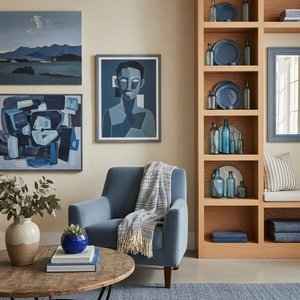
 Náhled v interiéru
 Sdílet
 Sdílet
 Podrobnosti o díle
 Průvodce

 Stáhnout
 Podobné položky
 Rentgenové snímky
 Slideshow
 Statistiky
Untitled


 Zobrazit více
Umělecké dílo zobrazené na této stránce je chráněno autorským zákonem, což znamená, že nemůžeme legálně vytvářet ani prodávat jeho identickou reprodukci. Tato ochrana je vymáhána na základě mezinárodních dohod, jako například Berberská úmluva a národními zákony, včetně těch stanovených v Americký autorský zákon – Díl 17. Všechna práva vyhrazena.
Tato metoda je plně v souladu s autorským právem, protože nezahrnuje kopírování ani duplikování chráněného díla. Jde o kreativní reinterpretaci – nový obraz, který je inspirován originálem, ale není s ním identický.
Giclée / Umělecký tisk
Giclée nebo plátěný tisk muzeální kvality s rychlou výrobou a širokou nabídkou povrchových úprav. ( Koupit ručně malovaný obraz Přepnout na digitální obraz)




P118B Kč10

P118H Kč10

P118W Kč10

P438Z Kč10

P508JH Kč12

P508YH Kč12

P805H Kč10

P805Z Kč10

P919BZ Kč10

P919G Kč10

P919XJ Kč10

P959ZH Kč10

P968JZ Kč12

W106C Kč8

W218G Kč10

W218JH Kč8

W218Y Kč10

W307PJ Kč10

W316G Kč10

W316PJ Kč8

W316Y Kč10

W398PJ Kč8

W4111J Kč10

W500HY Kč15

W500JH Kč15

W692G Kč12

W849H Kč8

W940BG Kč15

W953PJ Kč8




Vyberte si z našich přednastavených velikostí, které odpovídají původním proporcím díla.

Zadejte šířku a výšku, které potřebujete pro váš rám nebo stěnu. Tisk lze pouze oříznout, nikdy však nelze zvětšit obraz nad jeho původní rozměr, proto při výběru jiného formátu dochází ke ztrátě části obrazu. Před samotným tiskem vám zašleme digitální náhled k schválení. Obraz zobrazený na této stránce nenabízí skutečný výřez — ten uvidíte pouze v náhledu.
Celosvětové doručení () do 2 týdnů namísto standardních 4/5 týdnů. (26 říjen)

Zdarma celosvětová expresní doprava

Vysoce kvalitní lněné plátno

Kompletní pojištění přepravy

Záruka vrácení celního poplatku

Záruka věrného barevného souladu

100dení lhůta pro vrácení zboží (pouze při vadách výroby)

100% záruka vrácení peněz

Sleva při více objednávkách
 Skleněná varianta je dostupná pouze u rozměrů menších než 110 cm

Untitled
Giclée / Umělecký tisk
Rozměry reprodukce
-


Celková cena za vybrané možnosti reprodukcí
Kč 1370
The Silent Power of Geometry: Reimagining Ad Reinhardt’s Vision
In the quiet realm of minimalist mastery, few works command the room with such profound, understated authority as Ad Reinhardt’s "Untitled." At first glance, one might perceive only a dark, enigmatic field of blue, yet to linger before this canvas is to enter a meditative dialogue with the very essence of painting. This piece, a cornerstone of mid-century abstraction, transcends the mere application of pigment; it serves as a radical manifesto against the noise of the modern world. For the discerning collector or interior designer, this reproduction offers more than just a visual accent—it provides a focal point of intellectual depth and serene stability, inviting a sense of contemplative stillness into any sophisticated space.
The brilliance of Reinhardt’s technique lies in what he chose to omit. Eschewing the dramatic brushwork and emotional turbulence common in much of Abstract Expressionism, Reinhardt embraced a disciplined, almost architectural approach to form. Through the meticulous layering of paint, he achieved a tonal complexity that defies its monochromatic appearance. The dark blue field is not a flat void but a breathing landscape of subtle gradations, where light seems to emerge from within the depths of the canvas itself. This technique creates a captivating illusion of depth, as if the geometric squares arranged in a precise grid are floating within an infinite, nocturnal sky. Such structural precision makes this artwork an ideal choice for contemporary interiors that value clean lines, balance, and a sense of architectural harmony.
A Legacy of Pure Expression
To understand the emotional resonance of this work, one must look to its historical soul. Created during an era of immense global transition, Reinhardt’s "Untitled" was a deliberate rebellion against representation and narrative. He sought to strip away all extraneous associations—no figures, no landscapes, no stories—leaving only the pure relationship between color, shape, and light. This pursuit of art as art creates a timeless quality; because the work does not rely on recognizable symbols, its impact remains fresh and relevant across generations. It is an exploration of the irreducible, a confrontation with the sublime that demands the viewer’s full presence.
For those seeking to curate an environment of prestige and thought, this reproduction captures the meticulous craftsmanship of the original. The subtle textures of the canvas and the delicate interplay of shadows within the dark palette evoke the tactile luxury of a museum-grade masterpiece. Whether placed in a minimalist gallery-style living room or as a sophisticated anchor in a professional study, this piece acts as a window into the profound. It is an invitation to look past the surface, to find beauty in the shadows, and to appreciate the monumental power found in the simplest of forms.
Otázky a odpovědi
Využívá „Untitled“ od Ad Reinhardt výrazné kontrasty, nebo jemné harmonie?
Barevná kompozice díla „Untitled“ od Ad Reinhardt spojuje Serene kontrast s Unified Palette harmonií.
Jak harmonické jsou barvy díla „Untitled“ od Ad Reinhardt?
Barevná harmonie díla "Untitled" je hodnocena jako Unified Palette.
Jak sytá je paleta díla "Untitled"?
Barvy díla „Untitled“ od Ad Reinhardt mají Muted saturaci. Saturace určuje, jak jsou barvy živé nebo tlumené.
Podobná díla


Biografie umělce
A Life Dedicated to the Essence of Art
Ad Reinhardt, born Adolph Friedrich Reinhardt in Buffalo, New York, on December 24, 1913, was a figure who dedicated his life not merely to creating art, but to defining what art *could* be. His early years were marked by a familial mobility—his father’s work led the family to New York City—and a close bond with his cousin Otto. Even as a child, Reinhardt displayed an exceptional talent for drawing and painting, winning accolades in school that hinted at the rigorous artistic journey ahead. He wasn't simply interested in *making* images; he was driven by a need to understand the very foundations of visual expression. This intellectual curiosity led him to Columbia University where he studied art history under the influential Meyer Schapiro, an experience that profoundly shaped his thinking about aesthetics and the role of the artist. Further training at Columbia’s Teachers College, the American Artists School with Carl Holty and Francis Criss, and portraiture studies at the National Academy of Design under Karl Anderson solidified his technical skills—skills he would later deliberately attempt to transcend. Reinhardt believed he had mastered traditional techniques early on, freeing him to pursue a more conceptual path.From Geometric Beginnings to the “Ultimate” Black
Reinhardt’s artistic evolution was far from linear. He began with works rooted in geometric abstraction, exploring form and color with a precision that demonstrated his technical mastery. However, this early work served as a stepping stone toward something more radical. His involvement with the WPA Federal Art Project during the 1930s provided him with crucial support and exposure, allowing him to hone his craft while contributing to public art initiatives. The 1940s saw Reinhardt become an active member of American Abstract Artists (AAA), a group he considered pivotal to his development. He found kinship with fellow artists who shared a commitment to non-representational art, exhibiting regularly alongside them and engaging in lively debates about the future of painting. His association with Betty Parsons Gallery further cemented his place within the burgeoning New York art scene. Throughout the 1950s, Reinhardt embarked on a series of paintings exploring subtle variations within single hues—all red, all blue, all white—a deliberate reduction that foreshadowed his most iconic works. It was in the 1960s, however, that he achieved what many consider his defining achievement: the “black” paintings. These weren’t simply black canvases; they were meticulously crafted explorations of near-black shades, subtle gradations and textures designed to challenge perception and push the boundaries of painting itself. He referred to them as his "ultimate" paintings, suggesting a culmination of artistic endeavor—a point beyond which further progress was impossible.Art-as-Art: A Philosophy of Pure Aestheticism
Central to understanding Reinhardt’s work is his philosophy of *Art-as-Art*. He vehemently believed in the autonomy of art, rejecting any notion that it should serve political, social, or narrative purposes. For Reinhardt, the value of a painting lay solely in its aesthetic qualities—its form, color, composition, and the way it engaged with the viewer on a purely visual level. This conviction led him to critique what he saw as problematic tendencies within the art world, particularly artists who prioritized messaging over aesthetics. He expressed these critiques through satirical cartoons and writings, often challenging prevailing artistic norms with wit and intellectual rigor. His friendships with Robert Lax and Thomas Merton, both of whom explored themes of simplicity in their respective fields, further informed his aesthetic principles. Reinhardt’s work resonated with a growing interest in minimalism and conceptual art, influencing artists who sought to strip away extraneous elements and focus on the essential qualities of their medium. He wasn't merely creating paintings; he was articulating a theoretical position about the nature of art itself.The “Black Paintings” and Their Significance
Reinhardt’s “black” paintings represent more than just a shift in color palette; they embody a profound philosophical statement. These works, created between 1954 and 1967, were not intended to depict anything recognizable. Instead, Reinhardt sought to create paintings that were utterly self-contained—independent of any external reference or interpretation. He famously stated that his black paintings were “the ultimate,” suggesting they represented the purest form of abstract expression, devoid of all traces of emotion, narrative, or symbolism. The subtle variations in tone and texture within these canvases – achieved through painstaking layering and manipulation of paint – invited viewers to engage with the work on a purely sensory level, focusing on the experience of seeing rather than attempting to decipher meaning. They became a challenge to conventional notions of representation, demonstrating that art could exist solely as an object of aesthetic contemplation.A Lasting Legacy: Minimalism, Conceptualism, and Beyond
Ad Reinhardt’s influence extends far beyond his own body of work. His “black” paintings are now recognized as seminal contributions to minimalist and monochrome painting, challenging conventional notions of representation and pushing the boundaries of visual perception. His writings on *Art-as-Art* continue to be studied by artists and critics alike, sparking debate about the role of art in society and the relationship between form and content. Though he was a key figure within Abstract Expressionism through his association with AAA and Betty Parsons Gallery, Reinhardt ultimately transcended categorization, paving the way for subsequent generations of conceptual and minimalist artists. He taught at numerous institutions—Brooklyn College, California School of Fine Arts, University of Wyoming, Yale University, and Hunter College—imparting his rigorous intellectual approach to aspiring artists. Even his involvement in protests – against MoMA in the 1940s, with “The Irascibles” against the Metropolitan Museum of Art in the 1950s, and through a lithograph for Artists and Writers Protest Against the Vietnam War in 1967—demonstrated a commitment to artistic freedom and social responsibility. Ad Reinhardt died on August 30, 1967, in New York City, leaving behind a legacy that continues to inspire and provoke. His work remains a powerful testament to the enduring power of abstract art and the importance of questioning fundamental assumptions about the nature of creativity itself. The Ad Reinhardt Estate is currently represented by David Zwirner Gallery, ensuring his continued presence within the contemporary art world.
Ad Reinhardt
1913 - 1967 , Spojené státy americké
Rychlé informace o umělci
- Artistic Movement Or Style: Abstr. expresionismus, Minimalismus
- Artists Or Movements Influenced By This Artist: ['Konceptuální umění']
- Artists Who Influenced This Artist:
- Meyer Schapiro
- Robert Lax
- Date Of Birth: 24. prosinec 1913
- Date Of Death: 30. август 1967
- Full Name: Adolph Friedrich Reinhardt
- Nationality: Američan
- Notable Artworks:
- Untitled
- Černá malba
- Place Of Birth: Buffalo, USA
Související články

Top 10 mistrovských děl abstraktního expresionismu | Umění a dekorace s AllPaintingsStore.com
Prozkoumejte 10 ikonických děl abstraktního expresionismu od Pollocka, Rothka a dalších. Objevte příběhy za obrazy, techniky a barevné palety tohoto revolučního uměleckého hnutí. Reprodukce obrazů s AllPaintingsStore.com – luxusní dekorace pro váš interiér. Prozkoumejte celou kolekci online!

Geometrická abstrakce: 10 mistrovských děl, které změnily umění | AllPaintingsStore.cz
Prozkoumejte 10 ikonických děl geometrické abstrakce od Mondriana, Maleviče a Kandinského. Objevte příběhy umělců, techniky a historii tohoto revolučního hnutí. Najděte inspiraci pro moderní dekorace a luxusní reprodukce obrazů na AllPaintingsStore.com.

Wassily Kandinsky: Top 25 mistrovských děl abstrakce pro váš interiér | AllPaintingsStore.com
Prozkoumejte 25 ikonických děl Wassily Kandinského – průkopníka abstraktního umění a expresionismu. Objevte příběhy za barevnými kompozicemi, Bauhaus styl a inspirujte se pro váš interiér s reprodukcemi nejvyšší kvality na AllPaintingsStore.com.
Deset ikonických obrazů v odstínech šedé modré: Umění a inspirace pro váš domov
Objevte deset ikonických obrazů v odstínech šedé modré od Van Gogha, Moneta a dalších mistrů. Ponořte se do příběhů umění, technik a inspirace pro váš interiér. Reprodukce obrazů nejvyšší kvality na AllPaintingsStore.com.

Serene Blue Backgrounds: Discover Soulful Art to Transform Your Space with Timeless Elegance
Transform your home with soulful blue art. From serene Monet impressions to modern textured sculptures, discover curated masterpieces designed to inspire calm. Explore expert art consultations and bespoke hand-painted reproductions to create your personal sanctuary.

