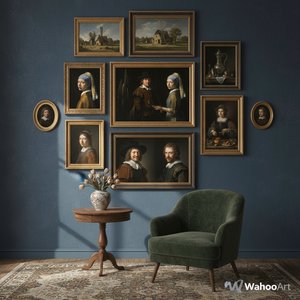
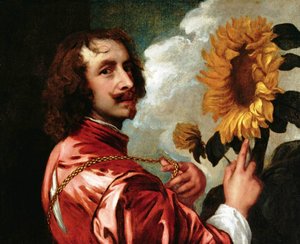
1620. Akryl na plátně, 120.0 x 88.0 cm. Metropolitní muzeum umění.

§ 1Catalogue data
 Akryl na plátně
- Obrazová tvorba na stěnu
- Baroque
 1620
1620 120.0 x 88.0 cm
 Metropolitní muzeum umění
§ 2Abstract
Popis sbírného předmětu
Elegant autorretrát od Anthony Van Dycka z roku 1620 zobrazující mladého umělce v černém róbě s rukama položenými na hipu. Významné dílo Barrokových dob, nyní dostupný na AllPaintingsStore.
 Zobrazit více
Biografie umělce
Sir Anthony van Dyck (1599-1641): Velmistr flemishského baroka, známý elegantními portréty evropské šlechty a králova dvora Karla I. Vlivný v anglickém umění, proslulným obrazům a inovativním stylem.
§ 3Commentary
Anthony van Dyck: Elegance Embodied – A Portrait of Renaissance Refinement
Sir Anthony van Dyck (1599–1641) stands as one of the undisputed masters of Baroque portraiture, a figure whose canvases continue to captivate audiences centuries later. Born in Antwerp during a period of fervent artistic innovation—the Flemish Golden Age—Van Dyck swiftly ascended to prominence thanks to his prodigious talent and shrewd connections within European courts. His life was marked by relentless travel and commissions that propelled him from the bustling workshops of Flanders to the opulent palaces of Rome and, ultimately, to the influential court of Charles I in England, where he cemented his legacy as a painter of unparalleled grace and sophistication.- Subject Matter: Van Dyck’s self-portrait exemplifies the genre's preoccupation with portraying an idealized image of the artist – not merely as a craftsman but as a man of intellect and virtue. The depiction is remarkably detailed, capturing every nuance of expression and gesture, reflecting the humanist ideals prevalent during his time.
- Style: Characteristic of Rubens’ influence, Van Dyck's style prioritizes dynamism and luminosity. He employs subtle chiaroscuro—the dramatic interplay between light and shadow—to sculpt the figure’s form and imbue it with a palpable sense of presence. The pose itself is deliberately theatrical, conveying confidence and composure.
- Technique: Executed in oil on canvas, Van Dyck utilized layering techniques to achieve remarkable tonal richness and textural depth. His meticulous brushwork contributes to the painting’s velvety surface finish, enhancing its visual impact and preserving it for posterity.
Emotional Impact
Ultimately, Van Dyck’s self-portrait transcends mere representation; it communicates a profound sense of inner contemplation and artistic conviction. The artist’s gaze downward—a gesture laden with psychological complexity—suggests introspection and awareness of his own identity. This subtle nuance elevates the portrait beyond a simple likeness, transforming it into an enduring symbol of Renaissance artistry and humanist ideals – a masterpiece that continues to inspire admiration for its beauty and intellectual depth.Otázky a odpovědi
Jaké umístění se hodí k formátu díla „Autorretrát“ od Antonin van Dyck?
Dílo v Portrétní orientace formátu, reprodukce díla „Autorretrát“, se doporučuje do Obývací pokoj.
V jaké technice a jaké velikosti je originál díla „Autorretrát“ od Antonin van Dyck?
Dílo „Autorretrát“ je vytvořeno v technice Akryl na plátně a v původní podobě má rozměry 120 x 88 cm.
Jaká technika byla u díla "Autorretrát" použita a v jakém roce vzniklo?
Dílo "Autorretrát" vzniklo v roce 1620 za použití techniky Akryl na plátně.


 Přepnout na tisk


 U děl nebo reprodukcí, u nichž je jakákoliv strana větší než 105 cm (přibližně 41 palců), bude rám dodán jako sestava v rozloženém stavu. Tato metoda zajišťuje bezpečné doručení a chrání dílo před poškozením během přepravy.