


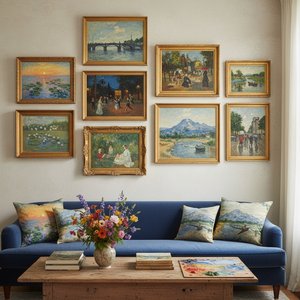
 Náhled v interiéru
 Sdílet
 Sdílet
 Podrobnosti o díle
 Průvodce

 Stáhnout
 Podobné položky
 Rentgenové snímky
 Slideshow
 Q&A
Q&A Statistiky
Daisies


 Zobrazit více
Giclée / Umělecký tisk
Giclée nebo plátěný tisk muzeální kvality s rychlou výrobou a širokou nabídkou povrchových úprav. ( Koupit ručně malovaný obraz Přepnout na digitální obraz)




P118B Kč10

P118H Kč10

P118W Kč10

P438Z Kč10

P508JH Kč12

P508YH Kč12

P805H Kč10

P805Z Kč10

P919BZ Kč10

P919G Kč10

P919XJ Kč10

P959ZH Kč10

P968JZ Kč12

W106C Kč8

W218G Kč10

W218JH Kč8

W218Y Kč10

W307PJ Kč10

W316G Kč10

W316PJ Kč8

W316Y Kč10

W398PJ Kč8

W4111J Kč10

W500HY Kč15

W500JH Kč15

W692G Kč12

W849H Kč8

W940BG Kč15

W953PJ Kč8




Vyberte si z našich přednastavených velikostí, které odpovídají původním proporcím díla.

Zadejte šířku a výšku, které potřebujete pro váš rám nebo stěnu. Tisk lze pouze oříznout, nikdy však nelze zvětšit obraz nad jeho původní rozměr, proto při výběru jiného formátu dochází ke ztrátě části obrazu. Před samotným tiskem vám zašleme digitální náhled k schválení. Obraz zobrazený na této stránce nenabízí skutečný výřez — ten uvidíte pouze v náhledu.
Celosvětové doručení () do 2 týdnů namísto standardních 4/5 týdnů. (30 říjen)

Zdarma celosvětová expresní doprava

Vysoce kvalitní lněné plátno

Kompletní pojištění přepravy

Záruka vrácení celního poplatku

Záruka věrného barevného souladu

100dení lhůta pro vrácení zboží (pouze při vadách výroby)

100% záruka vrácení peněz

Sleva při více objednávkách
 Skleněná varianta je dostupná pouze u rozměrů menších než 110 cm

Daisies
Giclée / Umělecký tisk
Rozměry reprodukce
-


Celková cena za vybrané možnosti reprodukcí
Kč 1390
A Moment of Serenity: Berthe Morisot's "Daisies"
Berthe Morisot’s “Daisies,” painted in 1885, is more than just a still life; it’s a delicate distillation of Impressionist philosophy – a fleeting capture of light and atmosphere that speaks to the quiet beauty of everyday moments. This oil on canvas work, brimming with pastel hues and executed with Morisot's signature loose brushstrokes, invites viewers into a world of serene contemplation, offering a glimpse into the artist’s profound understanding of color and form.
Impressionism at its Finest: Style and Technique
- Style: “Daisies” exemplifies the core tenets of Impressionism. Morisot eschews traditional academic realism in favor of capturing the *impression* of a scene – the way light dances on petals, the subtle variations in color, and the overall feeling of tranquility.
- Technique: The painting’s beauty lies largely in its technique. Morisot employs short, broken brushstrokes, layering colors to create an effect of shimmering light. This method, characteristic of Impressionism, avoids sharp outlines, allowing the eye to blend the forms and experience the scene with a sense of immediacy. Notice how she uses color not to represent reality exactly, but to evoke a feeling – a soft, hazy warmth that permeates the entire composition.
Historical Context: A Pioneer's Vision
Created during a pivotal moment in art history, “Daisies” reflects Berthe Morisot’s groundbreaking role within the Impressionist movement. As one of the few female artists actively participating in this revolutionary style, Morisot faced considerable societal challenges. Her work, often dismissed by critics, nevertheless demonstrated an exceptional sensitivity to light and color, solidifying her place as a key figure in art history. The painting's subject matter – a simple bouquet of daisies – was deliberately chosen to represent the domestic sphere, a common theme for female artists of the time, allowing Morisot to explore themes of femininity and beauty within the context of modern life.
Symbolism and Emotional Impact
The arrangement of the daisies themselves holds subtle symbolic weight. Daisies are traditionally associated with innocence, purity, and new beginnings – qualities that resonate deeply within the painting’s overall mood. The soft, muted background further enhances this sense of serenity, creating a space where the viewer can momentarily escape the pressures of daily life. Morisot's masterful use of light and shadow doesn't just define the forms; it evokes an emotional response—a feeling of peace, quiet contemplation, and appreciation for the simple beauty of nature.
Provenance and Acquisition
Currently residing in the Museum of Fine Arts in Boston, “Daisies” represents a significant addition to its collection of Impressionist masterpieces. Its creation in 1885 marks a crucial period in Morisot’s career, showcasing her evolving artistic style and cementing her legacy as one of the most important female artists of the late 19th century.
Otázky a odpovědi
Jak lze využít dílo „Daisies“ od Berthe Morisotová při dekorování interiéru?
Dílo „Daisies“ od Berthe Morisotová se doporučuje pro Accent, ideálně do Living Room. Způsob využití a prostor společně určují, kam se reprodukce hodí.
Kdy a z jakých materiálů bylo dílo "Daisies" vytvořeno?
Dílo "Daisies" vzniklo v roce 1885 za použití techniky Oil On Canvas.
Kde by měla být zavěšena reprodukce díla „Daisies“ od Berthe Morisotová?
Dílo v Landscape formátu, reprodukce díla „Daisies“, se doporučuje do Living Room.
Podobná díla


Biografie umělce
A Life Immersed in Light and Intimacy
Berthe Morisot, born in Bourges, France, in 1841, emerged as a pivotal figure within the Impressionist movement, yet her story extends far beyond simply being a “female Impressionist.” To define her solely by gender diminishes the profound originality of her artistic vision and her unwavering commitment to capturing the fleeting moments of modern life. Descended from a bourgeois family with artistic lineage – she was related to the celebrated Rococo painter Jean-Honoré Fragonard – Morisot received an education uncommon for women of her era, one that nurtured her innate talent and fostered a lifelong dedication to painting. Early lessons with Geoffroy-Alphonse Chocarne and Joseph Guichard provided foundational skills, but it was exposure to the masterpieces within the Louvre, copying works by the Old Masters, that truly ignited her artistic sensibility. This period of rigorous training laid the groundwork for her later explorations of light, color, and form. The influence of Jean-Baptiste-Camille Corot proved particularly significant; his emphasis on *plein air* painting – working outdoors directly from nature – became a cornerstone of Morisot’s approach, allowing her to capture the ephemeral qualities of light and atmosphere with remarkable sensitivity.Navigating the Impressionist Circle
Morisot's artistic journey intertwined closely with that of Édouard Manet, whom she met in 1864. Their relationship was one of mutual respect and intellectual exchange, with Manet serving as a mentor and friend. He painted her numerous times, immortalizing her presence within his own evolving style. However, Morisot wasn’t merely a subject; she actively participated in the burgeoning Impressionist movement, becoming a founding member alongside Monet, Degas, Renoir, and Pissarro. In 1874, she boldly exhibited with this group of “rejected” artists, defying the conservative standards of the official Salon. This first Impressionist exhibition marked a turning point in art history, challenging traditional academic conventions and paving the way for new modes of artistic expression. Morisot participated in nearly all subsequent Impressionist exhibitions, consistently showcasing her unique perspective and solidifying her position within the avant-garde. Her work, often depicting intimate scenes of domestic life – women reading, mothers with children, leisurely moments in gardens – offered a distinctly feminine gaze, challenging prevailing societal norms and expanding the scope of acceptable subject matter for female artists.A Distinctive Artistic Voice
What sets Morisot apart is not simply *what* she painted, but *how* she painted it. Her brushwork is characterized by its delicate fluidity, a lightness of touch that conveys an impression of spontaneity and immediacy. She masterfully employed broken color – applying small strokes of pure pigment side-by-side to create a shimmering effect of light and atmosphere. Unlike some of her Impressionist colleagues who focused on grand landscapes or bustling cityscapes, Morisot often chose intimate interior scenes and portraits, exploring the nuances of human relationships and the quiet beauty of everyday life. Her palette is typically soft and harmonious, favoring pastel shades and subtle gradations of color. This isn’t to say her work lacks strength; rather, it possesses a refined elegance and emotional depth that resonates with viewers even today. Critics like Gustave Geffroy recognized this unique quality, hailing her as one of “les trois grandes dames” of Impressionism – alongside Marie Bracquemond and Mary Cassatt – acknowledging her significant contribution to the movement.Key Works and Influences
Morisot’s artistic development was shaped by a diverse range of influences. Beyond Corot's *plein air* approach, she deeply admired the works of the Old Masters, particularly those depicting light and atmosphere. The meticulous detail and compositional structure of artists like Jean-Auguste-Dominique Ingres provided a framework for her own explorations of form and perspective. However, it was Manet’s innovative use of color and his willingness to challenge academic conventions that had the most profound impact on her artistic style. Her early portraits, such as *Portrait of Madame Morisot* (1870), demonstrate this influence, capturing the sitter's personality with a subtle blend of realism and Impressionistic brushwork. Later works, like *The Cradle* (1872) and *Woman at Her Toilette* (1876), showcase her growing mastery of light and color, as well as her ability to capture fleeting moments of domestic intimacy. The influence of Japanese prints, which were gaining popularity in Europe during this period, can also be seen in Morisot’s compositions – particularly her use of asymmetrical arrangements and flattened perspectives.Legacy and Historical Significance
Berthe Morisot’s life was tragically cut short in 1895, but her artistic legacy endures. Married to Eugène Manet, brother of Édouard, she navigated a world that often underestimated female artists, yet she persevered with unwavering determination. She exhibited under her full maiden name – a subtle act of independence and self-assertion – and consistently challenged conventional expectations. Her work continues to captivate audiences with its delicate beauty, emotional honesty, and innovative technique. Morisot’s influence extends beyond the realm of Impressionism; she paved the way for future generations of female artists, demonstrating that women could achieve artistic excellence and contribute meaningfully to the evolution of art history. Today, her paintings are held in prestigious collections around the world, serving as a testament to her enduring talent and her pivotal role in shaping modern art. Woman in the Green Dress, *The Cradle*, and *Summer’s Day* remain iconic examples of her mastery, inviting viewers into a world of light, intimacy, and quiet contemplation.
Berthe Morisotová
1841 - 1895 , Francie
Rychlé informace o umělci
- Artistic Movement Or Style: Impresionismus
- Artists Or Movements Influenced By This Artist: ['Impresionisté']
- Artists Who Influenced This Artist:
- Corot
- Manet
- Date Of Birth: 14. ledna 1841
- Date Of Death: 2. března 1895
- Full Name: Berthe Morisotová
- Nationality: Francouzská
- Notable Artworks:
- Žena v zeleném
- Házení na ručník
- Lektora
- Place Of Birth: Bourges, Francie
Související články

Beyond the Shadows: The Powerful Legacies of Artemisia Gentileschi and Berthe Morisot
Explore the profound legacies of Artemisia Gentileschi and Berthe Morisot. Discover how these female masters redefined the Baroque and Impressionist eras through dramatic chiaroscuro and luminous light, leaving an indelible mark on art history and modern aesthetics.

The Magic of Giclée: Bringing Impressionist Masterpieces to Your Walls with Vivid Detail
Discover the breathtaking beauty of Impressionist masterpieces with our museum-quality Giclée prints. Experience vivid detail, archival pigments, and the luminous light of Monet and Van Gogh, expertly preserved to bring timeless elegance and sophisticated artistry into your home.
Top 10 impresionistických krajin: Mistrovská díla, která změnila umění | AllPaintingsStore.cz
Prozkoumejte 10 ikonických impresionistických krajin od Monet, Renoir a dalších. Objevte příběhy umělců, techniky a barvy, které definovaly toto revoluční hnutí. Najděte dokonalý obraz pro váš interiér na AllPaintingsStore.cz

Top 10 impresionistických krajin: Mistrovská díla, která změnila umění | AllPaintingsStore
Prozkoumejte 10 ikonických impresionistických krajin od Monet, Renoir a dalších. Objevte příběhy umělců, techniky a barevnost tohoto revolučního hnutí. Najděte perfektní obraz pro váš interiér na AllPaintingsStore.com

Giclée Prints: Archival Quality & Aesthetic Nuances for the Discerning Collector
Explore the world of giclée prints with AllPaintingsStore. Learn about archival quality, aesthetic nuances & investment potential. Expert guidance for discerning art collectors seeking museum-quality reproductions and lasting value.


