

.

§ 1Katalogová data
§ 2Abstraktní
Biografie umělce
Cornelis Cort: Dutch engraver & draughtsman (1533-1578). Known for Italian prints, influenced by Titian & Raphael. Explore his legacy in art history.
.
Cornelis Cort: Dutch engraver & draughtsman (1533-1578). Known for Italian prints, influenced by Titian & Raphael. Explore his legacy in art history.

1533 - 1578, Netherlands
Cornelis Cort, a name that resonates with the precision of a master’s burin, stands as a pivotal figure in the history of Dutch engraving and printmaking during the transition from the Renaissance to the Baroque. Born around 1533 in the Netherlands, likely in Hoorn or Edam, Cort’s life was a journey of profound artistic migration. While his roots were firmly planted in the Northern tradition, his soul was captured by the luminous grandeur of Italy. Known in the Italian peninsula as Cornelio Fiammingo, he became much more than a mere craftsman; he was a vital conduit through which the majesty of Venetian art flowed back into the heart of Europe.
The early years of Cort’s development were shaped by the rigorous traditions of the Northern Renaissance. It is believed that his formative training may have occurred under the guidance of Dirck Volckertsz Coornhert in Haarlem, or perhaps within the influential workshop of the publisher Hieronymous Cock in Antwerp. This period of apprenticeship provided him with a foundational mastery of line and detail, a skill set that would later allow him to translate the painterly textures of great masters into the stark, yet nuanced, medium of copperplate engraving. His early works, published around 1553, already hinted at a burgeoning talent for capturing complex narratives with clarity and grace.
The true metamorphosis of Cort’s style occurred when he ventured south to Italy, a move that would redefine his artistic trajectory. His time in Venice was nothing short of transformative. Living in the very house of Titian during the mid-1560s, Cort breathed the same air as the masters of color and light. This proximity allowed him to embark on a monumental endeavor: the reproduction of Venetian masterpieces. Through his meticulous engravings, he captured the essence of works by Titian and Raphael, translating their sweeping compositions and atmospheric depth into a language of intricate hatching and stippling.
This period of intense study saw Cort developing a sophisticated command of chiaroscuro—the dramatic interplay between light and shadow. He did not merely copy; he interpreted. By employing a highly refined technique of varying line weights, he was able to simulate the tonal gradations found in oil paintings, giving his prints a sculptural quality that felt remarkably alive. His ability to render the soft glow of skin or the heavy drape of fabric through nothing but black ink on white paper cemented his reputation as one of the most skilled engravers of his era.
As Cort’s travels took him from Venice to Bologna, Florence, and eventually Rome, his influence expanded alongside his repertoire. In Rome, he became a central figure in a burgeoning school of engraving, where he modified the simpler linear traditions of earlier masters with a brilliant, more textured touch. This innovation would later inspire subsequent generations of artists, including Agostino Carracci. His work served as a bridge between the classical restraint of the High Renaissance and the emotive, dynamic energy of the Baroque.
The historical significance of Cornelis Cort lies in his role as an international disseminator of style. Through his prolific output, the aesthetic triumphs of the Italian masters reached audiences across the continent, fueling the artistic dialogues that defined European culture. His oeuvre remains a testament to the power of printmaking to transcend borders:
Though his life was relatively short, ending in Rome around 1578, the impact of Cornelis Cort remains etched in the history of art. He remains a master of the delicate balance between detail and atmosphere, a craftsman who used the sharp edge of a tool to capture the infinite nuances of the human experience.

AllPaintingsStore.com, “Cornelis Cort, Dialectics”, https://allpaintingsstore.com/cs/art/cornelis-cort-dialectics-A2A2WD-en/ (dne 14 říjen 2026 zkontolováno).
Rukou malované olejné plátno v libovolném rozměru i s rámem, vyrobené našimi umělci na zakázku. ( Přepnout na tisk Přepnout na digitální obraz)
Je uvedeno na okraji objednávkového listu; aktuální stav tohoto listu zní následovně.
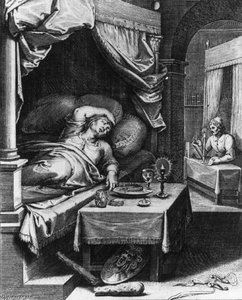
Dialectics
Rozměry reprodukce
Vyšší míra detailu, jemnosti a delší doba výroby
-
U děl nebo reprodukcí, u nichž je jakákoliv strana větší než 105 cm (přibližně 41 palců), bude rám dodán jako sestava v rozloženém stavu. Tato metoda zajišťuje bezpečné doručení a chrání dílo před poškozením během přepravy.
Vyžaduje se odborná montáž – nejedná se o produkt pro svépomocnou realizaci (DIY).
Sestava musí být složena a plátno napnuto zkušeným profesionálním rámovačem s použitím dřevěného lepidla (není součástí balení), kleští na napínání plátna a svorek pro udržení pravých úhlů křížů během schnutí lepidla. Nesprávná montáž nebo nerovnoměrné napnutí plátna může způsobit trvalé poškození uměleckého díla, které není kryto naší zárukou.
Jsou zahrnuty všechny lišty z masivního dřeva, přesně na míru nařezané.
Sestavuje se pomocí součástí balení (šroubů), plus dřevěného lepidla na rohové spoje, které není součástí balení a musí jej zajistit váš rámovač.
Vyžaduje se profesionální nářadí, které není součástí sady: kleště na napínání plátna a svorky pro udržení kolmosti příček během schnutí lepidla.
Důležité:
Spoje v rozích vyžadují lepidlo na dřevo, tyčinky musí být přichyceny pomocí svorek, dokud lepidlo zcela neuschne, a pro napnutí plátna na sestavený rám je zapotřebí kleští na natahování plátna. Žádný z těchto náčiní není součástí sady. Před objednáním této velikosti prosím zajistěte zkušeného profesionálního rámovače.
-
Lesklý lak (zvýrazňuje barvy, chrání před světlem a vlhkostí)
Příklady možných úprav: nahrazení obličeje fotografií zákazníka; přidání domácího mazlíčka (např. výměna kočky za psa); vložení skrytého vzkazu do pozadí; změna krajiny nebo prvků v pozadí.
Celosvětové doručení () za 3–4 týdny namísto standardních 5 týdnů. (11 listopad). Bez kompromisů v kvalitě.
Celosvětová doprava () do 5 týdnů. (18 listopad).
Součást každé objednávky

Explore the industrial roots of Constructivism and Tatlin's radical vision. Discover how geometry redefined modern design today.
 Zobrazit více




 U děl nebo reprodukcí, u nichž je jakákoliv strana větší než 105 cm (přibližně 41 palců), bude rám dodán jako sestava v rozloženém stavu. Tato metoda zajišťuje bezpečné doručení a chrání dílo před poškozením během přepravy.


