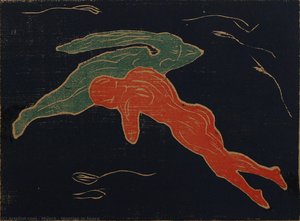
1903. Acrylic On Canvas.

§ 1Catalogue data


§ 2Abstract
 Zobrazit více
Biografie umělce
Edvard Munch (1863-1944): norsk malíř, průkopník expresionismu. Jeho díla zobrazují úzkost, smrt a lidské emoce. Obrazy jako Výkřik jsou ikonické symboly moderní doby.
§ 3Commentary
The Painting
Eken, a painting by Edvard Munch, is a striking representation of a tree with branches that extend outwards in various directions. The tree appears to be barren, with no leaves on its branches. The tree's trunk is large and prominent, taking up a significant portion of the image.Symbolism and Composition
In addition to the main tree, there are several smaller trees visible in the background, adding depth and dimension to the scene. A bird can also be seen perched atop one of the branches, further enhancing the natural atmosphere of the painting. The overall composition is striking and captivating, with a sense of tranquility and serenity emanating from the image.Artistic Style
The painting is classified under the Symbolism style, which was popular during the late 19th and early 20th centuries. Symbolist artists often used natural elements to convey deeper meanings and emotions. In this case, the barren tree may symbolize a sense of desolation or isolation.Artist's Background
Edvard Munch was a Norwegian artist known for his bold and expressive works. He is famous for his iconic painting The Scream, which is widely regarded as an icon of existential angst. Munch's work often explored themes of anxiety, death, and the human condition.Relevance to Art Movements
The Catholic Art Movement, also known as the Sacred Art Movement, was an art movement that emerged in the late 19th and early 20th centuries. It aimed to revive the tradition of religious art in the Catholic Church, which had been in decline since the Protestant Reformation. While Munch's work does not directly align with this movement, his use of symbolism reflects a broader interest in exploring deeper meanings through art.Conclusion
Eken by Edvard Munch is a powerful and thought-provoking painting that invites the viewer to contemplate the symbolism and emotions it evokes. For those interested in Symbolism and the works of Edvard Munch, this painting offers a unique insight into his artistic vision.Otázky a odpovědi
Jakým způsobem se dílo „Eken“ zapojuje do témat a stylu umělce Edvard Munch?
V rámci tvorby umělce Edvard Munch se dílo „Eken“ řadí do stylu Symbolism a doplňuje tak motivy expressionist roots, existential angst, mortality concerns, psychological depth, symbolic representation, iconic munch piece, exploring inner turmoil.
V jakém období a v jakém stylu vzniklo dílo „Eken“ od Edvard Munch?
Dílo „Eken“ vzniklo v roce 1903 jako reprezentativní dílo směru Symbolism. Datum vzniku a příslušnost k danému směru pevně ukotvují toto umělecké dílo v dějinách umění.
Existuje k dílu „Eken“ od Edvard Munch informační list pro studenty?
Stránka Průvodce pro studenty díla „Eken“ od Edvard Munch nabízí tištěný dvoulistový informační list: samotné umělecké dílo s identifikační tabulkou, časovou osu situující dílo do období života umělce, další díla daného autora, naměřenou barevnou paletu a citace ve čtyřech stylech připravené pro okamžité zkopírování.


 Přepnout na tisk


 U děl nebo reprodukcí, u nichž je jakákoliv strana větší než 105 cm (přibližně 41 palců), bude rám dodán jako sestava v rozloženém stavu. Tato metoda zajišťuje bezpečné doručení a chrání dílo před poškozením během přepravy.