Oil On Canvas.

§ 1Katalogová data


§ 2Abstraktní
Popis sbírného předmětu
Explore Egon Schiele’s ‘Self-Portrait Pulling Cheek’ (1910). A haunting Expressionist self-portrait featuring distorted figures & raw emotion. Discover this pivotal work of early 20th-century art.
 Zobrazit více
Biografie umělce
Egon Schiele: expresivní umělec s temnými motivy, portréty a silnými emocemi. Objevte jeho unikátní styl a díla! Reprodukce nyní.
§ 3Komentář
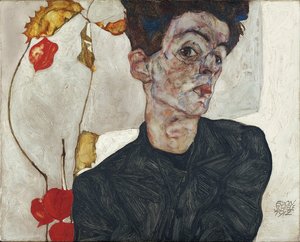
A Visceral Self-Examination: Egon Schiele’s 1910 Portrait
This striking self-portrait by Egon Schiele, created around 1910, is a powerful example of early Expressionism and offers a deeply unsettling yet captivating glimpse into the artist's psyche. More than just a likeness, it’s a raw emotional statement rendered with bold technique and psychological intensity.Decoding the Style & Technique
Schiele abandons traditional portraiture conventions in favor of an intensely personal style. The artwork is characterized by distorted anatomy, elongated features – particularly the hands pulling at the cheek – and a flattened perspective that rejects illusionistic depth. Thick, gestural brushstrokes are immediately apparent, creating a tactile surface brimming with energy. This *impasto* technique—where paint is applied so thickly it stands out from the canvas—heightens the emotional impact and emphasizes the physicality of the painting process. The color palette, while restrained, utilizes vibrant hues against a muted yellow-beige background to draw focus to the figure’s anguished expression.The Artist & His Era
Egon Schiele (1890-1918) was an Austrian artist whose brief but prolific career profoundly impacted 20th-century art. Living and working in Vienna during a period of societal upheaval and artistic innovation, he became associated with the Secession movement before forging his own unique path within Expressionism. His work often courted controversy due to its frank depictions of sexuality and psychological turmoil – themes that were largely taboo at the time. Schiele’s life was tragically cut short by the Spanish Flu pandemic, but his legacy continues to resonate today.Symbolism & Emotional Resonance
The act of pulling at the cheek is central to understanding this self-portrait. It's not merely a physical gesture; it suggests inner torment, anxiety, and self-scrutiny. The large, intensely focused eyes convey a sense of vulnerability and isolation. Schiele’s distorted features aren’t about accurate representation but rather an attempt to externalize internal states. This work embodies the Expressionist desire to depict not what things *look* like, but how they *feel*. It speaks to themes of alienation, psychological distress, and the search for identity – universal experiences that continue to resonate with viewers today.Considerations for Collectors & Designers
This self-portrait is a compelling statement piece. Its intense emotionality and unique aesthetic make it suitable for collectors seeking works with depth and historical significance. For interior designers, the artwork’s bold lines and expressive brushwork can add drama and sophistication to modern spaces. The muted background allows it to integrate into various color schemes, while its powerful imagery will undoubtedly spark conversation. A high-quality reproduction of this piece would serve as a focal point in any room, bringing a touch of artistic rebellion and psychological insight to the space.- Style: Expressionism
- Medium: Oil on Canvas (presumed)
- Themes: Self-Portraiture, Anxiety, Isolation, Psychological Turmoil
- Key Features: Distorted Anatomy, Impasto Technique, Intense Emotionality
Otázky a odpovědi
Jakým způsobem se dílo „Self-Portrait Pulling Cheek1910“ zapojuje do témat a stylu umělce Egon Schiele?
Dílo „Self-Portrait Pulling Cheek1910“ sdílí s ostatními pracemi umělce Egon Schiele styl období Expressionism a opakující se témata: von beckerat's influence, early expressionism", primitivism echoes, alienation & isolation, existential angst, "key se, early mature style.
Jaké emoce vyvolávají barvy díla „Self-Portrait Pulling Cheek1910“ od Egon Schiele?
Paleta Dark díla „Self-Portrait Pulling Cheek1910“ od Egon Schiele harmonizuje s jeho Melancholic emocionálním vyzněním. Barva je jedním ze způsobů, jakými umělecké dílo předává pocity.
Jak je utkaná barevná kompozice díla „Self-Portrait Pulling Cheek1910“ od Egon Schiele?
Barevná analýza díla „Self-Portrait Pulling Cheek1910“ od Egon Schiele zachycuje Statement kontrast a Strong Color Unity harmonii.


 Přepnout na tisk


 U děl nebo reprodukcí, u nichž je jakákoliv strana větší než 105 cm (přibližně 41 palců), bude rám dodán jako sestava v rozloženém stavu. Tato metoda zajišťuje bezpečné doručení a chrání dílo před poškozením během přepravy.