Záruka vrácení peněz · 100 dní Doprava po celém světě zdarma
449 564umělecká díla 30 613umělci 4 660muzea 32jazyky
Catalogue entry

The Risen Christ (frontal view)

1595. Oil On Canvas. Hospital Tavera.

Fig. 1. El Greco, The Risen Christ (frontal view), 1595. Shown as the reproduction you are specifying: , .

§ 1Catalogue data

§ 2Abstract

Popis sbírného předmětu

Biografie umělce

Objevte dramatické dílo El Greka! Studium manýrismu & náboženských obrazů s prodlouženými postavami. Předceňující expresionismus & kubismus – prohlédněte si jeho ikonické výtvarné díla!

§ 3Commentary

The Risen Christ (frontal view) – A Monumental Vision of Faith

Doménikos Theotokópoulos, universally known as El Greco—“the Greek”—stands apart from his contemporaries not merely as a painter but as an artist who forged his identity in the crucible of faith and fire. Born in Crete in 1541, under Venetian rule, his artistic journey traversed Venice and Rome before finding its ultimate expression in the spiritual heartland of Spain: Toledo. El Greco wasn’t simply responding to prevailing trends; he synthesized influences from Byzantium and Mannerism into a style that foreshadowed Expressionism and Cubism centuries ahead of their time.

  • Subject Matter & Symbolism: The artwork depicts Jesus Christ resurrected, embodying themes of divinity, ascension, and divine revelation. His nudity symbolizes purity and vulnerability—a deliberate choice reflecting the theological significance of repentance and spiritual rebirth. The upward gesture of his arms signifies blessing or offering, conveying a profound sense of hope and transcendence.
  • Style & Technique: El Greco’s oeuvre exemplifies Mannerist style, characterized by elongated figures, dramatic lighting, dynamic lines, and distorted perspective—techniques that deliberately challenged Renaissance conventions. Employing oil paint on canvas or panel, he achieved remarkable realism through meticulous layering and blending, capturing the subtleties of skin tones and light diffusion.
  • Composition & Perspective: The painting’s central compositional structure emphasizes Christ as its focal point, filling most of the frame with a monumental presence. The stark black background isolates him, intensifying his impact and creating an illusion of infinite depth—a deliberate distortion designed to convey spiritual grandeur beyond earthly limitations.
  • Color Palette & Lighting: Earthy hues dominate the color palette, punctuated by warm undertones that illuminate Christ’s flesh with ethereal light. This directional lighting casts dramatic shadows, enhancing the figure's three-dimensionality and creating a palpable atmosphere of solemn contemplation.
  • Lines & Shapes: Dynamic, swirling lines permeate the drapery and musculature, contributing to the painting’s sense of movement and energy—a stylistic hallmark of El Greco that distinguishes him from his peers. The elongated human form is stylized yet recognizable, reflecting the artist's preoccupation with conveying spiritual essence through visual representation.

Further research into “The Risen Christ” reveals its place within El Greco’s broader artistic output and its enduring influence on subsequent artists. Notably, a single sculpture by El Greco’s own hand resides in Toledo Cathedral—a testament to his unwavering devotion. Alongside this masterpiece, consider reproductions of other celebrated works like “Saint Peter” and “Saint Ildefonso,” showcasing El Greco's masterful manipulation of perspective and color to evoke profound spiritual emotion.

“The Resurrection” exemplifies El Greco’s stylistic innovations—a bold departure from traditional artistic norms that anticipated the expressive fervor of Expressionism. Its meticulous execution, utilizing oil paint on canvas, underscores El Greco’s commitment to capturing both visual realism and symbolic depth.

Otázky a odpovědi

Kde najdu průvodce k dílu "The Risen Christ (frontal view)"?

Pro dílo „The Risen Christ (frontal view)“ od El Greco je k dispozici stránka Průvodce pro studenty: tiskem připravený informační list o uměleckém díle, navržený pro studenty a použití ve výuce.

Je k dispozici prezentace pro „The Risen Christ (frontal view)“ od El Greco?

Diaporama díla „The Risen Christ (frontal view)“ si můžete prohlédnout na stránce Slideshow.

Jak světlý je celkově obraz "The Risen Christ (frontal view)"?

Z hlediska vnímané jasnosti je dílo „The Risen Christ (frontal view)“ od El Greco deep_shadow.
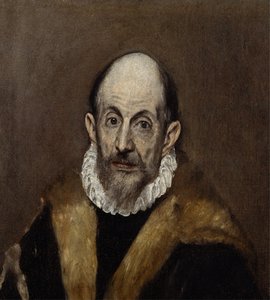
§ 4The artist

El Greco

El Greco

1541 - 1614, Řecko

Quick facts about El Greco

  • Artistic Movement Or Style: Mannerismus, Baroko
  • Artists Who Influenced This Artist:
    • Titian
    • Tintoretto
  • Date Of Birth: 1541
  • Full Name: Doménikos Theotokópoulos
  • Nationality: Řek
  • Notable Artworks:
    • The Burial of the Count of Orgaz
    • View of Toledo
    • El Espolio
    • St. Sebastian
  • Place Of Birth: Crete, Greece

Biografie umělce

Doménikos Theotokópoulos, called El Greco

Doménikos Theotokópoulos, known to the world as El Greco – “the Greek” – was a painter whose life and work defied easy categorization. Born in Crete, Greece (1541), his artistic journey took him through Venice and Rome before finding its ultimate expression in the spiritual heartland of Spain: Toledo. El Greco wasn’t merely a product of these places; he synthesized their influences into something wholly unique, a style that anticipated the emotional intensity of Expressionism and the fragmented forms of Cubism centuries later. His early training within the Byzantine tradition instilled in him a meticulous attention to detail and a profound understanding of religious iconography. This foundation, however, wouldn’t confine him. He signed his works in Greek, often appending “Krḗs” – Cretan – as a proud declaration of his origins, even as he ventured into new artistic territories. The seeds of his distinctive style were sown not just in technique but also in the fervent religious climate of his homeland and the rich tapestry of Venetian art.

Early Years: Venice and Rome

El Greco’s formative years were spent in Venice around 1567, where he immersed himself in the vibrant artistic scene dominated by titans like Titian, Tintoretto, and Veronese. He diligently studied their mastery of color, composition, and dramatic lighting—skills that would profoundly shape his future endeavors. Recognizing the importance of mastering Western Renaissance techniques, El Greco absorbed their influence, adapting them to his own distinctive vision. His Venetian training resulted in early works such as *Saint Sebastian* (1600), where anatomical detail blends seamlessly with an almost theatrical use of light and shadow—a testament to his ability to fuse Byzantine precision with Venetian dynamism. Subsequently, he traveled to Rome, encountering Mannerism – a style characterized by elongated forms, distorted perspectives, and sophisticated compositions. While he demonstrated considerable talent in the competitive Roman art world, El Greco struggled to gain widespread recognition due to stylistic differences from prevailing tastes of the time. Despite these challenges, his exposure to Mannerist principles undoubtedly broadened his artistic horizons.

A Style Unlike Any Other

El Greco’s artistic style is instantly recognizable – and utterly captivating. His figures are often dramatically elongated, their bodies stretched and contorted in poses that convey a sense of spiritual ecstasy or profound anguish. This isn't mere stylistic affectation; it’s an attempt to depict the unseen, the emotional and spiritual realities that lie beyond the surface of things. He masterfully employed color – not necessarily realistic color, but vibrant, often unnatural hues – to heighten the emotional impact of his work. Dramatic lighting, with stark contrasts between light and shadow, creates a theatrical effect, drawing the viewer into the heart of the scene. *The Burial of the Count of Orgaz* (1586-1588), considered his masterpiece, exemplifies these qualities perfectly. The painting depicts a miraculous event – the descent of saints to bury a pious nobleman – with remarkable realism in the portrayal of contemporary figures juxtaposed against ethereal, elongated forms representing divine intervention. He blended Byzantine traditions with Italian Renaissance techniques, forging a style that was both innovative and deeply personal. His later works became increasingly mystical, reflecting his own profound religious beliefs and a growing detachment from conventional artistic norms.

Toledo: The Flowering of Genius

El Greco’s relocation to Toledo in 1577 marked a pivotal moment in his artistic career—a move that coincided with the rise of Counter-Reformation fervor and provided him with an environment conducive to exploring his spiritual convictions. Here, he received significant commissions from churches and monasteries, securing patronage from influential figures like Diego de Castilla, Archbishop of Toledo. This support enabled him to produce some of his most celebrated paintings, including *Saint Martin and the Beggar* (1597/1599), *St. Peter in Tears* (1582), and *The Holy Family with Saint Anne and the Infant John the Baptist* (c. 1595/1600). These works demonstrate El Greco’s masterful command of composition, color, and expressive gesture—characteristics that solidified his reputation as one of Spain's foremost artists. Notably, *View of Toledo* (1596-1600) stands apart from his other paintings due to its landscape genre—a rare departure from religious iconography for El Greco—yet it captures the essence of Toledo with an almost visionary quality.

Legacy and Rediscovery

El Greco’s artistic legacy extends far beyond his lifetime, influencing generations of artists who recognized him as a precursor to modern art movements like Expressionism and Cubism. His distinctive style—characterized by elongated figures, intense emotion, and dramatic lighting—resonated with artists seeking new ways to convey psychological depth and spiritual experience. Furthermore, El Greco’s pioneering use of color and perspective challenged conventional artistic norms, paving the way for groundbreaking innovations in visual art. Although largely overlooked by art historians during the 19th century, El Greco experienced a resurgence of interest in the 20th century thanks to the recognition of artists like Picasso and Braque who admired his stylistic originality. Today, El Greco is revered as one of Spain’s greatest painters—a visionary artist whose work continues to inspire awe and contemplation with its profound spiritual resonance and unparalleled artistic brilliance.

§ 5Comparanda

§ 6Questions

Rychlé informace

  • Subject or theme: Religious iconography; Resurrection
  • Artist: El Greco
  • Artistic style: Stylized; Monumental
  • Notable elements or techniques: Dynamic lines; Dramatic lighting; Elongated figures
  • Medium: Oil on canvas

Artový kvíz

U každé otázky je pouze jedna správná odpověď.

Otázka 1:
What artistic style is El Greco primarily associated with?
Otázka 2:
The painting utilizes a central compositional structure where Jesus Christ occupies most of the frame. What contributes to this sense of monumentality?
Otázka 3:
What is the dominant color palette used in ‘The Risen Christ’?
Otázka 4:
How does El Greco employ lines within the painting?
Otázka 5:
What symbolic element is represented by the nudity of Jesus Christ?

§ 7Cite this entry

AllPaintingsStore.com, “El Greco, The Risen Christ (frontal view) (1595)”, https://allpaintingsstore.com/cs/art/el-greco-the-risen-christ-frontal-view-8XZGKP-en/ (accessed 5 říjen 2026).

§ 8The reproduction

Ručně malovaná olejová reprodukce

Rukou malované olejné plátno v libovolném rozměru i s rámem, vyrobené našimi umělci na zakázku. ( Přepnout na tisk Přepnout na digitální obraz)

It is specified on the order sheet in the margin; the present state of that sheet reads as follows.

The Risen Christ (frontal view)

Technika reprodukce

Rozměry reprodukce

-

Vybraní mistři umění

Vyšší míra detailu, jemnosti a delší doba výroby

-

Možnosti rámování reprodukcí

-

-

U děl nebo reprodukcí, u nichž je jakákoliv strana větší než 105 cm (přibližně 41 palců), bude rám dodán jako sestava v rozloženém stavu. Tato metoda zajišťuje bezpečné doručení a chrání dílo před poškozením během přepravy.

Vyžaduje se odborná montáž – nejedná se o produkt pro svépomocnou realizaci (DIY).
Sestava musí být složena a plátno napnuto zkušeným profesionálním rámovačem s použitím dřevěného lepidla (není součástí balení), kleští na napínání plátna a svorek pro udržení pravých úhlů křížů během schnutí lepidla. Nesprávná montáž nebo nerovnoměrné napnutí plátna může způsobit trvalé poškození uměleckého díla, které není kryto naší zárukou.

  • Jsou zahrnuty všechny lišty z masivního dřeva, přesně na míru nařezané.

  • Sestavuje se pomocí součástí balení (šroubů), plus dřevěného lepidla na rohové spoje, které není součástí balení a musí jej zajistit váš rámovač.

  • Vyžaduje se profesionální nářadí, které není součástí sady: kleště na napínání plátna a svorky pro udržení kolmosti příček během schnutí lepidla.

Důležité:
Spoje v rozích vyžadují lepidlo na dřevo, tyčinky musí být přichyceny pomocí svorek, dokud lepidlo zcela neuschne, a pro napnutí plátna na sestavený rám je zapotřebí kleští na natahování plátna. Žádný z těchto náčiní není součástí sady. Před objednáním této velikosti prosím zajistěte zkušeného profesionálního rámovače.

Popisek díla

-

-

Ochranný lak

Lesklý lak (zvýrazňuje barvy, chrání před světlem a vlhkostí)

-

Přizpůsobit své umělecké dílo

Příklady možných úprav: nahrazení obličeje fotografií zákazníka; přidání domácího mazlíčka (např. výměna kočky za psa); vložení skrytého vzkazu do pozadí; změna krajiny nebo prvků v pozadí.

-

Prioritní doručení

Celosvětové doručení () za 3–4 týdny namísto standardních 5 týdnů. (2 listopad). Bez kompromisů v kvalitě.

-

Expresní doručení

Celosvětová doprava () do 5 týdnů. (9 listopad).

V ceně

Celková cena za vybrané možnosti reprodukcí

Kč 5603

Included with every order

  • Zdarma celosvětová expresní doprava
  • Vysoce kvalitní lněné plátno
  • Kompletní pojištění přepravy
  • Záruka vrácení celního poplatku
  • Záruka věrného barevného souladu
  • 100dení lhůta pro vrácení zboží (pouze při vadách výroby)
  • 100% záruka vrácení peněz
  • Sleva při více objednávkách
Order sheet