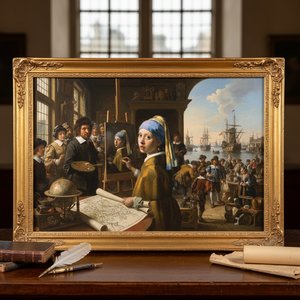
1640. Oil On Canvas, 77.0 x 66.0 cm. Státní Ermitáž.

§ 1Katalogová data

- 77.0 x 66.0 cm


§ 2Abstraktní
Popis sbírného předmětu
Explore Gabriel Metsu’s "The Prodigal Son" (1640). A lavish Baroque oil painting depicting decadence & moral decline, showcasing rich detail & dramatic chiaroscuro. Discover Dutch Golden Age art.
 Zobrazit více
Biografie umělce
Gabriel Metsu (1629-1667) byl nizozemský malíř zlatého věku známý svými žánrovými scénami, portréty a interiéry. Inspirací pro něj byli Rembrandt a Vermeer, jehož díla zachycují každodenní život s mimořádným detailem a symbolikou.
§ 3Komentář
A Masterpiece of Redemption and Splendor
In the heart of the Dutch Golden Age, few works capture the profound tension between worldly temptation and spiritual homecoming as exquisitely as Gabriel Metsu’s The Prodigal Son. Executed around 1640, this Baroque masterpiece is far more than a mere biblical illustration; it is a psychological drama rendered in oil and canvas. The painting invites viewers into a lavish, intimate bedroom where the air seems thick with the weight of unspoken emotions. Here, Metsu orchestrates a poignant tableau of familial reconciliation, depicting the moment a wealthy father welcomes his estranged son back into the fold after years of wandering. It is a scene that resonates deeply with anyone who has experienced the complexities of loss, regret, and the transformative power of forgiveness.
The narrative strength of the piece lies in its ability to juxtapose physical opulence with internal struggle. As the figures are positioned within an environment of extreme luxury—surrounded by heavy draperies and ornate furnishings—the setting serves as a deliberate metaphor for the very temptations that led the son astray. The contrast between the son’s state of repentance and the surrounding grandeur creates a captivating tension, making the artwork a profound meditation on the human condition. For the discerning collector or interior designer, this painting offers a sophisticated focal point that brings both historical gravity and narrative depth to any curated space.
The Artistry of Light and Texture
Metsu’s technical prowess is on full display through his masterful use of chiaroscuro. By employing a dramatic light source originating from an unseen point above and to the left, he sculpts the figures out of the surrounding shadows, lending them a three-dimensional, lifelike presence. This interplay of light and dark does more than create depth; it heightens the theatricality of the reunion, casting a spotlight on the emotional expressions of the characters while allowing the corners of the room to recede into mysterious, velvety gloom.
The tactile quality of the painting is nothing short of breathtaking. A close inspection reveals Metsu’s dedication to illusionistic realism, particularly in his rendering of diverse textures. One can almost feel the weight of the heavy bed canopy, the smoothness of the silk gowns, and the soft, organic contours of the skin tones. His color palette is a sophisticated blend of warm earth tones—rich ochre, deep gold, and resonant browns—which evoke a sense of aristocratic warmth. These are punctuated by strategic bursts of cooler blues and vibrant reds in the clothing, adding a rhythmic visual interest that guides the eye across the complex composition.
A Timeless Symbolism for the Modern Collector
Beyond its aesthetic brilliance, The Prodigal Son is rich with symbolic resonance. The discarded garments and the subtle gestures of the figures hint at themes of lost virtue and the pursuit of excess. Every element, from the way the light hits a piece of jewelry to the contemplative gaze of an observer in the background, contributes to a larger story of moral complexity. This layer of meaning ensures that the artwork remains intellectually stimulating long after the initial visual impact has been felt.
For those seeking to adorn a home or gallery with a high-quality reproduction, this piece offers an unparalleled opportunity to integrate a sense of history and soul into an interior design scheme. Whether placed in a quiet study to inspire reflection or as a grand statement piece in a formal living area, Metsu’s work brings with it the prestige of the Dutch masters. It is an investment in beauty, a tribute to the enduring power of storytelling, and a window into a golden era of artistic innovation.
Otázky a odpovědi
K kterému umělci je dílo "The Prodigal Son" připisováno?
Dílo "The Prodigal Son" vytvořil/a Gabriel Metsu. Informace na této stránce popisují originální dílo umělce Gabriel Metsu.
Využívá „The Prodigal Son“ od Gabriel Metsu výrazné kontrasty, nebo jemné harmonie?
V díle "The Prodigal Son" se Serene kontrast snoubí s Strong Color Unity harmonií.
Jak sytá je paleta díla "The Prodigal Son"?
Dílo „The Prodigal Son“ od Gabriel Metsu je zachyceno s Balanced Soft saturací.


 Přepnout na tisk


 U děl nebo reprodukcí, u nichž je jakákoliv strana větší než 105 cm (přibližně 41 palců), bude rám dodán jako sestava v rozloženém stavu. Tato metoda zajišťuje bezpečné doručení a chrání dílo před poškozením během přepravy.