


 Náhled
 Sdílet
 Sdílet
 Podrobnosti o díle

 Stáhnout
 Podobné položky
 Rentgenové snímky
 Slideshow
Poem


 Zobrazit více
Ručně malovaná olejová reprodukce
Ručně malovaná olejná barva na plátně ve vašem zvoleném rozměru i s rámem, vyrobená našimi umělci na zakázku. ( Koupit tisk Koupit obrázek)




































Vyberte si z našich přednastavených velikostí, které odpovídají původním proporcím díla.

Můžete zadat vlastní rozměry pro konkrétní rám nebo prostor. Pokud se vámi vybraná velikost neshoduje s proporcemi původního obrazu, dílo buď ořízneme, nebo jej doplníme ručně malovanými prvky. Před zahájením výroby vám bude zaslán digitální náhled ke schválení.
Upozorňujeme, že náhled na obrazovce neodpovídá skutečnému ořezu ani rozšíření. Pouze digitální náhled přesně zobrazí finální kompozici.
Ačkoliv je možné zvolit vlastní velikost, pro zachování původních proporcí doporučujeme vybrat rozměr z předdefinovaného seznamu.
Po přijetí objednávky vám tým AllPaintingsStore.com zašle e-mail s pokyny a poskytne náhledovou verzi.
Celosvětová doprava () za 3–4 týdny namísto standardních 5 týdnů. (22 srpen). Bez kompromisů v kvalitě.

Zdarma celosvětová expresní doprava

Vysoce kvalitní lněné plátno

Kompletní přepravní pojištění

Záruka vrácení celního poplatku

Záruka přesného barevného shodu

60denní lhůta pro vrácení zboží (pouze při vadách výroby)

100% garance vrácení peněz

Sleva při hromadné objednávce
 Skleněná varianta je dostupná pouze u rozměrů menších než 110 cm

Poem
Technika reprodukce
Rozměry reprodukce
-


Celková cena za výběr
$ 258
Popis díla
Podobná umělecká díla


Biografie umělce
A Life Forged in Ink: The Resilience of Gao Fenghan
Gao Fenghan (1683–1749) was a figure whose life, much like his later paintings, bore the marks of unexpected turns and profound transformation. Born into a modest bureaucratic family in Shandong province, China, he initially followed a conventional path, passing the local civil service examinations in 1727 and embarking on a career as a minor official. However, Gao Fenghan’s destiny was not to be defined by administrative duties but by an extraordinary artistic journey fueled by both talent and adversity. His early life offered him access to a cultured environment, nurturing his innate interest in poetry, painting, and the delicate art of seal-carving – pursuits that would become the cornerstones of his identity.
For roughly a decade, Gao served in Anhui province, where he cultivated relationships with scholars and artists from prominent centers like Suzhou, Nanjing, and Yangzhou. These connections proved pivotal, exposing him to diverse artistic currents and laying the groundwork for his future stylistic development. Yet, this period of relative stability was shattered in 1736 when he found himself unjustly imprisoned on charges related to his official work. Though eventually released, the experience left an indelible scar, leading to his resignation from public service the following year.
The Turning Point: Imprisonment and a New Artistic Voice
It was in the aftermath of imprisonment that Gao Fenghan’s life took its most dramatic turn. A combination of injuries sustained during his incarceration and the onset of arthritis cruelly robbed him of the use of his right hand – the hand with which he had practiced calligraphy and painting for years. For many, this would have signaled the end of their artistic aspirations. But Gao Fenghan was not one to succumb easily. He retreated to a Buddhist monastery in Yangzhou, a city renowned as a vibrant hub for art and culture, and embarked on an arduous journey of self-relearning.
This wasn’t merely about adapting; it was about reinventing his artistic expression. Gao Fenghan painstakingly taught himself to write and paint with his left hand. The result was not simply a technical feat but a profound stylistic shift. His earlier works, rooted in the literati tradition of refined brushwork and subtle landscapes, gave way to a highly individualistic aesthetic characterized by what some might describe as crude or awkward strokes. However, Gao embraced this perceived imperfection, valuing the raw authenticity it conveyed – an effect unattainable with his former right-handed technique.
Association with the Yangzhou Eccentrics
Yangzhou proved to be more than just a refuge; it became a crucible for artistic innovation. Gao Fenghan found himself drawn into the orbit of the “Eight Eccentrics of Yangzhou,” a group of iconoclastic painters who deliberately rejected conventional norms in favor of unconventional styles and a bohemian lifestyle. While not always formally included among their number, he was closely associated with them, sharing their spirit of individualism and challenging artistic orthodoxy.
Influenced by earlier masters like Bada Shanren (1626–1705), known for his expressive brushwork and poignant symbolism, and professional painters such as Lan Ying (1585–after 1664) and Gong Xian (1619?–1689), Gao Fenghan developed a unique visual language. His paintings frequently featured flowers and birds – lotuses, plum blossoms, peonies, roosters – alongside landscapes rendered in ink and light color on paper or silk. He drew inspiration from the archaic forms found in Han dynasty steles, introducing these robust elements into the more delicate southern aesthetics of his time.
Legacy: Disability Aesthetics and Enduring Influence
Gao Fenghan’s art wasn't simply about aesthetic innovation; it was a powerful statement about resilience and the transformative power of adversity. His work embodies what has come to be known as “disability aesthetics,” challenging conventional notions of beauty and skill by celebrating an artistic voice forged in the face of physical limitation. He transformed personal struggle into a celebrated mode of expression, appealing to patrons who valued nontraditional eccentricity.
Notable works like his 1727 hanging scroll, *Ink Lotus after Bada Shanren*, capture the humid lushness of nature through spontaneous wet-ink washes, while his 1741 handscroll, *Plum Blossoms and Peonies*, serves as a poignant farewell piece symbolizing strength in the face of both physical and emotional hardship. His calligraphy, evolving to emulate rugged ancient scripts, further contributed to epigraphic studies within Qing art.
Today, Gao Fenghan’s legacy endures in museum collections worldwide. He remains a compelling figure—a testament to the human spirit's capacity for reinvention and a reminder that true artistic expression often blossoms not despite adversity but because of it. His paintings are more than just beautiful objects; they are windows into a life marked by resilience, innovation, and an unwavering commitment to finding beauty in unexpected places.

gao fenghan
1683 - 1749 , China
Rychlé fakta
- Artistic Movement Or Style: Yangzhou School eccentric
- Artists Or Movements Influenced By This Artist: Yangzhou Eccentrics
- Artists Who Influenced This Artist:
- Bada Shanren
- Lan Ying
- Gong Xian
- Date Of Birth: 1683
- Date Of Death: 1749
- Full Name: Gao Fenghan
- Nationality: Chinese
- Notable Artworks:
- Chrysanthemums by a rock
- Ink Lotus after Bada Shanren
- Plum Blossoms and Peonies
- Poem
- Landscapes and Calligraphy
- Place Of Birth: Shandong, China
Související články
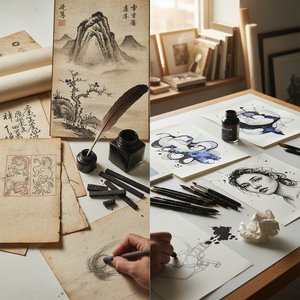
Ephemeral Expressions: Exploring the Nuances of Ink on Paper Through History & Contemporary Art
Explore the captivating world of ink wash painting – from its ancient origins to contemporary masters. Discover techniques, symbolism & conservation insights with AllPaintingsStore.com.

The Beauty of Ink Wash: Discover Serene & Soulful Art for Your Home
Discover the tranquil beauty of ink wash painting. Explore how Sumi-e and monochrome landscapes bring Zen-inspired serenity and soulful elegance to your home decor through expert curation and timeless East Asian aesthetics.
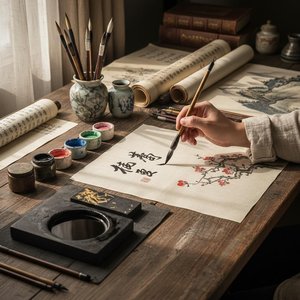
The Alchemy of Ink: Mastering the Timeless Beauty and Art History of Paper and Brush
Embark on a sophisticated exploration of ink wash painting and Sumi-e. Uncover the profound historical lineages, Zen philosophies, and technical mastery behind this timeless medium in our authoritative guide for fine art enthusiasts.

Katsushika Hokusai: 25 mistrovských děl japonského umění pro váš interiér | AllPaintingsStore.com
Prozkoumejte 25 ikonických děl japonského mistra Katsushiky Hokusaiho! Objevte příběhy za Velkou vlnou, 36 pohledů na horu Fuji a další ukiyo-e tisků. Kvalitní reprodukce obrazů pro váš interiér na AllPaintingsStore.com.

Xie Zhiliu: A Legacy of Ink Wash Painting & Modern Chinese Literati Tradition
Explore the legacy of Xie Zhiliu, a master of Chinese ink wash painting & prominent figure in modern art. Discover his techniques, influences, and contributions to literati tradition. A guide for discerning collectors.


