

Oil On Canvas.

§ 1Katalogová data


§ 2Abstraktní
Popis sbírného předmětu
Georges Seurat’s "The Models" showcases his revolutionary Pointillist style with three nude figures amidst a scene of observation and gathering, capturing the luminous precision that defined this pivotal moment in modern art – discover or own this iconic masterpiece.
 Zobrazit více
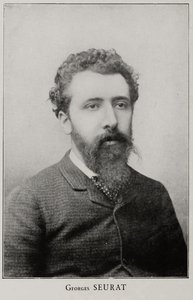
Biografie umělce
Objevte Georga Seurata (1859-1891), průkopníka pointilismu & neoimpresionismu! Prozkoumejte 'Neděli na ostrově La Grande Jatte' a jeho revoluční barevnou teorii zachycující moderní život. Nakupte ručně malované reprodukce!
§ 3Komentář
A Study in Light and Leisure: Georges Seurat's "The Models"
Georges Pierre Seurat’s “The Models” presents a captivating tableau of modern life, a snapshot of leisure and observation rendered with the revolutionary precision that would define his legacy. The painting depicts three nude women – positioned with an almost scientific detachment – engaged in a quiet moment before a wall adorned with images, suggesting a space of contemplation or perhaps a salon gathering. This is not merely a portrait; it’s a carefully constructed exploration of light, color, and the burgeoning concerns of Parisian society at the turn of the 20th century.
- Subject Matter: The central figures – three nude women – were a common motif in art during this period, often representing beauty, sensuality, and the idealized form. However, Seurat’s treatment elevates this subject beyond simple representation.
- Technique: “The Models” is a prime example of Seurat's groundbreaking Pointillist technique. Instead of applying broad strokes of color, he meticulously layered tiny dots of pure pigment – primarily blues, greens, and yellows – to create an optical illusion of blended tones when viewed from a distance. This method, influenced by scientific studies of optics and color theory, aimed to capture the fleeting effects of light with unprecedented accuracy.
The Dawn of Pointillism
Seurat’s development of Pointillism was a radical departure from Impressionism, which focused on capturing immediate sensory impressions. While Impressionists sought to depict the *effect* of light, Seurat aimed to analyze and reproduce it scientifically. He meticulously studied the work of Eugène Louis Pradé, a physician who had researched color perception, and applied these findings to his artistic practice. This dedication to scientific rigor is evident in the almost mathematical precision with which he built up the painting’s surface – a testament to his intellectual curiosity and unwavering commitment to innovation.
- Historical Context: “The Models” was created during a period of significant social and artistic change in Paris. The rise of industrialization, urbanization, and new scientific discoveries were challenging traditional values and inspiring artists to explore new ways of seeing the world.
- Seurat’s Vision: Seurat envisioned himself as a scientist-artist, seeking to create a “paintable mathematics.” He believed that by applying scientific principles to art, he could achieve a level of realism previously unattainable.
Symbolism and Emotional Resonance
Beyond its technical brilliance, "The Models" possesses a subtle emotional depth. The women’s averted gazes suggest a private moment of reflection or perhaps a shared understanding. The inclusion of the framed pictures on the wall adds another layer of meaning, hinting at themes of art, culture, and intellectual discourse. The scattered bottles – a detail often overlooked – could represent conviviality, indulgence, or even the fleeting nature of pleasure.
- Color Palette: Seurat’s masterful use of color contributes significantly to the painting's emotional impact. The cool blues and greens evoke a sense of tranquility and serenity, while the warmer yellows add touches of vibrancy and energy.
- Composition: The carefully arranged composition guides the viewer’s eye across the canvas, creating a dynamic visual experience that is both intellectually stimulating and aesthetically pleasing.
A Timeless Masterpiece
"The Models" stands as a pivotal work in the history of modern art, representing a crucial bridge between Impressionism and Post-Impressionism. Its innovative technique, intellectual rigor, and subtle emotional resonance continue to captivate viewers today. A hand-painted reproduction offers an unparalleled opportunity to experience the brilliance of Georges Seurat’s vision – a testament to his genius and a timeless celebration of light, color, and the human condition.
Otázky a odpovědi
Jaké emoce vyjadřuje dílo z období Pointillist Impressionism s názvem „The Models“?
Reflective emoce díla „The Models“ je doprovázena jeho stylem, který patří k Pointillist Impressionism.
Patří „The Models“ od Georges Pierre Seurat mezi vyhledávaná díla směru Pointillist Impressionism?
Dílo „The Models“ od Georges Pierre Seurat je klasifikováno jako Recognized a patří k享有 směru Pointillist Impressionism.
Jak se v díle „The Models“ od Georges Pierre Seurat propojují umělecký směr a doba?
Dílo "The Models" patří k období Pointillist Impressionism, jehož tvůrce působil v éře – 19. století.


 Přepnout na tisk


 U děl nebo reprodukcí, u nichž je jakákoliv strana větší než 105 cm (přibližně 41 palců), bude rám dodán jako sestava v rozloženém stavu. Tato metoda zajišťuje bezpečné doručení a chrání dílo před poškozením během přepravy.


