Záruka vrácení peněz · 100 dní Doprava po celém světě zdarma
449 587umělecká díla 30 613umělci 4 660muzea 32jazyky
Měna
    Jazyk
      Ateliér · Založeno 2015 · Paříž, Francie
      AllPaintingsStore
      allpaintingsstore.com
      Catalogue entry

      Tríptico

      Oil On Canvas.

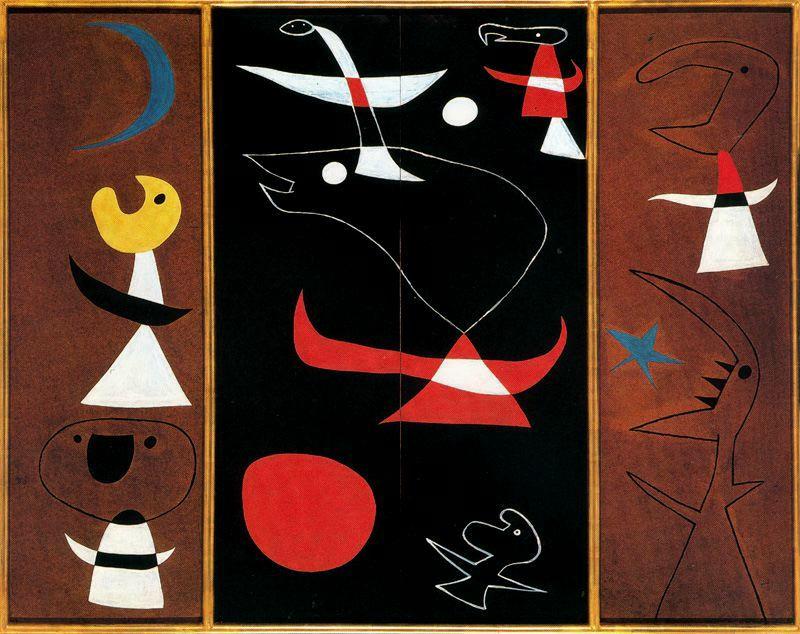
      Fig. 1. Joan Miró, Tríptico. Shown as the reproduction you are specifying: , .

      § 1Catalogue data

      § 2Abstract

      Popis sbírného předmětu

      Explore Joan Miró’s Tríptico, a captivating abstract artwork featuring birds, figures, and dynamic designs from the surrealist period. Discover this unique piece and bring its vibrant expression into your space.

      Biografie umělce

      Křehká kráska v zrcadle – mistrovské dílo Joan Miró z roku 1919, plné symboliky a podivného kouzla. Objevte surrealistickou hloubku a osobní výpověď tohoto ikonického obrazu.

      § 3Commentary

      An Overview of Tríptico

      Tríptico is an abstract artwork by Joan Miró that features three distinct sections or panels, each presenting its own unique design. The first panel contains two birds flying in the sky, one positioned on the left side and another towards the center. This section also includes several smaller figures scattered throughout, such as a person standing near the top right corner and another figure located at the bottom left corner.

      Composition and Design

      The second panel of the painting depicts a dog with its head turned to the left, appearing to look at something off-camera. The third panel presents an abstract design that includes a bird on the left side, a person in the middle, and two additional birds towards the right side. This final section also contains several other smaller figures scattered throughout the composition.

      Otázky a odpovědi

      Mohu si před objednávkou prohlédnout „Tríptico“ od Joan Miró?

      Chcete-li si prohlédnout náhled reprodukce díla „Tríptico“ od Joan Miró, otevřete stránku Náhled v prostoru tohoto díla.

      Jakou velikost tisku pro "Tríptico" bych si měl(a) zvolit pro svou místnost?

      Pro místnost typu Living Room doporučujeme pro dílo „Tríptico“ tisk v rozměru Large.

      Jakou převládající barvu má dílo „Tríptico“ od Joan Miró?

      Hlavní barvou díla „Tríptico“ od Joan Miró je Black (#030403).
      § 4The artist

      Joan Miró

      Joan Miró

      1893 - 1983, Španělsko

      Quick facts about Joan Miró

      • Artistic Movement Or Style: Surrealismo
      • Artists Or Movements Influenced By This Artist: ['Fauvismus']
      • Artists Who Influenced This Artist:
        • Pablo Picasso
        • Cézanne
      • Date Of Birth: 20 aprile 1893
      • Date Of Death: 25 dicembre 1983
      • Full Name: Joan Miró i Ferrà
      • Nationality: Spagnolo
      • Notable Artworks:
        • La Poetisa
        • Dům s palmy
        • Tanečník s zrcadlem
      • Place Of Birth: Barcelona, Spagna

      Biografie umělce

      A Catalan Visionary: The Life and Art of Joan Miró

      Joan Miró i Ferrà, born in Barcelona in 1893, stands as one of the most significant figures in 20th-century art. His journey was not merely a progression through styles but an exploration of inner worlds, translating dreams, memories, and Catalan identity onto canvas with a uniquely poetic visual language. From humble beginnings marked by illness and initial parental reservations about his artistic pursuits, Miró persevered, driven by an innate need to express the intangible—the emotions, sensations, and subconscious currents that lie beneath the surface of reality. His early life was steeped in the traditions of Barcelona, a city brimming with architectural marvels thanks to Antoni Gaudí, whose organic forms would subtly influence Miró’s later abstractions. The goldsmithing profession of his father instilled an appreciation for meticulous craftsmanship, while the rugged Catalan landscape became a recurring motif and source of inspiration throughout his career.

      Early Influences and the Path to Surrealism

      Miró's formal artistic training began at La Llotja in Barcelona, where he honed his skills in traditional techniques. However, it was exposure to the avant-garde movements sweeping through Paris that truly ignited his creative evolution. The vibrant colors of Fauvism and the fragmented forms of Cubism resonated deeply, prompting him to move to Paris in 1920. This period proved pivotal as he encountered artists like Pablo Picasso and began experimenting with increasingly abstract compositions. Yet, Miró didn’t simply adopt these styles; he synthesized them, forging a path toward his own distinctive aesthetic. He sought to distill forms to their essence, stripping away representational details in favor of symbolic shapes and evocative colors. This exploration led him to the Surrealist group in 1924, aligning him with artists such as Max Ernst and Salvador Dalí. While embracing the Surrealist interest in the subconscious, Miró maintained a unique sensibility—his work was less about shocking imagery or Freudian symbolism than it was about creating a world of playful forms and poetic suggestion. He believed that art should transcend rational thought and tap into the realm of dreams and intuition.

      The Catalan Landscape and Artistic Roots

      Miró’s formative years were profoundly shaped by his surroundings. Growing up in Barcelona, he absorbed the influence of Gaudí's architectural innovations—the undulating curves and organic textures of Sagrada Familia and Parc Güell—which instilled within him a fascination for natural forms and patterns. The Catalan landscape—characterized by pine forests, rocky mountains, and azure seas—became a constant source of inspiration for his paintings and prints. These elements would reappear throughout his oeuvre, symbolizing resilience, freedom, and the enduring spirit of Catalan culture. His father’s profession as a goldsmith instilled in him an appreciation for precision and craftsmanship, shaping his artistic approach and contributing to his meticulous attention to detail.

      Key Works: A Surrealist Universe

      Miró's artistic output spanned decades, encompassing painting, sculpture, ceramics, printmaking, and collage—each medium serving as a vehicle for exploring his distinctive vision. The Farm (1922) stands as a seminal achievement, embodying the artist’s synthesis of Fauvist color palettes with Cubist fragmentation. It depicts a stylized Catalan landscape populated by fantastical creatures—birds, snails, and amorphous shapes—creating a dreamlike atmosphere that reflects Miró's preoccupation with subconscious imagery. The series *Dutch Interiors (1928)* demonstrated his ability to reinterpret the Old Masters through a modernist lens, transforming familiar domestic scenes into abstracted compositions infused with Surrealist symbolism. His collaborative efforts with Max Ernst on *Grattage* canvases—particularly *The Elephant Bird*—marked an important stage in his artistic experimentation and showcased his innovative techniques for revealing textures beneath layers of paint. Painting (1933) exemplifies Miró’s commitment to simplifying forms and prioritizing color, resulting in striking images that convey a sense of immediacy and emotional intensity.

      Legacy and Enduring Influence

      Joan Miró's contribution to modern art is undeniable. He challenged conventional artistic norms and championed abstraction as a means of expressing inner experience—a legacy that continues to inspire artists today. His unwavering belief in the power of imagination and his refusal to compromise on his artistic vision solidified his place among the most influential figures of the 20th century. Miró established two foundations—the Fundació Joan Miró in Barcelona (1975) and the Fundació Pilar i Joan Miró in Palma de Mallorca (1981)—ensuring that his artistic legacy would endure, fostering creativity and promoting dialogue between art and society. His work remains a testament to the transformative potential of art—a vibrant celebration of Catalan identity and an enduring symbol of Surrealist innovation.

      § 5Comparanda

      § 6Questions

      Rychlé informace

      • Medium: Painting
      • Title: Tríptico
      • Notable elements or techniques: Bird motifs; Abstract forms
      • Location: Fundació Joan Miró, Barcelona
      • Movement: Surrealism

      Artový kvíz

      U každé otázky je pouze jedna správná odpověď.

      Otázka 1:
      What artistic movement is Joan Miró primarily associated with?
      Otázka 2:
      The image depicts a composition featuring three distinct panels. What is the predominant style of these panels?
      Otázka 3:
      Which element contributes to Miró's signature visual language, evident in each panel of Tríptico?
      Otázka 4:
      The painting’s depiction of birds symbolizes what broader concept?
      Otázka 5:
      What architectural influence can be observed in the location of the Fundació Joan Miró?

      § 7Cite this entry

      AllPaintingsStore.com, “Joan Miró, Tríptico”, https://allpaintingsstore.com/cs/art/joan-miro-triptico-8EWL2C-en/ArtistReproduction/ (accessed 1 říjen 2026).

      § 8The reproduction

      Ručně malovaná olejová reprodukce

      Rukou malované olejné plátno v libovolném rozměru i s rámem, vyrobené našimi umělci na zakázku. ( Přepnout na tisk Přepnout na digitální obraz)

      It is specified on the order sheet in the margin; the present state of that sheet reads as follows.

      Tríptico

      Technika reprodukce

      Rozměry reprodukce

      -

      Vybraní mistři umění

      Vyšší míra detailu, jemnosti a delší doba výroby

      -

      Možnosti rámování reprodukcí

      -

      -

      U děl nebo reprodukcí, u nichž je jakákoliv strana větší než 105 cm (přibližně 41 palců), bude rám dodán jako sestava v rozloženém stavu. Tato metoda zajišťuje bezpečné doručení a chrání dílo před poškozením během přepravy.

      Vyžaduje se odborná montáž – nejedná se o produkt pro svépomocnou realizaci (DIY).
      Sestava musí být složena a plátno napnuto zkušeným profesionálním rámovačem s použitím dřevěného lepidla (není součástí balení), kleští na napínání plátna a svorek pro udržení pravých úhlů křížů během schnutí lepidla. Nesprávná montáž nebo nerovnoměrné napnutí plátna může způsobit trvalé poškození uměleckého díla, které není kryto naší zárukou.

      • Jsou zahrnuty všechny lišty z masivního dřeva, přesně na míru nařezané.

      • Sestavuje se pomocí součástí balení (šroubů), plus dřevěného lepidla na rohové spoje, které není součástí balení a musí jej zajistit váš rámovač.

      • Vyžaduje se profesionální nářadí, které není součástí sady: kleště na napínání plátna a svorky pro udržení kolmosti příček během schnutí lepidla.

      Důležité:
      Spoje v rozích vyžadují lepidlo na dřevo, tyčinky musí být přichyceny pomocí svorek, dokud lepidlo zcela neuschne, a pro napnutí plátna na sestavený rám je zapotřebí kleští na natahování plátna. Žádný z těchto náčiní není součástí sady. Před objednáním této velikosti prosím zajistěte zkušeného profesionálního rámovače.

      Popisek díla

      -

      -

      Ochranný lak

      Lesklý lak (zvýrazňuje barvy, chrání před světlem a vlhkostí)

      -

      Přizpůsobit své umělecké dílo

      Příklady možných úprav: nahrazení obličeje fotografií zákazníka; přidání domácího mazlíčka (např. výměna kočky za psa); vložení skrytého vzkazu do pozadí; změna krajiny nebo prvků v pozadí.

      -

      Prioritní doručení

      Celosvětové doručení () za 3–4 týdny namísto standardních 5 týdnů. (29 říjen). Bez kompromisů v kvalitě.

      -

      Expresní doručení

      Celosvětová doprava () do 5 týdnů. (5 listopad).

      V ceně

      Celková cena za vybrané možnosti reprodukcí

      Kč 5559

      Included with every order

      • Zdarma celosvětová expresní doprava
      • Vysoce kvalitní lněné plátno
      • Kompletní pojištění přepravy
      • Záruka vrácení celního poplatku
      • Záruka věrného barevného souladu
      • 100dení lhůta pro vrácení zboží (pouze při vadách výroby)
      • 100% záruka vrácení peněz
      • Sleva při více objednávkách
      Order sheet