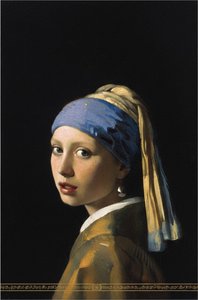
1631. Oil, 31.0 x 24.0 cm. Mořicův dům.

§ 1Katalogová data

- 31.0 x 24.0 cm


§ 2Abstraktní
Popis sbírného předmětu
This painting portrays a woman diligently sewing in a dimly lit room, attended by an older man offering her money – a visual representation of the complexities between virtue and indulgence within the domestic sphere.
 Zobrazit více
Biografie umělce
Judith Jans Leyster (1609–1660) byla průkopnou malarkou holandského zlatého věku, známou živočišnými scénami, portréty a stálemi. Její dílo z roku 1893 nabízí pohled do 17. století a mění dějiny umění.
§ 3Komentář
A Quiet Tension in Haarlem
Step closer and observe the stillness within this room. In 1631, Judith Jans Leyster captured a moment that feels remarkably private, as if we have interrupted a conversation mid-sentence. A woman sits at a table, her attention anchored to her sewing, a task representing the industriousness expected of her station. Yet, there is a subtle disruption in the air. An older man stands beside her, his presence marked by a gesture that carries weight: he presents a fist adorned with jewelry. It is a small movement, but it introduces an unspoken desire into this domestic setting, hinting at the complexities that can exist within even the most stable relationships.
The atmosphere is shaped by a masterful use of chiaroscuro. Leyster employs light and shadow to sculpt the figures, pulling them from the darkness of the room with a luminous touch. This interplay of light does more than define form; it creates a palpable sense of intimacy. The shadows are deep, yet they do not obscure, but rather focus our gaze on the textures of the scene—the delicate thread of the sewing, the glint of the ring, and the scattered books that lie nearby. These books offer a quiet metaphor for knowledge and education, suggesting an intellectual life existing alongside domestic duty.
The Weight of Virtue and Temptation
There is a profound psychological depth to be found in the way these figures interact without direct eye contact. The woman’s focus on her needlework symbolizes moral integrity and responsibility, values held dear in the Dutch Golden Age. However, the man's gesture acts as a subtle commentary on temptation and the potential for disruption. It is a delicate balance between duty and passion, rendered through tonal variations that imbue the scene with a sense of melancholy.
The setting itself speaks to the era of Haarlem’s flourishing. During this period of Dutch innovation, such genre scenes allowed artists to explore the nuances of human interaction. Leyster’s technique, characterized by confident yet delicate brushstrokes, allows us to feel the weight of the moment. The scene does not demand attention through loud colors; instead, it invites a slow contemplation of the tension between what is seen and what is felt. It remains a study of restraint, leaving us to wonder about the resolution of this silent encounter.
Otázky a odpovědi
Jaké barvy dominují dílu „The Proposition“ od Judith Leyster?
Barevná identita díla „The Proposition“ od Judith Leyster: paleta v odstínech Earthy, s převládající barvou Espresso (#43371c).
Jakou náladu a emoci vyjadřuje „The Proposition“ od Judith Leyster?
Zachycená nálada díla „The Proposition“ od Judith Leyster je Calm a jeho emocionální náboj je Reflective.
Jak je utkaná barevná kompozice díla „The Proposition“ od Judith Leyster?
V díle "The Proposition" se Serene kontrast snoubí s Unified Palette harmonií.


 Přepnout na tisk


 U děl nebo reprodukcí, u nichž je jakákoliv strana větší než 105 cm (přibližně 41 palců), bude rám dodán jako sestava v rozloženém stavu. Tato metoda zajišťuje bezpečné doručení a chrání dílo před poškozením během přepravy.