Záruka vrácení peněz · 100 dní Doprava po celém světě zdarma
449 587umělecká díla 30 613umělci 4 660muzea 32jazyky
Měna
    Jazyk
      Ateliér · Založeno 2015 · Paříž, Francie
      AllPaintingsStore
      allpaintingsstore.com
      Catalogue entry

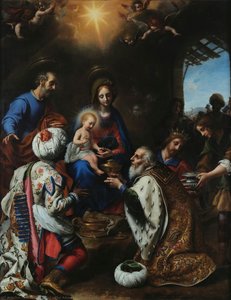
      Circumcision

      1580. Olejová barva, 95.0 x 73.0 cm. Státní Ermitáž.

      Fig. 1. Luis De Carbajal, Circumcision, 1580. Shown as the reproduction you are specifying: , .

      § 1Catalogue data

      § 2Abstract

      Popis sbírného předmětu

      Luis de Carbajalova katedrálová výstava - Toledoanský mistr zobrazující křesťanské hodnoty v období Renesance. Významná díla v Museo del Prado.

      Biografie umělce

      Explore the masterful works of Luis de Carbajal, a Spanish painter renowned for religious scenes & cathedral art. Discover his legacy in Toledo & beyond!

      § 3Commentary

      Luis de Carbajal: Toledo’s Gothic Soul Transformed

      Luis de Carbajal (c. 1531 – after 1618), born in Toledo, Spain, stands as one of the most prolific and influential painters of the Spanish Renaissance, particularly renowned for his monumental cathedral altarpieces that embody the grandeur and spiritual fervor of the era. While overshadowed by contemporaries like El Greco—with whom he shared a formative artistic connection—Carvajal’s distinctive style cemented his place in art history as a pivotal figure in Toledo’s artistic revival and a masterful interpreter of Gothic sensibilities adapted to the burgeoning humanist spirit. His output spanned decades, leaving behind an impressive legacy that continues to inspire admiration for its meticulous detail and emotive power. ### The Crucible of Influence: Early Training and El Greco's Legacy Carvajal’s formative years coincided with El Greco’s arrival in Toledo, establishing himself as a teacher and fostering a stylistic dialogue that would profoundly shape Carbajal's artistic vision. This mentorship instilled in him a fascination for dramatic lighting—a hallmark of El Greco’s Mannerist style—and an unwavering commitment to conveying spiritual depth through meticulously rendered figures. The influence of Villoldo, another prominent Toledo artist, contributed to his understanding of classical proportions and compositional balance, grounding his work in humanist principles alongside religious devotion. This confluence of artistic traditions ensured that Carbajal's oeuvre would never be merely decorative; it would always strive for profound emotional resonance. ### Cathedral Altarpieces: Monumental Expressions of Faith – A Synthesis of Tradition and Innovation Carvajal’s fame rests primarily on his monumental cathedral altarpieces—a genre that flourished during the Habsburg reign and served as a powerful vehicle for disseminating theological narratives. His most celebrated commissions included seven canvases depicting saints for the Escorial Cathedral, commissioned by Philip II to commemorate the Holy Spirit. These works exemplify Carbajal's mastery of technique: he employed oil paint on canvas with painstaking precision, layering translucent glazes to achieve luminous effects and capturing subtle nuances of expression in his figures. The composition—characterized by pyramidal structures and dramatic diagonals—mirrors the architectural grandeur of the cathedral itself, reinforcing its symbolic significance as a locus of divine presence. Each saint is portrayed with palpable emotion, conveying not merely doctrinal correctness but also spiritual contemplation. He skillfully blended Gothic stylistic elements – elongated figures, stylized drapery – with Renaissance humanist ideals, creating images that are both aesthetically stunning and spiritually uplifting. ### Symbolism and Emotion: Decoding the Visual Language of Faith Carvajal’s artistic approach wasn't simply about replicating religious iconography; it was about reimagining Gothic traditions within the framework of Renaissance humanism. He deliberately incorporated elements reminiscent of medieval art—such as stylized drapery and elongated figures—to evoke a sense of solemn reverence and to honor Toledo’s rich ecclesiastical heritage. The saints depicted are not merely representations of biblical figures but embodiments of virtues – compassion, humility, courage – reflecting the moral values championed by humanist thinkers. Furthermore, Carbajal's meticulous attention to detail—from the folds of robes to the expressions on faces—demonstrates a profound understanding of human psychology and elevates his paintings beyond mere visual spectacle into emotionally resonant experiences. The resulting images are imbued with an aura of solemn contemplation, inviting viewers to engage in a dialogue with divine grace. ### Rediscovery and Legacy: A Toledo Treasure Revisited – Illuminating Carbajal’s Enduring Influence Today, Carbajal’s canvases reside primarily in the Museo del Prado in Madrid, where they continue to captivate audiences with their breathtaking beauty and spiritual depth. Recent scholarship has illuminated the significance of his work within the broader context of Toledo’s artistic revival—a period marked by a renewed interest in classical ideals alongside an enduring devotion to Christian faith. His paintings stand as testament to Carbajal's skill, creativity, and unwavering commitment to conveying the sublime—a legacy that secures his place among Spain’s greatest artists and ensures that his masterpieces endure for generations to come. The Museo del Prado’s careful preservation of these monumental works guarantees that future generations will continue to marvel at Carbajal’s unparalleled ability to capture the essence of faith through masterful artistic execution.

      Otázky a odpovědi

      Jakým způsobem se dílo „Circumcision“ zapojuje do témat a stylu umělce Luis De Carbajal?

      Dílo „Circumcision“ sdílí s ostatními pracemi umělce Luis De Carbajal styl období Baroque Revival a opakující se témata: religious symbolism, gothic revival, patron saint imagery, cathedral decoration, baroque tradition.

      Jaké emoce vyjadřuje dílo z období Baroque Revival s názvem „Circumcision“?

      Melancholický emoce díla „Circumcision“ je doprovázena jeho stylem, který patří k Baroque Revival.

      Jak mohu objevit umělecká díla podobná dílu „Circumcision“ od Luis De Carbajal?

      Podobná díla k "Circumcision" naleznete na stránce Podobná díla tohoto díla.

      § 4The artist

      Luis De Carbajal

      Luis De Carbajal

      1531 - 1618, Spain

      Quick facts about Luis De Carbajal

      • Full Name: Luis de Carbajal y de la Cueva
      • Nationality: Spanish
      • Date Of Birth: 1531
      • Date Of Death: 1618
      • Place Of Birth: Toledo, Spain
      • Notable Artworks: ['Circumcision']
      • Artistic Movement Or Style: Religious Painting; Gothic Art Style
      • Artists Who Influenced This Artist: ['Alonso Berruguete']
      • Artists Or Movements Influenced By This Artist: ['El Greco']

      Biografie umělce

      The Radiant Legacy of Luis de Carbajal

      In the heart of Toledo, a city where the echoes of medieval devotion meet the burgeoning light of the Renaissance, the life of Luis de Carbajal unfolded as a profound testament to spiritual and artistic endurance. Born around 1531, Carbajal emerged from the vibrant, intellectually charged atmosphere of Spain’s most storied religious center. While history often casts a long shadow through the ethereal mysticism of El Greco, Carbajal stands as a monumental figure in his own right—a master who bridged the gap between the soaring, structural grandeur of the Gothic tradition and the nuanced, humanistic spirit of the Spanish Renaissance. His journey was one of deep connection to the sacred, moving through the halls of cathedrals and royal monasteries, leaving behind a visual legacy that captured the very soul of an era defined by faith.

      The foundations of Carbajal’s artistry were laid within the prestigious workshops of Toledo, under the guidance of masters like Juan de Villoldo. This early training provided him with a rigorous understanding of classical proportions and compositional balance, yet it was his encounter with the transformative energy of El Greco that truly ignited his creative vision. From this connection, Carbajal embraced the dramatic power of chiaroscuro, learning to manipulate light and shadow to evoke deep emotional resonance. Unlike the more otherworldly, elongated figures of his contemporary, Carbajal’s work maintained a grounded, architectural dignity. He drew inspiration from the very bones of Toledo—its ribbed arches, vaulted ceilings, and stained glass—incorporating these Gothic elements into his canvases to create spaces that felt both physically immense and spiritually intimate.

      A Master of the Altarpiece and Royal Commission

      Carbajal’s career was marked by an extraordinary level of productivity, with estimates suggesting he produced over 300 works during his long life. His talent earned him the prestigious distinction of being named a painter for King Philip II of Spain, a role that placed him at the epicenter of the Spanish Golden Age. His brush traveled through the most sacred corridors of the empire, from the intimate oratories of the Pardo Palace to the imposing halls of the monastery in El Escorial. One of his most significant achievements was the creation of seven large-scale canvases for the church of the Escorial in 1570, where he masterfully paired saints such as Cosme and Damián, and Cecilia and Barbara, weaving complex theological narratives into single, cohesive compositions.

      His ability to command large-scale religious subjects allowed him to become a primary architect of visual devotion. His works were not merely decorations but were essential tools for the dissemination of Catholic doctrine during a period of intense religious fervor. Through his meticulous attention to detail and his ability to render the divine within a tangible, earthly framework, he achieved several notable milestones:

      • Monumental Altarpieces: He specialized in massive cathedral commissions that served as the focal points for liturgical worship, embodying the grandeur of the Habsburg reign.
      • Narrative Depth: His paintings, such as the Circumcision, utilized dramatic lighting to guide the viewer's eye through complex biblical stories.
      • Ecclesiastical Influence: By decorating the Archbishop's chapel in Toledo and various convent cloisters, he shaped the visual identity of the Spanish Church.

      Historical Significance and Enduring Spirit

      The historical importance of Luis de Carbajal lies in his role as a stabilizer of tradition during a time of radical artistic change. While the art world moved toward the more distorted and emotive Mannerism, Carbajal provided a sense of continuity, anchoring the new humanist ideas within the familiar, comforting language of Gothic architecture and classical balance. He was a painter who understood that to move the heart, one must first respect the structure of the faith. His work remains a vital link in the evolution of Spanish art, representing a moment when the medieval past and the Renaissance future existed in perfect, painted harmony.

      Today, the traces of his genius can still be found in the great repositories of Spanish heritage, including the Museo del Prado in Madrid. To study Carbajal is to witness the pulse of Toledo itself—a master who took the stone and light of his homeland and transformed them into an eternal dialogue between the human and the divine. His life, stretching well into the 17th century, serves as a bridge across eras, ensuring that the spiritual gravity of the Spanish Renaissance would never be forgotten.

      § 5Comparanda

      § 6Questions

      Rychlé informace

      • Influences: El Greco
      • Location: Museo del Prado
      • Year: 1580
      • Title: Circumcision
      • Movement: Mannerism
      • Subject or theme: Religious ceremony

      Artový kvíz

      U každé otázky je pouze jedna správná odpověď.

      Otázka 1:
      Jaký styl umění je převážně zastoupen v tomto díle?
      Otázka 2:
      Kde najdete reprodukci tohoto obrazu?
      Otázka 3:
      Přibližně kdy byl tento obraz vytvořen?
      Otázka 4:
      ¿Cuál es el título de esta pintura?
      Otázka 5:
      ¿Quién fue Luis Carbajal?

      § 7Cite this entry

      AllPaintingsStore.com, “Luis De Carbajal, Circumcision (1580)”, https://allpaintingsstore.com/cs/art/luis-de-carbajal-circumcision-8Y35H8-cs/ArtistReproduction/ (accessed 2 říjen 2026).

      § 8The reproduction

      Ručně malovaná olejová reprodukce

      Rukou malované olejné plátno v libovolném rozměru i s rámem, vyrobené našimi umělci na zakázku. ( Přepnout na tisk Přepnout na digitální obraz)

      It is specified on the order sheet in the margin; the present state of that sheet reads as follows.

      Circumcision

      Technika reprodukce

      Rozměry reprodukce

      -

      Vybraní mistři umění

      Vyšší míra detailu, jemnosti a delší doba výroby

      -

      Možnosti rámování reprodukcí

      -

      -

      U děl nebo reprodukcí, u nichž je jakákoliv strana větší než 105 cm (přibližně 41 palců), bude rám dodán jako sestava v rozloženém stavu. Tato metoda zajišťuje bezpečné doručení a chrání dílo před poškozením během přepravy.

      Vyžaduje se odborná montáž – nejedná se o produkt pro svépomocnou realizaci (DIY).
      Sestava musí být složena a plátno napnuto zkušeným profesionálním rámovačem s použitím dřevěného lepidla (není součástí balení), kleští na napínání plátna a svorek pro udržení pravých úhlů křížů během schnutí lepidla. Nesprávná montáž nebo nerovnoměrné napnutí plátna může způsobit trvalé poškození uměleckého díla, které není kryto naší zárukou.

      • Jsou zahrnuty všechny lišty z masivního dřeva, přesně na míru nařezané.

      • Sestavuje se pomocí součástí balení (šroubů), plus dřevěného lepidla na rohové spoje, které není součástí balení a musí jej zajistit váš rámovač.

      • Vyžaduje se profesionální nářadí, které není součástí sady: kleště na napínání plátna a svorky pro udržení kolmosti příček během schnutí lepidla.

      Důležité:
      Spoje v rozích vyžadují lepidlo na dřevo, tyčinky musí být přichyceny pomocí svorek, dokud lepidlo zcela neuschne, a pro napnutí plátna na sestavený rám je zapotřebí kleští na natahování plátna. Žádný z těchto náčiní není součástí sady. Před objednáním této velikosti prosím zajistěte zkušeného profesionálního rámovače.

      Popisek díla

      -

      -

      Ochranný lak

      Lesklý lak (zvýrazňuje barvy, chrání před světlem a vlhkostí)

      -

      Přizpůsobit své umělecké dílo

      Příklady možných úprav: nahrazení obličeje fotografií zákazníka; přidání domácího mazlíčka (např. výměna kočky za psa); vložení skrytého vzkazu do pozadí; změna krajiny nebo prvků v pozadí.

      -

      Prioritní doručení

      Celosvětové doručení () za 3–4 týdny namísto standardních 5 týdnů. (30 říjen). Bez kompromisů v kvalitě.

      -

      Expresní doručení

      Celosvětová doprava () do 5 týdnů. (6 listopad).

      V ceně

      Celková cena za vybrané možnosti reprodukcí

      Kč 5604

      Included with every order

      • Zdarma celosvětová expresní doprava
      • Vysoce kvalitní lněné plátno
      • Kompletní pojištění přepravy
      • Záruka vrácení celního poplatku
      • Záruka věrného barevného souladu
      • 100dení lhůta pro vrácení zboží (pouze při vadách výroby)
      • 100% záruka vrácení peněz
      • Sleva při více objednávkách
      Prozkoumejte umělecká díla uspořádaná podle témat, stylů a charakteristik.
      Order sheet