

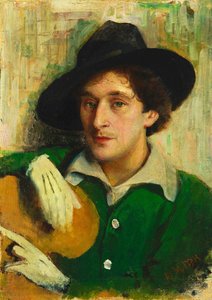
1923. Acrylic On Canvas.

§ 1Catalogue data


Toto umělecké dílo je chráněno autorským právem
Umělecké dílo zobrazené na této stránce je chráněno autorským zákonem, což znamená, že nemůžeme legálně vytvářet ani prodávat jeho identickou reprodukci. Tato ochrana je vymáhána na základě mezinárodních dohod, jako například Berberská úmluva a národními zákony, včetně těch stanovených v Americký autorský zákon – Díl 17. Všechna práva vyhrazena.
Jako etická a právní alternativa nabízíme vlastní, ručně malovaná umělecká díla inspirovaná originálem. Naši zdatní a profesionální umělci si pečlivě studují styl, náladu a uměleckou podstatu originálu, aby vytvořili nové, jedinečné dílo, které vyvolává stejný pocit – přičemž zůstává samostatným originálním tvůrčím dílem.
Tato metoda je plně v souladu s autorským právem, protože nezahrnuje kopírování ani duplikování chráněného díla. Jde o kreativní reinterpretaci – nový obraz, který je inspirován originálem, ale není s ním identický.
 Více informací
§ 2Abstract
Popis sbírného předmětu
Biografie umělce
Poznejte klidnou krásu obrazu „Ležící básník“ Marca Chagalla – ikonického díla z roku 1915 kombinujícího kubismus a symbolismus. Objevte jeho tajemství a emoční hloubku!
§ 3Commentary
Asking the Way: A Dreamscape in Black Ink
Marc Chagall’s “Asking the Way,” created around 1923 during his Parisian period, isn't merely an image; it’s a portal into a subconscious realm—a testament to Chagall’s unwavering commitment to capturing the essence of memory and imagination. Executed in black ink on white paper, this etching embodies the spirit of Naïve Art (Primitivism), prioritizing expressive line work over meticulous realism.
- Composition & Perspective: The artwork presents an asymmetrical arrangement dominated by a colossal head—a motif recurrent throughout Chagall’s oeuvre—positioned prominently at the lower half. A man, adorned with a hat, navigates this landscape atop the head, holding reins or a whip, suggesting guidance and control amidst a simplified backdrop of trees and buildings. Notably absent is traditional perspective; instead, spatial relationships are dictated by symbolic significance, fostering a dreamlike atmosphere.
- Technique & Line Work: Chagall’s masterful technique relies on freehand drawing utilizing black ink on paper—a deliberate choice that maximizes tonal variation through hatching and cross-hatching. These lines aren't merely descriptive; they pulsate with emotion, conveying a sense of movement and capturing the fluidity characteristic of Chagall’s artistic vision.
- Symbolism & Emotional Impact: The oversized head likely represents memory or perhaps societal structures—a recurring symbol in Chagall’s work. The man's posture speaks to an active quest for direction, mirroring a broader exploration of identity and navigating complex realities. An undercurrent of melancholy pervades the scene, reflecting Chagall’s profound sensitivity to human experience.
- Historical Context: Produced during the turbulent years following World War I, “Asking the Way” reflects the anxieties and aspirations of its time—a period marked by disillusionment yet brimming with artistic experimentation. Chagall's embrace of Naïve Art aligns with a broader movement rejecting academic conventions in favor of unfiltered emotion and intuitive representation.
This etching’s monochromatic palette amplifies the impact of line work, emphasizing texture and creating depth without resorting to illusionistic techniques. It invites contemplation—a journey into Chagall's inner world where dreams intertwine with reality, leaving an indelible impression on any viewer fortunate enough to experience its evocative beauty.
Recommended Reproduction: A high-quality hand-painted reproduction of “Asking the Way” captures the essence of Chagall’s artistic spirit, bringing his dreamlike vision to life in vibrant color—a stunning addition to any art collection or interior design scheme.Otázky a odpovědi
V jaké orientaci je dílo „Asking the Way“ od Marc Chagall?
Formát díla „Asking the Way“ je Portrait. Tato informace vám pomůže při plánování umístění reprodukce.
Jak lze vysvětlit situaci s autorskými právy u díla „Asking the Way“ od Marc Chagall?
Dílo „Asking the Way“ od Marc Chagall spadá do stále chráněno autorským právem. Autorská práva se počítají od roku úmrtí autora; Marc Chagall zemřel(a) v roce 1985.
Jak je utkaná barevná kompozice díla „Asking the Way“ od Marc Chagall?
Barevná kompozice díla „Asking the Way“ od Marc Chagall spojuje Serene kontrast s Discordant Palette harmonií.


 Přepnout na tisk


 U děl nebo reprodukcí, u nichž je jakákoliv strana větší než 105 cm (přibližně 41 palců), bude rám dodán jako sestava v rozloženém stavu. Tato metoda zajišťuje bezpečné doručení a chrání dílo před poškozením během přepravy.


