


 Zobrazit v interiéru
 Odeslat
 Sdílet
 Podrobnosti
 Průvodce

 Stáhnout obrázek
 Podobné kousky
 Rentgenové snímky
 Slideshow
 Statistiky
Mars and Venus


 Přečíst si více
Ručně malovaná olejová reprodukce
Ručně malované olejné plátno v libovolném rozměru i s rámem, vyrobené našimi umělci na zakázku. ( Přepnout na tiskové verze Přepnout na digitální verzi obrazu)




P118B Kč10

P118H Kč10

P118W Kč10

P438Z Kč10

P508JH Kč12

P508YH Kč12

P805H Kč10

P805Z Kč10

P919BZ Kč10

P919G Kč10

P919XJ Kč10

P959ZH Kč10

P968JZ Kč12

W106C Kč8

W218G Kč10

W218JH Kč8

W218Y Kč10

W307PJ Kč10

W316G Kč10

W316PJ Kč8

W316Y Kč10

W398PJ Kč8

W4111J Kč10

W500HY Kč15

W500JH Kč15

W692G Kč12

W849H Kč8

W940BG Kč15

W953PJ Kč8




Vyberte si z našich přednastavených velikostí, které odpovídají původním proporcím díla.

Zadejte šířku a výšku, které potřebujete pro váš rám nebo stěnu. Protože se jedná o ruční malbu, při výběru jiného formátu může umělec kolem obrazu domalovat o něco více, nebo jej mírně oříznout — rozhodnete si vy. Před zahájením malby vám zašleme digitální náhled ke schválení. Obraz zobrazený na této stránce neodpovídá skutečnému výsledku — pouze digitální náhled jej zobrazuje.
Po přijetí objednávky vám tým AllPaintingsStore.com zašle e-mail s pokyny a poskytne náhledovou verzi.
Celosvětová doprava () za 3–4 týdny namísto standardních 5 týdnů. (23 říjen). Bez kompromisů v kvalitě.

Zdarma celosvětová expresní doprava

Vysoce kvalitní lněné plátno

Úplné pojištění přepravy

Záruka vrácení celního poplatku

Záruka věrného barevného shodu

100dení lhůta pro vrácení zboží (pouze při vadách výroby)

100% garance vrácení peněz

Sleva při více objednávkách
 Skleněná varianta je dostupná pouze u rozměrů menších než 110 cm

Mars and Venus
Technika provedení
Velikost reprodukce
-


Celková cena
Kč 6594
A Mythological Encounter: Nicolas Poussin’s *Mars and Venus*
Painted in 1626, *Mars and Venus* by Nicolas Poussin is a captivating example of French Baroque painting, steeped in classical mythology. While often misidentified as Diana and Actaeon, the scene depicts the Roman deities Mars (god of war) and Venus (goddess of love), caught in a moment of intimate repose before being interrupted – a theme central to Poussin’s exploration of human passion and divine intervention.
Decoding the Scene: Subject & Narrative
- Mythological Basis: The painting draws upon the well-known Roman myth of Mars and Venus, whose illicit affair was a source of scandal amongst the gods. Poussin doesn’t depict the moment of discovery, but rather a fleeting instance *before* disruption, heightening the sense of impending drama.
- Compositional Focus: The central grouping features Mars and Venus reclining amidst a lush landscape, surrounded by attendant figures – nymphs, satyrs, and hunting companions. This crowded composition isn’t chaotic; Poussin masterfully organizes it using a pyramidal structure, drawing the eye towards the entwined deities at its apex.
- Impending Disruption: The presence of hunting dogs and figures in the background subtly foreshadows an intrusion, creating a palpable tension. This anticipation is key to understanding Poussin’s intent – he isn't simply illustrating a story, but exploring the psychological state *before* a pivotal moment.
Style & Technique: A Baroque Classicist
- Baroque Drama: While rooted in classical ideals, Poussin employs Baroque techniques to enhance the emotional impact. Dramatic lighting – strong contrasts between illuminated areas and deep shadows (chiaroscuro) – creates a theatrical quality.
- Linear Precision: Unlike many of his Baroque contemporaries who favored painterly brushwork, Poussin prioritizes clarity of line and form. This emphasis on *disegno* (drawing) is a hallmark of his style, lending the scene a sense of order and intellectual rigor.
- Oil on Canvas: Executed in oil paints on canvas, Poussin’s technique involves meticulous layering to achieve rich textures and subtle gradations of tone. The drapery folds are particularly noteworthy, demonstrating his skill in rendering fabric with both realism and elegance.
Symbolism & Interpretation: Love, War, and Divine Order
- Contrasting Forces: The pairing of Mars and Venus embodies the inherent tension between love and war – two powerful forces that shape human existence. Their union, though passionate, is forbidden and threatens the established order.
- The Landscape as Metaphor: The secluded, wooded landscape symbolizes a hidden realm where passions can flourish unchecked. However, its very seclusion also suggests vulnerability to external forces.
- Divine Caprice: Poussin’s work often explores the capricious nature of the gods and the consequences of human transgression. *Mars and Venus* serves as a reminder that even deities are subject to fate and moral consequence.
Historical Context & Legacy: A Bridge Between Eras
- Poussin in Rome: Painted during Poussin’s first period in Rome, the artwork reflects his deep engagement with classical antiquity and Renaissance art. He was particularly influenced by Raphael, whose emphasis on composition and idealized forms is evident here.
- A Lasting Influence: Poussin's work profoundly impacted subsequent generations of artists, including Jacques-Louis David and Paul Cézanne. His commitment to clarity, order, and intellectual rigor established him as a pivotal figure in the development of French painting.
- Emotional Resonance: Beyond its historical significance, *Mars and Venus* continues to resonate with viewers today due to its timeless themes of love, desire, and the complexities of human relationships. It’s a work that invites contemplation and offers a glimpse into the enduring power of myth.
Otázky a odpovědi
Jak se u díla „Mars and Venus“ od Nikolás Poussin propojují emoce a příležitost k darování?
Dramatický nádech díla „Mars and Venus“ od Nikolás Poussin odpovídá i jeho doporučenému příležitosti k darování: Výročí.
Mohu si před koupí prohlédnout „Mars and Venus“ od Nikolás Poussin na své vlastní stěně?
Dílo „Mars and Venus“ nabízí náhled v rozšířené realitě: na stránce Náhled v AR si jej můžete prohlédnout ve vlastním prostoru pomocí kompatibilního zařízení.
Jak si mohu stáhnout obrázek díla „Mars and Venus“ od Nikolás Poussin?
Obraz díla „Mars and Venus“ od Nikolás Poussin si můžete stáhnout na stránce s k dispozici pro stažení Stáhnout: stažení digitálního obrazu ve vysokém rozlišení.
Související díla


Biografie umělce
Nicolas Poussin – A Life Steeped in Classical Reverie
Nicolas Poussin, a name synonymous with the grandeur of French Baroque painting, was nonetheless a soul deeply rooted in Italian soil for much of his artistic life. Born in Les Andelys, Normandy, in June 1594, his early years remain somewhat veiled in mystery, yet they undoubtedly laid the foundation for a career that would become pivotal in shaping the classical tradition within French art. Though he briefly studied in Paris during the early 1610s, absorbing influences from lesser-known artists of the time, it was his journey to Rome in 1624 that truly ignited his artistic destiny. This wasn’t merely a geographical relocation; it was an immersion into the heart of antiquity, a pilgrimage to the very source of inspiration that would define his aesthetic vision. Poussin's initial forays into painting were marked by a sensuous quality reminiscent of Venetian masters like Titian, yet even in these early works, a nascent sense of order and intellectual rigor began to emerge—a foreshadowing of the style he would so masterfully refine.Early Influences and Parisian Years
His formative years were spent honing his skills under Quentin Varin, a respected artist who instilled in him an appreciation for draughtsmanship and observation. Shortly thereafter, Poussin ventured into Paris, where he engaged with the artistic currents of the era—particularly those championed by Raphael and Giulio Romano—artists whose harmonious compositions and graceful forms would profoundly shape his subsequent style. The Parisian environment fostered intellectual curiosity and exposed him to humanist scholarship, influencing his worldview and fueling his desire for artistic excellence. During this period, Poussin produced a series of mythological drawings that showcased his burgeoning talent and demonstrated his commitment to capturing the beauty and dignity of classical ideals. These early works established a foundation for his later explorations of history and myth—themes he would revisit throughout his illustrious career.The Roman Years: Forging a Classical Ideal
Rome proved to be more than just a studio for Poussin; it became his intellectual crucible. He found himself amidst a vibrant circle of scholars, archaeologists, and fellow artists, notably Cassiano dal Pozzo, whose profound understanding of classical antiquity profoundly influenced the artist’s approach. Dal Pozzo's dedication to meticulously documenting ancient remains instilled in Poussin a deep respect for historical accuracy and a desire to imbue his paintings with a sense of timelessness. This period saw Poussin move away from the flamboyant exuberance of some of his contemporaries, instead embracing a style characterized by clarity, balance, and a deliberate emphasis on linear composition. He meticulously studied Raphael’s works, absorbing their harmonious arrangements and graceful forms, while simultaneously drawing inspiration from ancient sculptures and literary sources like Ovid's *Metamorphoses*. His paintings began to populate with figures drawn from classical history and mythology, rendered not as mere decorative elements but as embodiments of moral virtues and philosophical ideals. He became acquainted with Cardinal Francesco Barberini, whose patronage provided him with invaluable support and access to a stimulating intellectual milieu.Style and Technique: Classical Restraint Amidst Baroque Flourish
Poussin’s artistic style distinguished itself from the prevailing Baroque trends—characterized by dramatic emotion and opulent ornamentation—through its unwavering commitment to classical principles. He rejected excessive theatricality in favor of serene beauty, prioritizing compositional clarity and harmonious color palettes. His technique involved painstaking draughtsmanship, utilizing precise lines and subtle shading to create illusions of depth and perspective that mirrored the achievements of Renaissance masters. The artist’s meticulous attention to detail—evident in his depictions of drapery folds, facial expressions, and landscape vistas—reflected a profound understanding of artistic craftmanship. He skillfully blended influences from Venetian painters like Titian with the stylistic refinements of Raphael, resulting in an oeuvre marked by both sensuous richness and intellectual rigor.Legacy: Shaping French Art and Beyond
Nicolas Poussin’s influence extended far beyond his own lifetime, establishing a cornerstone of French Classical painting. His unwavering devotion to classical ideals served as inspiration for subsequent generations of artists—Jacques-Louis David and Paul Cézanne among them—who acknowledged their debt to Poussin's stylistic precision and philosophical depth. He championed the pursuit of beauty and order, advocating for artistic training rooted in humanist scholarship and informed by a deep appreciation for antiquity. His enduring legacy resides not merely in his magnificent paintings but also in his contribution to shaping the intellectual landscape of France—a testament to an artist who transcended mere aesthetic achievement to become a symbol of cultural excellence. He remains one of the most revered figures in French art history, celebrated for his mastery of technique and his profound engagement with timeless themes.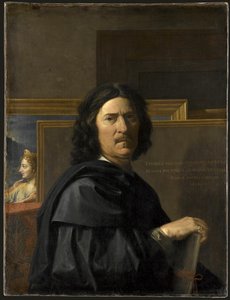
Nikolás Poussin
1594 - 1665 , Francie
Rychlé informace
- Artistic Movement Or Style: Baroko, Klasicismus
- Artists Or Movements Influenced By This Artist: ['Jacques-Louis David']
- Artists Who Influenced This Artist:
- Raphael
- Titian
- Date Of Birth: Les Andelys, Francie
- Date Of Death: Řím, Italie
- Full Name: Nicolas Poussin
- Nationality: Francouzský
- Notable Artworks:
- Mrtvý Němcův
- Sedm Sakramentů Série
- Římanská cesta
- Place Of Birth: Francie
Související články

Baroque Classicism: The Grandeur of Order and Drama in 17th-Century Art History
Explore the profound elegance of Baroque Classicism. Discover how 17th-century masters synthesized dramatic emotion with classical order through the lens of the Counter-Reformation and the works of legends like Carlo Maratta and Andrea Sacchi.

Baroque Classicism: Reconciling Drama & Order in 17th-Century Art
Explore the captivating world of Baroque Classicism! Discover its history, key artists like Caravaggio & Rubens, and defining characteristics. Expert insights & high-quality reproductions at AllPaintingsStore.

Barokní drama: Umění, které vnáší velkolepost do domova
Objevte velkolepost barokního stylu v interiéru! Průvodce klíčovými prvky, inspirace a tipy pro integraci do moderního bydlení. Reprodukce umění s .

Nicolas Poussin: Classicism, Allegory & Order in 17th-Century French Painting
Explore the life & work of Nicolas Poussin, a master of French Classicism. Discover his allegorical paintings, Roman influences, and enduring impact on art history. Expert analysis & insights.

Barokní malba: 10 mistrovských děl, které definovaly éru | AllPaintingsStore.cz
Prozkoumejte 10 ikonických děl barokní malby – od Rembrandta po Caravaggia. Objevte příběhy mistrů, techniky a dramatickou krásu tohoto uměleckého období. Reprodukce obrazů nejvyšší kvality na AllPaintingsStore.cz! Prohlédněte si celou kolekci online.


