Záruka vrácení peněz · 100 dní Doprava po celém světě zdarma
449 564umělecká díla 30 613umělci 4 658muzea 32jazyky
Záznam v katalogu

The Ordination

1640. Acrylic On Canvas.

Obr. 1. Nikolás Poussin, The Ordination, 1640. Zobrazeno jako vámi zvolená reprodukce: , .

§ 1Katalogová data

§ 2Abstraktní

Popis sbírného předmětu

Nicolas Poussin, born in Le Havre, France, was a pivotal figure in French Baroque painting. Influenced by Italian masters like Titian and Andrea Celesti, he championed classical ideals within his art, creating iconic landscapes and mythological narratives that continue to inspire.

Biografie umělce

Objevte mistrovské barokní díla Nikolase Poussina – známé pro klidné krajinky a mytologické příběhy inspirované klasickou antickou kulturou. Najdete ikonické výtvarné dílo na AllPaintingsStore.

§ 3Komentář

A Moment of Sacred Revelation: Exploring Nicolas Poussin’s “The Ordination”

Nicolas Poussin, a titan amongst French Baroque painters, possessed an uncommon ability to distill the grandeur of antiquity into canvases imbued with serene contemplation and profound spiritual resonance. Born in Le Havre in 1594, his formative years remain shrouded in some obscurity, yet they undeniably nurtured within him a lifelong fascination for classical ideals—a passion that would irrevocably shape his artistic trajectory. While he briefly dabbled in Parisian academic circles early in his career, absorbing influences from contemporaries like Bonnart and Celesti, it was his pilgrimage to Rome in 1624 that truly cemented his reputation as one of the era’s foremost masters. This wasn't merely a relocation; it was an immersion into the very bedrock of Western artistic tradition—a deliberate confrontation with the sculptures and frescoes of Michelangelo and Raphael—that would forge the distinctive aesthetic vision we recognize today.
  • Subject Matter: The painting depicts a solemn religious ceremony – specifically, the ordination of a priest. This pivotal moment symbolizes spiritual ascension and divine grace, central themes within Christian iconography.
  • Style: Poussin’s work exemplifies Classicism, prioritizing clarity, balance, and idealized forms reminiscent of Greco-Roman sculpture. He eschewed the turbulent dynamism favored by Venetian painters like Titian for a deliberate restraint that conveys solemn dignity.
  • Technique: Employing meticulous oil painting techniques—characterized by layered glazing and subtle tonal gradations—Poussin achieved an unparalleled level of realism while simultaneously elevating the scene to a realm of timeless beauty. His masterful handling of light creates an ethereal atmosphere, enhancing the spiritual significance of the depicted event.

Historical Context: Rome and the Renaissance Ideal

The painting’s creation coincided with the flourishing artistic fervor of Rome during the High Renaissance—a period marked by a renewed interest in classical art and philosophy. Poussin actively engaged with this intellectual climate, drawing inspiration from humanist ideals that championed reason and virtue. The depiction of Jesus surrounded by apostles reflects the theological preoccupations of the time, emphasizing faith, humility, and divine authority. Furthermore, the architectural backdrop—a stylized Roman temple—underscores the painting’s connection to the grandeur of antiquity and its aspiration to represent universal truths.

Symbolism: Layers of Meaning Within Tranquility

“The Ordination” is replete with symbolic elements designed to communicate profound spiritual concepts. The central figure of Jesus, elevated in posture and radiating serenity, embodies divine compassion and leadership. The apostles kneeling before him signify submission to God’s will and the importance of ecclesiastical hierarchy. The book held aloft by one apostle symbolizes scripture—the Word of God—serving as a conduit for divine revelation. These carefully chosen symbols contribute to the painting's overarching message: the transformative power of faith and the sanctity of sacred ritual.

Emotional Impact: A Vision of Heavenly Grace

Despite its restrained composition, “The Ordination” possesses an undeniable emotional resonance. The luminous quality of the light—characteristic of Poussin’s signature style—creates a sense of tranquility and spiritual illumination. Viewers are invited to contemplate the profound beauty inherent in religious devotion and to experience a glimpse of divine grace. This enduring masterpiece continues to captivate audiences centuries after its creation, demonstrating the timeless appeal of classical art's ability to convey universal human emotions.

Further Exploration: Discover More About Nicolas Poussin

For a deeper understanding of Nicolas Poussin’s artistic legacy and his influence on subsequent generations of painters, explore resources such as Nicolas Poussin's Artist Database, Nicolas Poussin: Classicism, Allegory & Order in 17th-Century French Painting and Seven Sacraments (Poussin) - Wikipedia.

Otázky a odpovědi

Působí barvy díla "The Ordination" výrazně, nebo jemně?

Intenzita barev díla „The Ordination“ je Vivid. Tato hodnota vyjadřuje, jak výrazné barvy působí.

Kdo je autorem díla "The Ordination" a do kterého uměleckého směru patří?

Autorem díla "The Ordination" je Nikolás Poussin, který patřil k hnutí Baroque Classicism.

Jaké umístění se hodí k formátu díla „The Ordination“ od Nikolás Poussin?

Dílo v Landscape formátu, reprodukce díla „The Ordination“, se doporučuje do Living Room.
§ 4Autor díla

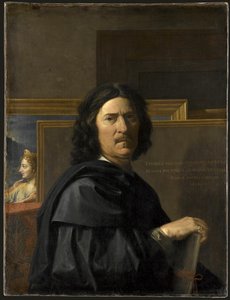
Nikolás Poussin

Nikolás Poussin

1594 - 1665, Francie

Rychlé informace o umělci Nikolás Poussin

  • Artistic Movement Or Style: Baroko, Klasicismus
  • Artists Or Movements Influenced By This Artist: ['Jacques-Louis David']
  • Artists Who Influenced This Artist:
    • Raphael
    • Titian
  • Date Of Birth: Les Andelys, Francie
  • Date Of Death: Řím, Italie
  • Full Name: Nicolas Poussin
  • Nationality: Francouzský
  • Notable Artworks:
    • Mrtvý Němcův
    • Sedm Sakramentů Série
    • Římanská cesta
  • Place Of Birth: Francie

Biografie umělce

Nicolas Poussin – A Life Steeped in Classical Reverie

Nicolas Poussin, a name synonymous with the grandeur of French Baroque painting, was nonetheless a soul deeply rooted in Italian soil for much of his artistic life. Born in Les Andelys, Normandy, in June 1594, his early years remain somewhat veiled in mystery, yet they undoubtedly laid the foundation for a career that would become pivotal in shaping the classical tradition within French art. Though he briefly studied in Paris during the early 1610s, absorbing influences from lesser-known artists of the time, it was his journey to Rome in 1624 that truly ignited his artistic destiny. This wasn’t merely a geographical relocation; it was an immersion into the heart of antiquity, a pilgrimage to the very source of inspiration that would define his aesthetic vision. Poussin's initial forays into painting were marked by a sensuous quality reminiscent of Venetian masters like Titian, yet even in these early works, a nascent sense of order and intellectual rigor began to emerge—a foreshadowing of the style he would so masterfully refine.

Early Influences and Parisian Years

His formative years were spent honing his skills under Quentin Varin, a respected artist who instilled in him an appreciation for draughtsmanship and observation. Shortly thereafter, Poussin ventured into Paris, where he engaged with the artistic currents of the era—particularly those championed by Raphael and Giulio Romano—artists whose harmonious compositions and graceful forms would profoundly shape his subsequent style. The Parisian environment fostered intellectual curiosity and exposed him to humanist scholarship, influencing his worldview and fueling his desire for artistic excellence. During this period, Poussin produced a series of mythological drawings that showcased his burgeoning talent and demonstrated his commitment to capturing the beauty and dignity of classical ideals. These early works established a foundation for his later explorations of history and myth—themes he would revisit throughout his illustrious career.

The Roman Years: Forging a Classical Ideal

Rome proved to be more than just a studio for Poussin; it became his intellectual crucible. He found himself amidst a vibrant circle of scholars, archaeologists, and fellow artists, notably Cassiano dal Pozzo, whose profound understanding of classical antiquity profoundly influenced the artist’s approach. Dal Pozzo's dedication to meticulously documenting ancient remains instilled in Poussin a deep respect for historical accuracy and a desire to imbue his paintings with a sense of timelessness. This period saw Poussin move away from the flamboyant exuberance of some of his contemporaries, instead embracing a style characterized by clarity, balance, and a deliberate emphasis on linear composition. He meticulously studied Raphael’s works, absorbing their harmonious arrangements and graceful forms, while simultaneously drawing inspiration from ancient sculptures and literary sources like Ovid's *Metamorphoses*. His paintings began to populate with figures drawn from classical history and mythology, rendered not as mere decorative elements but as embodiments of moral virtues and philosophical ideals. He became acquainted with Cardinal Francesco Barberini, whose patronage provided him with invaluable support and access to a stimulating intellectual milieu.

Style and Technique: Classical Restraint Amidst Baroque Flourish

Poussin’s artistic style distinguished itself from the prevailing Baroque trends—characterized by dramatic emotion and opulent ornamentation—through its unwavering commitment to classical principles. He rejected excessive theatricality in favor of serene beauty, prioritizing compositional clarity and harmonious color palettes. His technique involved painstaking draughtsmanship, utilizing precise lines and subtle shading to create illusions of depth and perspective that mirrored the achievements of Renaissance masters. The artist’s meticulous attention to detail—evident in his depictions of drapery folds, facial expressions, and landscape vistas—reflected a profound understanding of artistic craftmanship. He skillfully blended influences from Venetian painters like Titian with the stylistic refinements of Raphael, resulting in an oeuvre marked by both sensuous richness and intellectual rigor.

Legacy: Shaping French Art and Beyond

Nicolas Poussin’s influence extended far beyond his own lifetime, establishing a cornerstone of French Classical painting. His unwavering devotion to classical ideals served as inspiration for subsequent generations of artists—Jacques-Louis David and Paul Cézanne among them—who acknowledged their debt to Poussin's stylistic precision and philosophical depth. He championed the pursuit of beauty and order, advocating for artistic training rooted in humanist scholarship and informed by a deep appreciation for antiquity. His enduring legacy resides not merely in his magnificent paintings but also in his contribution to shaping the intellectual landscape of France—a testament to an artist who transcended mere aesthetic achievement to become a symbol of cultural excellence. He remains one of the most revered figures in French art history, celebrated for his mastery of technique and his profound engagement with timeless themes.

§ 5Podobná díla

§ 6Otázky

Rychlé informace

  • Year: 1640
  • Subject or theme: Religious ceremony; Ordination
  • Influences: Italian Renaissance
  • Notable elements or techniques: Classical composition; Dramatic lighting
  • Artistic style: Allegorical painting

Artový kvíz

U každé otázky je pouze jedna správná odpověď.

Otázka 1:
What artistic style is prominently featured in Nicolas Poussin’s ‘The Ordination’?
Otázka 2:
The painting depicts a religious scene centered around which event?
Otázka 3:
What is the primary visual element that contributes to the solemn atmosphere of ‘The Ordination’?
Otázka 4:
According to the description, how many figures are visible in the painting?
Otázka 5:
What symbolic object is prominently displayed in the painting, representing religious authority?

§ 7Citovat tento záznam

AllPaintingsStore.com, “Nikolás Poussin, The Ordination (1640)”, https://allpaintingsstore.com/cs/art/nicolas-poussin-the-ordination-8YDKV4-en/ArtistReproduction/ (dne 12 říjen 2026 zkontolováno).

§ 8Reprodukce díla

Ručně malovaná olejová reprodukce

Rukou malované olejné plátno v libovolném rozměru i s rámem, vyrobené našimi umělci na zakázku. ( Přepnout na tisk Přepnout na digitální obraz)

Je uvedeno na okraji objednávkového listu; aktuální stav tohoto listu zní následovně.

The Ordination

Technika reprodukce

Rozměry reprodukce

-

Vybraní mistři umění

Vyšší míra detailu, jemnosti a delší doba výroby

-

Možnosti rámování reprodukcí

-

-

U děl nebo reprodukcí, u nichž je jakákoliv strana větší než 105 cm (přibližně 41 palců), bude rám dodán jako sestava v rozloženém stavu. Tato metoda zajišťuje bezpečné doručení a chrání dílo před poškozením během přepravy.

Vyžaduje se odborná montáž – nejedná se o produkt pro svépomocnou realizaci (DIY).
Sestava musí být složena a plátno napnuto zkušeným profesionálním rámovačem s použitím dřevěného lepidla (není součástí balení), kleští na napínání plátna a svorek pro udržení pravých úhlů křížů během schnutí lepidla. Nesprávná montáž nebo nerovnoměrné napnutí plátna může způsobit trvalé poškození uměleckého díla, které není kryto naší zárukou.

  • Jsou zahrnuty všechny lišty z masivního dřeva, přesně na míru nařezané.

  • Sestavuje se pomocí součástí balení (šroubů), plus dřevěného lepidla na rohové spoje, které není součástí balení a musí jej zajistit váš rámovač.

  • Vyžaduje se profesionální nářadí, které není součástí sady: kleště na napínání plátna a svorky pro udržení kolmosti příček během schnutí lepidla.

Důležité:
Spoje v rozích vyžadují lepidlo na dřevo, tyčinky musí být přichyceny pomocí svorek, dokud lepidlo zcela neuschne, a pro napnutí plátna na sestavený rám je zapotřebí kleští na natahování plátna. Žádný z těchto náčiní není součástí sady. Před objednáním této velikosti prosím zajistěte zkušeného profesionálního rámovače.

Popisek díla

-

-

Ochranný lak

Lesklý lak (zvýrazňuje barvy, chrání před světlem a vlhkostí)

-

Přizpůsobit své umělecké dílo

Příklady možných úprav: nahrazení obličeje fotografií zákazníka; přidání domácího mazlíčka (např. výměna kočky za psa); vložení skrytého vzkazu do pozadí; změna krajiny nebo prvků v pozadí.

-

Prioritní doručení

Celosvětové doručení () za 3–4 týdny namísto standardních 5 týdnů. (9 listopad). Bez kompromisů v kvalitě.

-

Expresní doručení

Celosvětová doprava () do 5 týdnů. (16 listopad).

V ceně

Celková cena za vybrané možnosti reprodukcí

Kč 5617

Součást každé objednávky

  • Zdarma celosvětová expresní doprava
  • Vysoce kvalitní lněné plátno
  • Kompletní pojištění přepravy
  • Záruka vrácení celního poplatku
  • Záruka věrného barevného souladu
  • 100dení lhůta pro vrácení zboží (pouze při vadách výroby)
  • 100% záruka vrácení peněz
  • Sleva při více objednávkách
Objednávací formulář