Záruka vrácení peněz · 100 dní Doprava po celém světě zdarma
449 587umělecká díla 30 613umělci 4 660muzea 32jazyky
Měna
    Jazyk
      Ateliér · Založeno 2015 · Paříž, Francie
      AllPaintingsStore
      allpaintingsstore.com
      Catalogue entry

      Untitled 25

      Acrylic On Canvas.

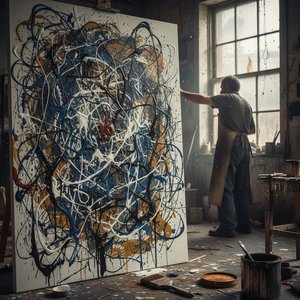
      Fig. 1. Jackson Pollock, Untitled 25. Shown as the reproduction you are specifying: , .

      § 1Catalogue data

      § 2Abstract

      Popis sbírného předmětu

      Explore Jackson Pollock’s "Untitled 6" – a dynamic abstract expressionist painting featuring chaotic black & red splatters. Action painting at its finest! #Pollock #AbstractArt #ModernArt

      Biografie umělce

      Paul Jackson Pollock (1912-1956) byl americký malíř, průkopník abstrakce a „drip“ techniky. Jeho dynamické, expresivní obrazové plochy, jako "Blue Poles", definovaly moderní umění a ovlivnily generace umělců. #Pollock #Abstraktníexpresionismus

      § 3Commentary

      A Dance of Chaos and Color: Unpacking Paul Jackson Pollock’s “Untitled 25”

      Paul Jackson Pollock's "Untitled 25" stands as a cornerstone of Abstract Expressionism, embodying the movement’s radical departure from representational art and its embrace of spontaneity and subconscious exploration. Painted in 1948 during his prolific period at Black Mountain College, this canvas pulsates with an energy that transcends mere pigment; it's a visual manifestation of process itself—a testament to Pollock’s revolutionary technique and a reflection of the anxieties and aspirations shaping postwar American culture.

      The Method Behind the Madness: Action Painting

      Pollock’s approach to painting was unlike anything seen before. Abandoning traditional brushes, he opted for “drip” or “splatter,” pouring paint onto an unstretched canvas laid horizontally on the floor. Using sticks, knives, and even syringes, he manipulated the paint with rhythmic movements—a process he termed "action painting." This method wasn’t about meticulously crafting a finished image but rather allowing chance to guide the composition. As Pollock famously stated, “I have no fears about making changes, destroying the image, etc., because the painting has a life of its own.” The resulting surface is characterized by interwoven layers of pigment—thickly applied drips and splatters interspersed with thinner washes—creating a textured tapestry that defies easy categorization.

      Symbolism Within the Flow

      While ostensibly rejecting symbolism in favor of pure abstraction, “Untitled 25” nevertheless speaks volumes about the artist’s inner state. The prominent birds scattered across the canvas aren't merely decorative elements; they represent freedom and aspiration—themes central to Pollock’s worldview and mirroring the broader cultural preoccupation with overcoming constraints during the postwar era. Their placement is deliberate, drawing the eye upwards and suggesting a yearning for transcendence. Similarly, the clock – positioned on the right side – could be interpreted as a commentary on time's relentless march and perhaps an acknowledgement of mortality—a poignant juxtaposition within the seemingly carefree dance of color and texture.

      Historical Context: The Rise of Abstract Expressionism

      “Untitled 25” emerged during a period of profound artistic upheaval following World War II. Artists like Pollock, Willem de Kooning, Mark Rothko, and Jackson Pollock were rejecting European Surrealist influences and forging their own path toward emotional expression. They sought to capture the psychological impact of trauma and disillusionment—the anxieties surrounding nuclear weapons and the pervasive sense of uncertainty about the future—through non-figurative art that prioritized feeling over intellect. This painting exemplifies the movement’s core tenets: immediacy, spontaneity, and a rejection of illusionistic representation.

      Emotional Resonance: A Window into Pollock's Soul

      Ultimately, “Untitled 25” succeeds in conveying a palpable sense of dynamism and unease. The chaotic arrangement of paint—the swirling reds and blacks—captures the turbulent emotions simmering beneath the surface. It’s not an artwork designed to soothe or reassure but rather one that confronts the viewer with its raw intensity. Like many masterpieces of Abstract Expressionism, it invites contemplation and encourages viewers to engage in a dialogue with their own subconscious—a powerful reminder of art's ability to communicate profound truths about human experience.

      Otázky a odpovědi

      Jakou techniku a styl charakterizuje „Untitled 25“ od Jackson Pollock?

      V díle "Untitled 25" se setkává technika Acrylic On Canvas sismem Abstract Expressionism.

      Je dílo „Untitled 25“ od Jackson Pollock spíše světlé, nebo tmavé?

      „Untitled 25“ má celkovou jasnost brilliant a jeho luminanci je Luminous.

      Odkud pocházejí návštěvníci díla „Untitled 25“ od Jackson Pollock?

      Statistiky k dílu „Untitled 25“ od Jackson Pollock naleznete na stránce Statistiky tohoto díla: měsíční návštěvnost díla, návštěvnost děl daného umělce a rozpis nedávných návštěvníků podle zemí a jazyků.

      § 4The artist

      Jackson Pollock

      Jackson Pollock

      1912 - 1956, Spojené státy americké

      Rychlé informace o umělci

      • Artistic Movement Or Style: Abstraktní expresionismus
      • Artists Or Movements Influenced By This Artist: ['Surrealismus']
      • Artists Who Influenced This Artist: ['Thomas Hart Benton']
      • Date Of Birth: 28. ledna 1912
      • Date Of Death: 11. srpna 1956
      • Full Name: Paul Jackson Pollock
      • Nationality: Američan
      • Notable Artworks:
        • Number 1, 1950
        • Blue Poles
        • Convergence
      • Place Of Birth: Cody, Wyoming

      Biografie umělce

      Early Life and the Seeds of Innovation

      Paul Jackson Pollock, born in Cody, Wyoming, in 1912, was a restless spirit from the outset. His early life was marked by frequent relocation as his father, LeRoy Pollock, pursued work as a land surveyor across the vast landscapes of the American West. This itinerant existence instilled in young Pollock a deep connection to the natural world and an exposure to diverse cultures, particularly through encounters with Native American art during those surveying trips – impressions that would subtly permeate his artistic vision later in life. Though he never explicitly imitated Indigenous styles, the raw energy and spiritual resonance of these early experiences undoubtedly left their mark. Pollock’s formal artistic training began at the Manual Arts High School in Los Angeles, followed by studies at the Art Students League of New York under the tutelage of Thomas Hart Benton. Benton, a prominent figure in the Regionalist movement, emphasized rhythmic composition and narrative themes rooted in American life. While Pollock initially absorbed these lessons, his inherent inclination leaned toward more abstract explorations. He was also profoundly impacted by Mexican muralists like José Clemente Orozco, whose powerful depictions of social struggle resonated deeply with him. These early influences laid a foundation, but it was the burgeoning world of Surrealism that truly unlocked Pollock’s artistic potential.

      The Birth of Action Painting and a Revolutionary Technique

      The 1930s saw Pollock experimenting with various techniques, seeking alternatives to traditional brushwork. He began pouring paint, exploring its fluidity and unpredictable nature. However, it was around 1947 that his artistic trajectory underwent a radical transformation. Abandoning the easel altogether, Pollock laid canvases directly on the floor, initiating what would become known as his “drip technique.” He then proceeded to drip, splash, and fling paint onto the canvas from above, orchestrating a dynamic dance between artist, medium, and surface. This wasn’t merely about applying paint; it was about embodying the act of creation itself. Pollock's canvases became arenas for physical expression, capturing the immediacy of his gestures and emotions. The resulting paintings are characterized by their “all-over” composition – a lack of central focus that invites the viewer to explore the entire surface as a unified field of energy. Intricate networks of lines and colors intertwine, creating a visual complexity that is both captivating and challenging. He employed unconventional tools—sticks, knives, even syringes—to manipulate the paint in unpredictable ways, further emphasizing the spontaneous nature of his process.
      • The technique involved covering the entire canvas with layers of thinned paint.
      • He used sticks, knives, and other implements to drip and fling paint onto the surface.
      • This method allowed him to work from all angles, creating a dynamic and immersive experience.

      Influence and Early Style

      Pollock’s early artistic development was significantly shaped by several key influences. The stark landscapes of the American West, coupled with his exposure to Native American art during surveying trips, instilled in him a deep appreciation for raw energy and primal forms. He also drew inspiration from European modernists like Pablo Picasso and André Masson, whose explorations of abstraction and subconscious imagery resonated with his own artistic sensibilities. His time at the Art Students League under Thomas Hart Benton exposed him to Regionalist painting, which emphasized narrative themes rooted in American life – a style he initially embraced before ultimately forging his own unique path. Key Influences:
      • Thomas Hart Benton (Regionalism)
      • José Clemente Orozco (Mexican Muralism)
      • Pablo Picasso & André Masson (Surrealism and Abstraction)

      The Rise of Action Painting and Recognition

      By the mid-1940s, Pollock’s innovative techniques and increasingly bold compositions began to attract attention within the New York art scene. His work was exhibited at galleries like Peggy Guggenheim's Art of This Century, where it initially faced mixed reactions – some critics dismissed his approach as chaotic or lacking skill, while others recognized its groundbreaking potential. However, the momentum continued to build, fueled by the growing interest in Abstract Expressionism, a movement that sought to capture the essence of human experience through non-representational imagery and spontaneous gesture. The term “action painting” emerged to describe Pollock’s method – emphasizing the physical act of creation as central to the artistic process.

      Iconic Works and Lasting Legacy

      Pollock's most celebrated works—such as Number 1, 1950 (Lavender Mist), One: Number 31, 1950, Blue Poles: Number 11, 1952, and *Convergence*—are testaments to his revolutionary technique. These paintings are not simply images; they are records of a performance, imbued with the artist’s physical presence and emotional intensity. The dynamic energy that emanates from these canvases is palpable, drawing viewers into a world of pure abstraction. Notable Works:
      • Number 1, 1950 (Lavender Mist)
      • One: Number 31, 1950
      • Blue Poles: Number 11, 1952
      • *Convergence*
      Pollock’s impact on the history of art is immeasurable. He fundamentally altered the way artists approached painting, breaking free from easel-based methods and embracing a more performative approach. His work helped solidify New York City's position as a global center for modern art, shifting the focus away from European dominance. His influence can be seen in the work of countless artists who followed, including those associated with Color Field painting and later forms of abstract expressionism. Despite initial skepticism, Pollock’s legacy is now firmly established as one of the most important and influential figures in 20th-century art.

      § 5Comparanda

      § 6Questions

      Rychlé informace

      • Movement: Abstract Expressionism
      • Artistic style: Action Painting
      • Influences: Regionalism
      • Artist: Paul Jackson Pollock
      • Medium: Enamel Paint

      Artový kvíz

      U každé otázky je pouze jedna správná odpověď.

      Otázka 1:
      What artistic movement is Paul Jackson Pollock associated with?
      Otázka 2:
      The technique Pollock employed in creating this painting involves:
      Otázka 3:
      What is the predominant color scheme in ‘Untitled 25’?
      Otázka 4:
      The presence of birds in the painting symbolizes:
      Otázka 5:
      According to Pollock’s statement, what is crucial for maintaining the painting's essence?

      § 7Further reading

      Cite this entry

      AllPaintingsStore.com, “Jackson Pollock, Untitled 25”, https://allpaintingsstore.com/cs/art/paul-jackson-pollock-untitled-25-8EWJZD-en/ArtistReproduction/ (accessed 1 říjen 2026).

      § 8The reproduction

      Ručně malovaná olejová reprodukce

      Rukou malované olejné plátno v libovolném rozměru i s rámem, vyrobené našimi umělci na zakázku. ( Přepnout na tisk Přepnout na digitální obraz)

      It is specified on the order sheet in the margin; the present state of that sheet reads as follows.

      Untitled 25

      Technika reprodukce

      Rozměry reprodukce

      -

      Vybraní mistři umění

      Vyšší míra detailu, jemnosti a delší doba výroby

      -

      Možnosti rámování reprodukcí

      -

      -

      U děl nebo reprodukcí, u nichž je jakákoliv strana větší než 105 cm (přibližně 41 palců), bude rám dodán jako sestava v rozloženém stavu. Tato metoda zajišťuje bezpečné doručení a chrání dílo před poškozením během přepravy.

      Vyžaduje se odborná montáž – nejedná se o produkt pro svépomocnou realizaci (DIY).
      Sestava musí být složena a plátno napnuto zkušeným profesionálním rámovačem s použitím dřevěného lepidla (není součástí balení), kleští na napínání plátna a svorek pro udržení pravých úhlů křížů během schnutí lepidla. Nesprávná montáž nebo nerovnoměrné napnutí plátna může způsobit trvalé poškození uměleckého díla, které není kryto naší zárukou.

      • Jsou zahrnuty všechny lišty z masivního dřeva, přesně na míru nařezané.

      • Sestavuje se pomocí součástí balení (šroubů), plus dřevěného lepidla na rohové spoje, které není součástí balení a musí jej zajistit váš rámovač.

      • Vyžaduje se profesionální nářadí, které není součástí sady: kleště na napínání plátna a svorky pro udržení kolmosti příček během schnutí lepidla.

      Důležité:
      Spoje v rozích vyžadují lepidlo na dřevo, tyčinky musí být přichyceny pomocí svorek, dokud lepidlo zcela neuschne, a pro napnutí plátna na sestavený rám je zapotřebí kleští na natahování plátna. Žádný z těchto náčiní není součástí sady. Před objednáním této velikosti prosím zajistěte zkušeného profesionálního rámovače.

      Popisek díla

      -

      -

      Ochranný lak

      Lesklý lak (zvýrazňuje barvy, chrání před světlem a vlhkostí)

      -

      Přizpůsobit své umělecké dílo

      Příklady možných úprav: nahrazení obličeje fotografií zákazníka; přidání domácího mazlíčka (např. výměna kočky za psa); vložení skrytého vzkazu do pozadí; změna krajiny nebo prvků v pozadí.

      -

      Prioritní doručení

      Celosvětové doručení () za 3–4 týdny namísto standardních 5 týdnů. (29 říjen). Bez kompromisů v kvalitě.

      -

      Expresní doručení

      Celosvětová doprava () do 5 týdnů. (5 listopad).

      V ceně

      Celková cena za vybrané možnosti reprodukcí

      Kč 5559

      Included with every order

      • Zdarma celosvětová expresní doprava
      • Vysoce kvalitní lněné plátno
      • Kompletní pojištění přepravy
      • Záruka vrácení celního poplatku
      • Záruka věrného barevného souladu
      • 100dení lhůta pro vrácení zboží (pouze při vadách výroby)
      • 100% záruka vrácení peněz
      • Sleva při více objednávkách
      Order sheet