

Acrylic On Canvas.

§ 1Catalogue data

§ 2Abstract
Popis sbírného předmětu
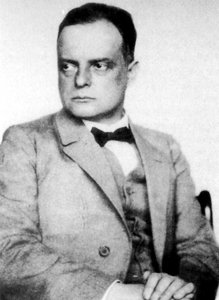
Employing a grayscale palette—ranging from whites to blacks—highlights form and texture over color variation.
 Zobrazit více
Biografie umělce
Objevte Paul Kleeho umělecké dílo – švýcarského malíře a grafika známého svou abstraktní krásou a inovativním přístupem. Prozkoumejte jeho největší sbírku v Bernu a inspirujte se jeho světlým pohledem na svět.
§ 3Commentary
A Quiet Reflection: Analyzing Paul Klee’s Self-Portrait
Paul Klee's "Self-portrait," executed in 1937, stands as a deceptively simple yet profoundly resonant testament to the artist’s enduring fascination with form and gesture. More than just a depiction of his likeness, it embodies Klee’s core artistic philosophy – an unwavering commitment to capturing essence rather than striving for photographic accuracy. The sketch, rendered in muted grayscale tones—primarily whites and blacks punctuated by subtle shading—immediately establishes a contemplative mood, inviting viewers into the artist's inner world.- Composition & Perspective: Klee employs a flattened perspective, characteristic of his early style, prioritizing visual harmony over illusionistic depth. The head and shoulders dominate the canvas, positioned centrally to draw the eye directly to the subject’s gaze – an unwavering stare that conveys both introspection and quiet confidence. Minimal background detail reinforces this focus, emphasizing the portrait's contemplative nature.
- Technique & Material: Crafted with graphite pencils on paper, “Self-Portrait” showcases Klee’s masterful use of hatching and crosshatching techniques. These meticulous lines build up tonal values with remarkable precision, creating a textured surface that mimics the physicality of pencil strokes. The artist eschews bold colors, opting instead for grayscale to heighten the expressive power of line and shape.
- Stylistic Influences & Expression: Klee’s approach aligns closely with his broader stylistic explorations—drawing inspiration from Cubism's fragmented perspectives and Surrealism’s dreamlike imagery. However, unlike many artists of his time who sought to convey emotion overtly, Klee prioritizes visual abstraction, suggesting feelings through carefully considered compositional choices and expressive lines.
- Symbolic Resonance: The artist’s attire—a cap and collared shirt with a tie—offers subtle symbolic cues. These elements speak to Klee's engagement with tradition while simultaneously reflecting his desire for artistic innovation. The simplicity of the sketch itself symbolizes an exploration of fundamental visual principles, mirroring Klee’s belief that art should transcend mere representation.
- Historical Context: Created during a period marked by political upheaval and uncertainty—specifically amidst Nazi persecution—the portrait reflects Klee's anxieties about his personal safety and artistic freedom. Yet, despite these concerns, the artwork retains an aura of serenity, suggesting resilience and unwavering dedication to creative pursuits.
Otázky a odpovědi
Jaké téma a atmosféru spojuje dílo „Self-portrait“ od Paul Klee?
„Self-portrait“ zobrazuje portrait sketch, monochromatic drawing, geometric forms, early style, minimal composition, line texture, psychological depth a jeho zachycená nálada je Calm.
Do které období tvorby Paul Klee patří dílo „Self-portrait“?
Dílo „Self-portrait“ pochází z období Early Style v tvorbě umělce Paul Klee. Tato klasifikace dílo zasazuje do kontextu vývoje jeho tvůrčí dráhy.
Je dílo „Self-portrait“ volné z autorských práv?
Co se týče autorských práv, dílo "Self-portrait" spadá do v rámci volného užití – autorská práva vypršela.


 Přepnout na tisk


 U děl nebo reprodukcí, u nichž je jakákoliv strana větší než 105 cm (přibližně 41 palců), bude rám dodán jako sestava v rozloženém stavu. Tato metoda zajišťuje bezpečné doručení a chrání dílo před poškozením během přepravy.


