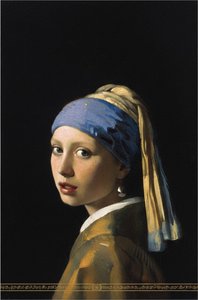
Oil On Canvas. Louvr.

§ 1Catalogue data


§ 2Abstract
Popis sbírného předmětu
Explore Paulus Potter's iconic "La Prairie" – a breathtaking Dutch landscape painting capturing the essence of rural harmony. Witness meticulous realism, atmospheric perspective, and masterful textural detail in this seminal work from the Golden Age.
 Zobrazit více
Biografie umělce
Paulus Potter (1625-1654) byl nizozemský malíř známý svými detailními a emotivními obrazy zvířat v rozsáhlých krajinách, často považovaný za průkopníka romantismu s ikonickými díly jako "Mladý býk".
§ 3Commentary
La Prairie: A Window Into Dutch Pastoral Perfection
Paulus Potter’s “La Prairie,” painted circa 1652, stands as an iconic exemplar of the Dutch Golden Age's fascination with the natural world and its masterful depiction of rural life. More than just a landscape scene—it’s a carefully constructed meditation on beauty, tranquility, and the harmonious relationship between humanity and nature, themes deeply resonant within the artistic sensibilities of the era.
The painting captures a serene meadow populated by cows grazing peacefully beneath a cloudy sky. Potter's meticulous observation is evident in every detail—the subtle variations in grass color, the texture of bark on the dominant tree, and the realistic rendering of bovine anatomy. This dedication to realism distinguishes “La Prairie” from earlier artistic conventions and firmly establishes it as a cornerstone of Romanticism’s burgeoning influence.
- Composition: Potter employs a classic landscape arrangement—a low horizon line emphasizing the expansive sky—creating a balanced visual composition. The cows are positioned strategically in the foreground and midground, drawing the viewer's gaze inwards, while a substantial oak tree anchors the scene on the left side, providing vertical stability.
- Color Palette: Dominated by earthy hues – muted greens, browns, and blues—the color palette reflects the subdued lighting conditions of the meadow. Highlights of white accentuate the cows’ coats, contrasting effectively with darker shades of their bodies and foliage.
- Technique: Potter skillfully utilizes oil paint on canvas, layering pigments to achieve depth and subtle gradations in color. Brushstrokes are predominantly smooth and blended, contributing to a remarkably lifelike appearance—a testament to the artist’s mastery of chiaroscuro (light and shadow).
Beyond its aesthetic beauty, “La Prairie” carries symbolic weight. The cows represent domesticity and prosperity – symbols central to Dutch society during Potter's time. Simultaneously, the overcast sky evokes a sense of contemplative melancholy—a subtle suggestion that even in idyllic landscapes, life is punctuated by moments of quiet reflection. This duality underscores Potter’s profound understanding of human emotion and his ability to translate it into visual form.
The painting’s enduring appeal lies not only in its technical brilliance but also in its timeless portrayal of pastoral serenity. It serves as a poignant reminder of the beauty found in simplicity and the importance of appreciating the natural world—a sentiment that continues to inspire artists and collectors alike. Its inclusion in the Louvre Museum's collection ensures its legacy as one of the most celebrated landscapes of the Dutch Golden Age.
Otázky a odpovědi
Nachází se dílo „La prairie“ od Paulus Potter v zemi původu umělce?
Ne – dílo se nachází v zahraničí. Dílo „La prairie“ je uloženo v zemi France, zatímco Paulus Potter se narodil(a) v zemi Nizozemsko.
Je k dispozici prezentace pro „La prairie“ od Paulus Potter?
Diaporama díla „La prairie“ si můžete prohlédnout na stránce Slideshow.
Kdo je autorem díla "La prairie" a do kterého uměleckého směru patří?
Dílo "La prairie" vytvořil/a Paulus Potter v rámci stylu Dutch Golden Age. Autor/ka i toto umělecké směřování definují tradici tohoto díla.


 Přepnout na tisk


 U děl nebo reprodukcí, u nichž je jakákoliv strana větší než 105 cm (přibližně 41 palců), bude rám dodán jako sestava v rozloženém stavu. Tato metoda zajišťuje bezpečné doručení a chrání dílo před poškozením během přepravy.