


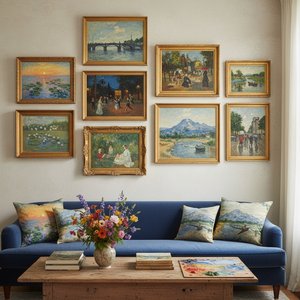
 Náhled v interiéru
 Sdílet
 Sdílet
 Podrobnosti o díle
 Průvodce

 Stáhnout
 Podobné položky
 Rentgenové snímky
 Slideshow
 Q&A
Q&A Statistiky
Blossoming Trees

 Zobrazit více
Giclée / Umělecký tisk
Giclée nebo plátěný tisk muzeální kvality s rychlou výrobou a širokou nabídkou povrchových úprav. ( Koupit ručně malovaný obraz Přepnout na digitální obraz)




































Vyberte si z našich přednastavených velikostí, které odpovídají původním proporcím díla.

Zadejte šířku a výšku, které potřebujete pro váš rám nebo stěnu. Tisk lze pouze oříznout, nikdy však nelze zvětšit obraz nad jeho původní rozměr, proto při výběru jiného formátu dochází ke ztrátě části obrazu. Před samotným tiskem vám zašleme digitální náhled k schválení. Obraz zobrazený na této stránce nenabízí skutečný výřez — ten uvidíte pouze v náhledu.
Celosvětové doručení () do 2 týdnů namísto standardních 4/5 týdnů. (30 říjen)

Zdarma celosvětová expresní doprava

Vysoce kvalitní lněné plátno

Kompletní pojištění přepravy

Záruka vrácení celního poplatku

Záruka věrného barevného souladu

100dení lhůta pro vrácení zboží (pouze při vadách výroby)

100% záruka vrácení peněz

Sleva při více objednávkách
 Skleněná varianta je dostupná pouze u rozměrů menších než 110 cm

Blossoming Trees
Giclée / Umělecký tisk
Rozměry reprodukce
-


Celková cena za vybrané možnosti reprodukcí
Kč 1390
Podobná díla


Biografie umělce
A Life Rooted in Transylvania – The Early Years of Sandor Nagy
Born in 1869 in Nemethy, a small village nestled within the Carpathian Mountains of Hungary, Sandor Nagy’s early life was deeply intertwined with the landscape and traditions of his native Transylvania. This region, a melting pot of cultures and artistic influences, would profoundly shape his artistic vision. His family's connection to the land—a legacy of farming and craftsmanship—provided an initial grounding for his future explorations of nature and rural life. While details about his formal education are somewhat sparse, it’s understood that Nagy initially studied at the National Apprentice School of Decorative Arts in Budapest, gaining a foundational understanding of artistic techniques. However, it was his subsequent journey to Rome in 1890 that proved transformative, marking the beginning of his immersion into the vibrant world of European art.
Rome, during this period, was a crucible of artistic innovation, attracting artists from across Europe and beyond. Nagy quickly found himself drawn into the circle of Hungarian expatriates, including Aladár Körösfői-Kriesch, whose influence would be significant in shaping his own style. The Roman atmosphere—a blend of classical inspiration, burgeoning modernism, and a renewed interest in color and light—proved to be an ideal environment for his artistic development. He began experimenting with new techniques and approaches, laying the groundwork for his distinctive visual language.
The Development of a Distinctive Style – From Roman Studies to Hungarian Landscapes
Returning to Hungary in 1900, Nagy established himself in Gödöllő, a region renowned for its artistic community. This period witnessed a crucial evolution in his work—a shift from the more academic influences of Rome towards a distinctly Hungarian style. He began to focus on capturing the essence of the Transylvanian landscape – the rolling hills, dense forests, and dramatic light that defined this region. His palette became richer, incorporating vibrant hues inspired by the surrounding flora and fauna. A key element in his work is the use of texture; he employed thick impasto techniques to create a palpable sense of surface and depth, inviting the viewer to almost feel the roughness of bark or the warmth of sunlight on stone.
Nagy’s artistic explorations extended beyond mere landscape painting. He was also involved in decorative projects, including designing stained glass windows for cultural buildings and creating intricate furniture pieces. This versatility demonstrates a broad range of skills and an understanding of how art could be integrated into the fabric of everyday life. His work during this time is often characterized by a blend of realism and impressionism, capturing both the precise details of the natural world and the fleeting effects of light and atmosphere.
Key Themes and Techniques – The Language of the Hunt
Sandor Nagy’s oeuvre is deeply rooted in themes of nature, rural life, and the traditions of Hungarian hunting culture. His paintings frequently depict scenes of the Transylvanian countryside—hunters tracking game through dense forests, shepherds tending their flocks, and farmers working the land. These images are not simply representations of reality; they are imbued with a sense of nostalgia and reverence for the natural world. The “Legend of the Wondrous Hunt,” perhaps his most celebrated work, exemplifies this thematic focus. The painting’s dramatic composition, rich colors, and dynamic brushstrokes convey both the excitement of the hunt and the profound connection between man and nature.
Technically, Nagy was a master of color and texture. He utilized a layered approach to his paintings, building up multiple layers of paint to create a sense of depth and luminosity. His use of impasto—applying thick strokes of paint directly to the canvas—added a tactile quality to his work, inviting viewers to engage with the surface on a physical level. He also experimented with various techniques, including glazing (applying thin washes of color over dried layers) and scumbling (dragging dry paint across the surface), further enhancing the richness and complexity of his paintings.
Legacy and Historical Significance – A Voice of Hungarian Modernism
Sandor Nagy’s work represents a significant contribution to Hungarian art at the turn of the 20th century. He was part of a broader movement that sought to redefine artistic expression in response to the changing social and cultural landscape. While he never achieved widespread international recognition during his lifetime, his paintings are now appreciated for their beauty, technical skill, and evocative portrayal of the Transylvanian countryside. His work is considered an important example of Hungarian Modernism, reflecting a blend of traditional influences with contemporary artistic trends.
Today, Sandor Nagy’s paintings can be found in museums and private collections around the world. They serve as a testament to his artistic vision and his enduring legacy as one of Hungary's most celebrated landscape painters. His work continues to resonate with viewers who appreciate the beauty of nature and the power of art to capture its essence.

Sandor Nagy
1869 - 1950 , Hungary
Rychlé informace o umělci
- Full Name: Sándor Nagy
- Nationality: Hungarian
- Date Of Birth: 1869
- Date Of Death: 1950
- Place Of Birth: Hungary
- Notable Artworks:
- Ave Miriam
- Cervera
- Musician woman
- Artistic Movement Or Style: Post-Impressionism
- Artists Who Influenced This Artist: ['Aladár Körösfői-Kriesch']
- Artists Or Movements Influenced By This Artist: ['Hungarian Modernism']
Související články

Top 10 impresionistických krajin: Mistrovská díla, která změnila umění | AllPaintingsStore
Prozkoumejte 10 ikonických impresionistických krajin od Monet, Renoir a dalších. Objevte příběhy umělců, techniky a barevnost tohoto revolučního hnutí. Najděte perfektní obraz pro váš interiér na AllPaintingsStore.com
Top 10 impresionistických krajin: Mistrovská díla, která změnila umění | AllPaintingsStore.cz
Prozkoumejte 10 ikonických impresionistických krajin od Monet, Renoir a dalších. Objevte příběhy umělců, techniky a barvy, které definovaly toto revoluční hnutí. Najděte dokonalý obraz pro váš interiér na AllPaintingsStore.cz

Beyond the Horizon: A Curated Guide to Integrating Post-Impressionist Landscapes into Modern Interiors
Transform your home with the emotive power of Post-Impressionist landscapes. Discover expert tips on selecting hand-painted oil reproductions to create a soulful, vibrant interior that reflects your unique style and connection to nature.

Beyond the Light: Capturing Raw Emotion and Subjective Vision in Post-Impressionist Landscapes
Explore the profound emotional depth of Post-Impressionist landscapes. Discover how masters like Van Gogh moved beyond light to capture raw human feeling through vibrant color and expressive texture in this expert art history retrospective.

Capturing the Soul: The Most Emotionally Moving Impressionist and Post-Impressionist Masterpieces
Discover the profound emotional depth of Impressionist and Post-Impressionist masterpieces. Explore how legends like Monet, Van Gogh, and Gauguin captured light and soul through evocative landscapes and vibrant brushwork for a timeless connection to art history.

