- Domů

- Tisk na plátno
- Tiziano Vecellio
- Pentecost

 Náhled
 Sdílet
 Sdílet
 Podrobnosti o díle

 Stáhnout
 Podobné položky
 Rentgenové snímky
 Slideshow
Pentecost


 Zobrazit více
Giclée / Umělecký tisk
Giclée nebo plátěný tisk muzeální kvality s rychlou výrobou a flexibilními možnostmi povrchové úpravy. ( Přepnout na ručně malovanou reprodukci Přepnout na obrázek)




P118B $10

P118H $10

P118W $10

P438Z $10

P508JH $12

P508YH $12

P805H $10

P805Z $10

P919BZ $10

P919G $10

P919XJ $10

P959ZH $10

P968JZ $12

W106C $8

W218G $10

W218JH $8

W218Y $10

W307PJ $10

W316G $10

W316PJ $8

W316Y $10

W398PJ $8

W4111J $10

W500HY $15

W500JH $15

W692G $12

W849H $8

W940BG $15

W953PJ $8




Vyberte si z našich přednastavených velikostí, které odpovídají původním proporcím díla.

Můžete zadat vlastní rozměry tak, aby výtvor odpovídal konkrétnímu rámu nebo prostoru. Pokud zvolená velikost nebude odpovídat poměru stran původního obrazu, dílo buď ořížeme, nebo obraz rozšíříme pomocí zrcadlového efektu či jednobarevného okraje. Před zahájením výroby vám bude zaslán digitální náhled k schválení.
Mějte prosím na paměti, že náhled na obrazovce neodráží skutečné oříznutí nebo rozšíření. Pouze digitální náhled přesně zobrazí finální kompozici.
Ačkoliv jsou k dispozici i vlastní rozměry, pro zachování původních proporcí doporučujeme vybrat si rozměr z předdefinovaného seznamu.
Celosvětové doručení () do 2 týdnů namísto standardních 4/5 týdnů. (1 srpen)

Zdarma celosvětová expresní doprava

Vysoce kvalitní lněné plátno

Kompletní přepravní pojištění

Záruka vrácení celního poplatku

Záruka přesného barevného shodu

60denní lhůta pro vrácení zboží (pouze při vadách výroby)

100% garance vrácení peněz

Sleva při hromadné objednávce
 Skleněná varianta je dostupná pouze u rozměrů menších než 110 cm

Pentecost
Giclée / Umělecký tisk
Rozměry reprodukce
-


Celková cena za výběr
$ 64
Popis sběratelského kousku
A Symphony of Light and Faith: Exploring Titian’s Pentecost
Tiziano Vecellio, universally recognized as Titian, wasn't merely an artist; he was a transformative force within the Venetian Renaissance—a painter who elevated color to its highest expression and fundamentally reshaped the very language of oil painting. Born around 1490 in Pieve di Cadore, nestled amidst the breathtaking alpine scenery of Veneto, his life’s trajectory embodies unwavering artistic ambition and an unparalleled mastery of technique. While biographical details remain somewhat elusive, records indicate he was one of several children born to Gregorio Vecellio, a military officer, and Lucia—a familial circumstance that foreshadowed a destiny destined for extraordinary achievement. Recognizing their sons' innate talent, the Vecellio family strategically secured apprenticeships with accomplished artists in Venice—a decision that would propel young Titian and Francesco onto an artistic path of unparalleled significance. Venice during this pivotal period was a crucible of cultural dynamism, fueled by burgeoning trade routes and brimming with intellectual curiosity. This environment proved fertile ground for Titian’s artistic development, allowing him to hone his skills amidst the vibrant tapestry of Venetian art life. His early training encompassed fresco painting—a technique demanding meticulous precision and blending pigments directly onto wet plaster—providing him with invaluable experience in capturing texture and luminosity. However, it was his embrace of oil paint that truly cemented his legacy as a revolutionary innovator. Unlike tempera, which relied on brittle pigments and limited color palettes, oil offered artists unprecedented flexibility and depth of tonal range, enabling them to achieve effects previously unattainable.Composition and Technique: Mastering the Illusion of Depth
Titian’s “The Descent of the Holy Ghost,” completed in 1545, exemplifies his mastery of compositional principles and technical prowess. The painting depicts a scene from Christian scripture—the Pentecost—where the Holy Spirit descends upon the Apostles as fiery tongues of light illuminate the chapel interior. Titian skillfully employs pyramidal composition, anchoring the central figure – a woman draped in sumptuous robes – at its apex, drawing the viewer’s gaze upwards towards the radiant divine illumination. This upward thrust reinforces the spiritual grandeur of the event and underscores its importance within Christian iconography. Furthermore, Titian’s meticulous attention to detail is evident throughout the canvas. He painstakingly renders drapery folds with subtle gradations of color and texture, creating a convincing illusion of three-dimensionality that transcends mere representation. The artist's masterful use of chiaroscuro—the dramatic interplay between light and shadow—amplifies the emotional impact of the scene, highlighting the woman’s serene countenance and emphasizing the solemn reverence of the apostles.Symbolism: Light, Faith, and Divine Revelation
Beyond its technical brilliance, “The Descent of the Holy Ghost” resonates deeply with symbolic meaning. The radiant light emanating from above symbolizes divine grace and illumination—representing God's intervention in human affairs and illuminating the Apostles’ faith. The woman at the center embodies purity and piety, serving as a conduit for divine blessing. Her posture suggests prayerful contemplation, inviting viewers to contemplate the transformative power of spiritual devotion. The architectural setting—a chapel adorned with intricate coffered ceilings—further reinforces the sacred atmosphere, grounding the scene in Christian tradition and elevating it to a realm of transcendent beauty. The halos surrounding the Apostles’ heads signify their holiness and proclaim their status as messengers of God—affirming the central narrative of Pentecost as an event of profound theological significance.Emotional Impact: Capturing Sacred Reverence
Titian's ability to convey emotion is palpable in “The Descent of the Holy Ghost.” The painting captures a moment of sublime awe and reverence—a feeling conveyed through subtle gestures, facial expressions, and the luminous quality of the light itself. It’s not merely a depiction of an event; it’s an experience rendered visually—an invitation to contemplate the mysteries of faith and divine revelation. The warmth of the color palette contributes to the painting's emotional resonance, fostering a sense of tranquility and spiritual contemplation. Viewing this masterpiece evokes feelings of reverence and wonder—a testament to Titian’s unparalleled skill in translating theological concepts into visual splendor.A Legacy Enduring Through Reproduction
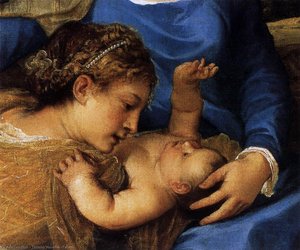
Today, reproductions of “The Descent of the Holy Ghost” continue to inspire artists and collectors alike. AllPaintingsStore.com offers exceptionally detailed prints that faithfully capture the painting's luminosity and textural richness—allowing admirers worldwide to experience Titian’s artistic genius firsthand. Explore more of Titian’s captivating oeuvre at AllPaintingsStore.com, where you can discover stunning reproductions of “Madonna and Child” and “Flora”—each piece embodying the artist’s unwavering commitment to capturing beauty and conveying profound spiritual emotion.Podobná umělecká díla




Biografie umělce
The Venetian Titan: A Life in Color and Canvas
Tiziano Vecellio, známý pod jménem Titian, představuje monumentální postavu italského Renesansu – možná jeho nejvýznamnější kolorista a mistr, který definoval možnosti malby olejem. Narodil se kolem roku 1490 v Pieve di Cadore, zasazené do dramatických krajin veneta Alp, jeho cesta od skromných začátků k mezinárodnímu uznání je důkazem neuvěřitelného talentu a neochvějné oddanosti umělecké inovacii. Detaily o Titianově raném životě zůstávají částečně zahalené v závoji tajemství, ale víme, že byl jedním z několika dětí narozených Gregoriovi Vecelliovi, vojákovi, a Lucie. Rodina proto uspořádala, aby Tiziano i jeho bratr Francesco byli učni u umělce ve Verceli – rozhodnutí, které neodmyslitelně změnilo chod historie umění. Veneza na přelomu 16. století byla pulzující obchodním, kulturním a uměleckým centrem. Titianův počáteční výcvik probíhal v dílnech Sebastiana Zuccata, mozaikovce, následně krátkodobě pod vedením Gentile Belliniho a především jeho bratra Giovanniho. Ale to spojenectví s Giorgione – umělcem, jehož práce vykazovala éterickou poezii – se ukázalo jako nejvlivnější. Ti dva spolupracovali na několika projektech, včetně vnějších fresk pro Fondaco dei Tedeschi, rušný obchodní dům pro německé obchodníky. I v těchto raných dílech byl Titianův výjimečný talent patrný, získal si uznání mezi svými soudnými umělci a předzvěst blížící se geniality.A Master's Evolving Style
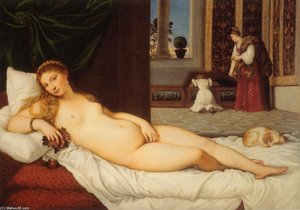
Titianova umělecká tvorba se dá charakterizovat pozoruhodnou rozmanitostí a neustálou snahou o malířské techniky. Jeho rané díla, silně ovlivněná Giorgione, vykazují jemnou lyrickou atmosféru a mistrné používání barev k vytváření atmosférických efektů. Malby jako *A Man with a Quilted Sleeve* (kolem roku 1509) demonstrují jeho rostoucí talent pro portrétování, zachycující nejen fyzické podobnosti svých subjektů, ale i jejich vnitřní charakter. Jak s postupoval, Titian začal odklánět se od Giorgioneových jemných tónů a přijmout odvážnější, dramatickou přístup k barvě. *The Visitation of Mary and Elizabeth* (nyní v Accademia ve Verceli) ukazuje jeho rostoucí jistotu při zachycování složitých kompozic a živé barevnosti. Během svého dlouhého života neustále rozvíjel hranice uměleckého vyjádření. Experimentoval s různými štětcovými pohyby – od hladkých, splečených povrchů po volné, expresivní značky – a vyvinul jedinečnou techniku vrstvení barev k vytváření luminózních efektů. Jeho portréty se staly proslulé svou psychologickou hloubkou a realistickým zobrazením textur a látek. Současně vynikal v malbě mytologických a náboženských témat, obohacoval je o sexualitu a dramatický intenzitní efekt, který okouzlil publikum. Primárním příkladem je *Venus of Urbino*, mistrovské dílo, které definovalo zobrazení ženské nude a etablovalo Titiana jako vedoucí postavu ve venetské malbě.Patronage, Prestige, and Lasting Influence
Titianův talent přilákal pozornost mocných mecenášů po celé Evropě. Byl dvorním malířem císaře Karla V., krále Filipa II. Španělského a papeže Pavla III. mezi dalšími. Tato mecenátská podpora mu nejen zajistila finanční zabezpečení, ale také mu umožnila vytvářet monumentální díla, která ukazovala jeho uměleckou genialitu na velkém měřítku. Jeho schopnost přizpůsobit svůj styl vkusu různých dvorních kruhů a zároveň si zachovat vlastní jedinečný hlas je důkazem jeho mimořádného talentu a diplomatické zručnosti. Titian zemřel ve Verceli v roce 1576 během epidemie moru. Jeho díla jsou k nalezení v muzeích po celém světě, včetně Galleria Palatina ve Florencii, Prado muzea v Madridu a National Gallery v Londýně. K ochutnávce Titiana je nutné navštívit Scuola del Santo ve Padově a San Salvador ve Verceli, kde se nacházejí jeho dechberoucí fresky.Exploring Further
- Museums & Collections: Discover Titian’s works at the Scuola del Santo in Padua and San Salvador in Venice, both showcasing his breathtaking frescoes.
- Related Artists: Explore the influence of Giorgione on Titian's early style and the later impact of Titian on artists like Rubens and Delacroix.
- Historical Context: Immerse yourself in the world of the Italian Renaissance and Venetian painting to fully appreciate Titian’s artistic achievements.
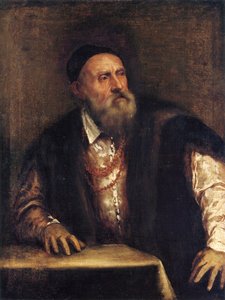
Tiziano Vecellio
1490 - 1576 , Itálie
Rychlé fakta
- Artistic Movement Or Style: Benátská malba
- Artists Or Movements Influenced By This Artist:
- Rubens
- Delacroix
- Artists Who Influenced This Artist:
- Giovanni Bellini
- Giorgione
- Date Of Birth: c. 1490
- Date Of Death: 1576
- Full Name: Tiziano Vecellio
- Nationality: Italijský
- Notable Artworks:
- Bacchus a Ariadne
- Venere di Urbino
- Place Of Birth: Pieve di Cadore, Itálie
Související články
25 Mistrovských Děl Alte Pinakothek: Umění a Krása pro Váš Domov | AllPaintingsStore
Prozkoumejte 25 ikonických děl Alte Pinakothek v Mnichově! Obrazy Da Vinciho, Rembrandta a Rubense ožívají. Inspirujte se pro váš interiér s reprodukcemi nejvyšší kvality na AllPaintingsStore.com.

Sandro Botticelli: Top 25 mistrovských děl pro váš domov | AllPaintingsStore.com
Objevte top 25 mistrovských děl Sandra Botticelliho! Prozkoumejte renesanční umění, ikonické obrazy jako Zrození Venuše a Primavera. Kvalitní reprodukce obrazů pro váš interiér na AllPaintingsStore.com
10 mistrovských děl rané renesance: Obrazy a umělci, kteří změnili svět
Objevte 10 ikonických děl rané renesance – od Botticelliho po Leonarda da Vinci. Ponořte se do příběhů mistrů a jejich techniky. Najděte inspiraci pro váš interiér s reprodukcemi nejvyšší kvality na AllPaintingsStore.com
25 Mistrovských Děl Metropolitního Muzea: Umění pro Vaši Inspiraci | AllPaintingsStore
Prozkoumejte 25 ikonických děl z Metropolitního muzea v New Yorku! Objevte příběhy Van Gogha, Moneta a dalších mistrů. Reprodukce obrazů pro váš interiér na AllPaintingsStore.com.

10 legendárních olejů na plátně, které změnily umění | AllPaintingsStore.cz
Objevte 10 legendárních olejů na plátně od Van Gogha, Moneta a dalších mistrů! Ponořte se do příběhů ikonických děl impresionismu a moderního umění. Reprodukce obrazů pro váš interiér – AllPaintingsStore.cz