Painting.

§ 1Katalogová data


Toto umělecké dílo je chráněno autorským právem
Umělecké dílo zobrazené na této stránce je chráněno autorským zákonem, což znamená, že nemůžeme legálně vytvářet ani prodávat jeho identickou reprodukci. Tato ochrana je vymáhána na základě mezinárodních dohod, jako například Berberská úmluva a národními zákony, včetně těch stanovených v Americký autorský zákon – Díl 17. Všechna práva vyhrazena.
Jako etická a právní alternativa nabízíme vlastní, ručně malovaná umělecká díla inspirovaná originálem. Naši zdatní a profesionální umělci si pečlivě studují styl, náladu a uměleckou podstatu originálu, aby vytvořili nové, jedinečné dílo, které vyvolává stejný pocit – přičemž zůstává samostatným originálním tvůrčím dílem.
Tato metoda je plně v souladu s autorským právem, protože nezahrnuje kopírování ani duplikování chráněného díla. Jde o kreativní reinterpretaci – nový obraz, který je inspirován originálem, ale není s ním identický.
 Více informací
§ 2Abstraktní
Popis sbírného předmětu
Victor Vasarely (1906-1997) was born Károly Vaszary in Pécs, Croatia. Initially pursuing medical studies at Eötvös Loránd University in Budapest, he abandoned medicine for painting in 1927 after enrolling at Sándor Bortnyik’s Műhely – a Bauhaus-influenced school. This formative experience instilled him with the principles of functional design and geometric abstraction, shaping his signature Op Art
Biografie umělce
Victor Vasarely (1906-1997) byl průkopníkem Op Artu a kinetického umění. Jeho geometrické abstrakce, optické iluze a inovativní design ovlivnily moderní umění a grafiku.
§ 3Komentář
Geometric Composition and Color
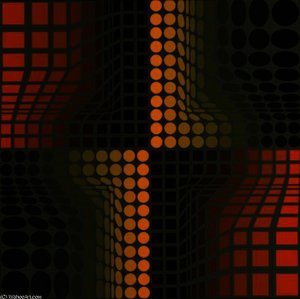
The artwork consists of four circles arranged in a square configuration. Each circle is assigned a specific color: blue, orange, yellow, and purple. These shapes are positioned at different points within the square frame. One circle occupies the left side, another is on the right, one is placed above, and the final circle is situated below the others. The composition relies on sharp edges and distinct color zones rather than blended transitions. The artist utilized a method called hydrostatic printing to apply pigment to the canvas, ensuring consistent color application and mathematical precision across the surface.
The arrangement of these circles follows a square motif, a recurring element in the artist's body of work. This specific layout utilizes Euclidean geometry to establish a sense of order. The interplay between the colored circles and the surrounding space creates a shimmering effect that shifts as the viewer's gaze moves across the canvas. This visual phenomenon is a result of the interaction between the specific hues and the eye's perception of light and shape.
The Mechanics of Perception
This piece belongs to the Op Art movement, which emerged in the wake of World War II. The movement focused on the psychological and neurological aspects of vision, using illusionistic effects to challenge how the brain interprets visual information. By employing a systematic methodology involving grids and mathematical principles, the work moves away from representational art. It does not attempt to mimic nature or provide a narrative. Instead, it functions as a visual experiment in how the retina processes high-contrast colors and geometric forms.
The intellectual foundation of the work draws from the Bauhaus movement's focus on functional design and the reductive abstraction of Piet Mondrian. It also incorporates Gestalt principles, which concern how the mind organizes visual stimuli into coherent patterns. The use of hydrostatic printing allowed for a level of accuracy that traditional brushwork could not achieve, emphasizing the mathematical nature of the composition. The result is a work that prioritizes the stimulation of the mind through controlled visual input, focusing on the mechanics of sight rather than the depiction of objects.
Otázky a odpovědi
K kterému uměleckému směru patří „Lain“ od Victor Vasarely?
„Lain“ je dílo z období Geometric Abstraction. Tento směr představuje uměleckou tradici, jejíž je dílo součástí.
Jaké je umětrovědné postavení díla „Lain“ od Victor Vasarely?
Dílo „Lain“ od Victor Vasarely patří k období Modern a směru Geometric Abstraction. Tyto prvky společně zasazují dílo do historie umění.
Jak mohu objevit umělecká díla podobná dílu „Lain“ od Victor Vasarely?
Podobná díla k "Lain" naleznete na stránce Podobná díla tohoto díla.


 Přepnout na tisk


 U děl nebo reprodukcí, u nichž je jakákoliv strana větší než 105 cm (přibližně 41 palců), bude rám dodán jako sestava v rozloženém stavu. Tato metoda zajišťuje bezpečné doručení a chrání dílo před poškozením během přepravy.