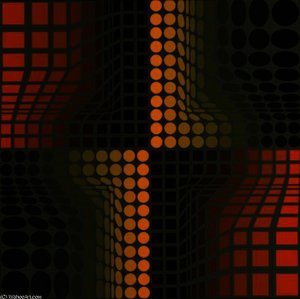
Acrylic On Canvas. Bechtler Museum of Modern Art.

§ 1Katalogová data


Toto umělecké dílo je chráněno autorským právem
Umělecké dílo zobrazené na této stránce je chráněno autorským zákonem, což znamená, že nemůžeme legálně vytvářet ani prodávat jeho identickou reprodukci. Tato ochrana je vymáhána na základě mezinárodních dohod, jako například Berberská úmluva a národními zákony, včetně těch stanovených v Americký autorský zákon – Díl 17. Všechna práva vyhrazena.
Jako etická a právní alternativa nabízíme vlastní, ručně malovaná umělecká díla inspirovaná originálem. Naši zdatní a profesionální umělci si pečlivě studují styl, náladu a uměleckou podstatu originálu, aby vytvořili nové, jedinečné dílo, které vyvolává stejný pocit – přičemž zůstává samostatným originálním tvůrčím dílem.
Tato metoda je plně v souladu s autorským právem, protože nezahrnuje kopírování ani duplikování chráněného díla. Jde o kreativní reinterpretaci – nový obraz, který je inspirován originálem, ale není s ním identický.
 Více informací
§ 2Abstraktní
Popis sbírného předmětu
Explore Victor Vasarely’s mesmerizing NB 22 Caope – a masterful Op Art piece featuring interlocking circles that generate an illusion of movement and depth. Witness the birth of kinetic art, celebrating geometric precision and challenging our visual reality.
Biografie umělce
Victor Vasarely (1906-1997) byl průkopníkem Op Artu a kinetického umění. Jeho geometrické abstrakce, optické iluze a inovativní design ovlivnily moderní umění a grafiku.
§ 3Komentář
NB 22 Caope: A Geometric Symphony by Victor Vasarely
Victor Vasarely’s “NB 22 Caope” is more than just an abstract painting; it's a meticulously crafted portal into the heart of Op Art, a movement that sought to redefine our perception of reality. This striking work, dominated by a precisely arranged grid of black and white circles, exemplifies Vasarely’s pioneering approach to visual illusion – a technique he developed with mathematical rigor and an almost obsessive attention to detail. The image itself captures a key moment in the artist's career, showcasing his mastery of creating dynamic movement and depth through seemingly static geometric forms.
At first glance, “NB 22 Caope” presents a stark simplicity: a tightly controlled composition of circles. However, closer observation reveals a sophisticated interplay of overlapping shapes and subtle variations in size. This creates an illusion of three-dimensionality, drawing the viewer’s eye across the canvas and generating a captivating sense of movement – a hallmark of Op Art. The deliberate restriction to black and white amplifies this effect, maximizing contrast and intensifying the optical stimulation.
The Genesis of Optical Illusion
Born in Pécs, Croatia (then part of Austria-Hungary) in 1906, Victor Vasarely’s artistic journey began far from the world of abstract art. Initially pursuing medical studies, he was drawn to visual expression and ultimately embraced a path shaped by geometric abstraction. His formative years were profoundly influenced by the Bauhaus movement, particularly through his association with Sándor Bortnyik's “Műhely” workshop in Budapest – a space where functional design principles and rigorous mathematical calculations converged. This background is crucial to understanding Vasarely’s approach; he didn’t simply paint circles; he engineered visual experiences.
Vasarely’s work, like that of many Op Artists, was driven by a desire to challenge traditional notions of representation. Rather than depicting recognizable objects, he sought to manipulate the viewer's perception directly, creating an illusion of movement and depth through carefully arranged geometric patterns. The ‘NB 22 Caope’ series, created between 1962 and 1968, represents a peak in this exploration, demonstrating his refined control over optical effects.
Symbolism and the Pursuit of “Art for All”
While strictly abstract, "NB 22 Caope" resonates with potential symbolic interpretations. The repetitive pattern of circles can be seen as representing growth, cycles, or even interconnectedness – themes frequently explored by Vasarely. He famously stated his goal was to create ‘art for all,’ accessible and engaging regardless of prior artistic knowledge. This accessibility is achieved through the immediate, visceral impact of the work’s optical effects.
The Fondation Vasarely, established in Aix-en-Provence, continues to champion Vasarely's legacy, showcasing his innovative approach to art and design. Reproductions like this one allow us to experience firsthand the power of his geometric vision – a testament to the enduring appeal of Op Art’s exploration of perception.
Otázky a odpovědi
Kde je dnes možné vidět dílo „NB 22 Caope“ od Victor Vasarely?
Originál díla „NB 22 Caope“ si můžete prohlédnout v instituci Bechtler Museum of Modern Art, Charlotte, Spojené státy americké.
V jaké velikosti se doporučuje vytisknout "NB 22 Caope"?
Pro dílo „NB 22 Caope“ se doporučuje tisk ve velikosti Large. K dispozici jsou i jiné velikosti při zachování stejných proporcí.
Jakou úroveň kontrastu má dílo „NB 22 Caope“ od Victor Vasarely?
Kontrast světla a stínu u díla „NB 22 Caope“ je klasifikován jako Statement. Kontrast popisuje, jak výrazně se liší světlé a tmavé oblasti.




 Přepnout na tisk


 U děl nebo reprodukcí, u nichž je jakákoliv strana větší než 105 cm (přibližně 41 palců), bude rám dodán jako sestava v rozloženém stavu. Tato metoda zajišťuje bezpečné doručení a chrání dílo před poškozením během přepravy.