Záruka vrácení peněz · 100 dní Doprava po celém světě zdarma
637 378umělecká díla 50 751umělci 4 658muzea 32jazyky
Záznam v katalogu

Los

1804. Acrylic On Canvas, 146.0 x 222.0 cm. Yale Center for British Art.

Obr. 1. William Blake, Los, 1804. Zobrazeno jako vámi zvolená reprodukce: , .

§ 1Katalogová data

Rozměry
146.0 x 222.0 cm

§ 2Abstraktní

Popis sbírného předmětu

Biografie umělce

Vizionář anglického romantismu známý pro Tygra. Objevte jeho mystické iluminované tisky a poezii ještě dnes.

§ 3Komentář

A Profound Vision of Innocence and Suffering: Exploring William Blake’s “Los”

William Blake's "Los," painted in 1804, stands as a haunting testament to the Romantic spirit—a collision between sublime beauty and unsettling psychological depth. More than just a depiction of figures amidst a forest landscape, it embodies Blake’s complex exploration of human experience, grappling with themes of innocence, corruption, and divine judgment. The painting's immediate impact is one of arresting visual splendor; meticulously rendered trees dominate the composition, illuminated by an ethereal moonlight that casts long shadows across the scene. Stars twinkle overhead, adding to the atmosphere of otherworldly contemplation. Yet, beneath this surface tranquility lies a narrative fraught with symbolic significance. The central trio—three nude figures—represent archetypal characters engaged in a dramatic confrontation. The figure on the left possesses a prominent erect penis, a deliberate allusion to primal sexuality and vulnerability. This anatomical detail isn’t merely descriptive; it serves as a visual metaphor for the inherent tension between innocence and desire, mirroring Blake's broader preoccupation with reconciling spiritual idealism with earthly realities. Adjacent to him is another figure holding what appears to be a crucifix—a poignant emblem of Christian faith juxtaposed against the raw physicality of the scene. This gesture speaks to the struggle between piety and transgression, highlighting the inescapable paradoxes of human existence. The third figure reaches upwards towards an unseen celestial realm, symbolizing aspiration for transcendence and divine grace. However, this upward gaze is countered by a palpable sense of unease; the positioning of the figures suggests a precarious balance—a vulnerability exposed to forces beyond comprehension. The inclusion of a wheel at the base of the painting adds another layer of complexity. Often interpreted as representing cyclical time and karmic retribution, it underscores Blake’s belief that human actions inevitably bear consequences, shaping our destinies in ways we may not fully grasp. Blake's technique—primarily watercolor on paper—contributes significantly to the artwork’s emotive power. Watercolor allows for subtle gradations of tone and color, capturing the luminescence of moonlight and creating an illusion of depth that enhances the scene’s dramatic effect. The artist’s meticulous attention to detail ensures that every element—from the texture of bark to the glimmering stars—is rendered with remarkable precision. This painstaking craftsmanship underscores Blake's commitment to conveying not just what he saw but also what he felt—a profound engagement with the spiritual and psychological dimensions of his subject matter. “Los” resonates powerfully with viewers today, prompting contemplation on fundamental questions about morality, faith, and the human condition. Its unsettling beauty compels us to confront uncomfortable truths about our own desires and vulnerabilities, reminding us that true enlightenment requires acknowledging both innocence and suffering—a duality perfectly captured in Blake’s masterful depiction of this unforgettable tableau. It remains a cornerstone of Romantic art, securing its place as an enduring symbol of artistic vision and spiritual inquiry.

Otázky a odpovědi

Kde najdu průvodce k dílu "Los"?

Průvodce k dílu "Los" je stránka Průvodce pro studenty pro dané umělecké dílo – tiskatelný informační list, který zobrazuje dílo spolu s jeho popiskem, údaji o autorství a identifikační tabulkou (umělec, data, technika, původní rozměry, sbírka).

Kolik let bylo William Blake, když v roce 1804 vytvořil(a) dílo „Los“?

William Blake vytvořil/a dílo „Los“ v возрасте 47 let. Umělec se narodil/a v 1757 a dílo je datováno na 1804.

Je u díla „Los“ od William Blake povoleno vytvářet reprodukce z důvodu autorského práva?

Originál díla „Los“ se nachází v instituci Yale Center for British Art a toto dílo je v rámci volného užití – autorská práva vypršela.
§ 4Autor díla

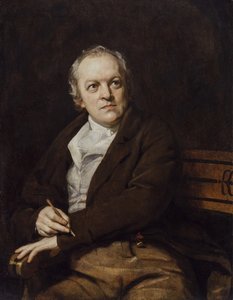
William Blake

William Blake

1757 - 1827, Spojené království

Rychlé informace o umělci William Blake

  • Artistic Movement Or Style: Romantismus
  • Artists Or Movements Influenced By This Artist:
    • Pre-rafaelité bratrstvo
    • Symbolismus
    • Modernismus
  • Artists Who Influenced This Artist:
    • Rafael
    • Michelangelo
  • Date Of Birth: 1757
  • Date Of Death: 1827
  • Full Name: William Blake
  • Nationality: Britská
  • Notable Artworks:
    • The Ancient of Days
    • Isaac Newton
    • Tygr
    • Beránek
    • Londýn
  • Place Of Birth: Londýn, Spojené království

Biografie umělce

William Blake – Visionary Poet & Painter (1757–1827)

William Blake, born in London on November 28, 1757, was a figure perpetually out of step with his time, yet destined to become one of the most celebrated artists and poets of the Romantic Age. His life unfolded against the backdrop of a rapidly changing England—a world grappling with industrialization, political upheaval, and shifting spiritual beliefs. From humble beginnings as the son of a hosier, Blake’s early years were marked by an intensely vivid imagination and a propensity for visionary experiences that would profoundly shape his artistic trajectory. Though largely self-taught in formal academics, he received drawing instruction at a young age, quickly revealing a talent that hinted at the extraordinary path ahead. His apprenticeship with engraver James Basire proved pivotal, providing him not only with technical mastery but also an understanding of printmaking techniques he would later revolutionize. These early influences—the Gothic grandeur of Westminster Abbey, the classical forms of Raphael and Michelangelo—served as foundational elements in his developing aesthetic, though Blake was never one to remain bound by convention.

Early Life & Artistic Training

Blake’s formative years instilled within him a deep fascination with mythology and folklore, alongside an acute sensitivity to visual beauty. Despite lacking formal artistic education, he possessed an innate ability to observe and interpret the world around him—skills honed through meticulous sketching and drawing exercises. His apprenticeship under James Basire, a respected engraver, provided invaluable experience in mastering printmaking techniques, particularly etching—a craft that would become central to his distinctive artistic style. This training exposed him to the established conventions of engraving but simultaneously fueled his desire to forge new paths toward creative expression. The architectural grandeur of Westminster Abbey and the idealized forms of Raphael’s frescoes served as enduring inspirations, shaping his aesthetic sensibilities and informing his artistic vision.

Illuminated Printing: A Revolutionary Technique

Blake's artistic innovation wasn’t merely about subject matter; it resided fundamentally in *how* he created. Dissatisfied with conventional engraving methods—which he viewed as sterile and restrictive—he developed a unique process known as “illuminated printing.” This involved etching both text and illustrations onto copper plates, then painstakingly hand-coloring the resulting prints—a laborious but deeply personal approach that allowed for complete artistic control. This wasn’t simply illustration accompanying poetry; it was an integrated art form where image and verse were inextricably linked, each enhancing the meaning of the other. Blake's belief in the transformative power of imagination underpinned this revolutionary technique. He argued that “the Imagination is the Eye of God,” asserting that true creativity resided in perceiving realities beyond the confines of sensory experience—a conviction that would permeate his entire oeuvre. This method granted him unparalleled freedom to express his inner vision, resulting in prints imbued with vibrant color and symbolic depth unlike anything produced before.

Major Works & Artistic Style

Blake’s artistic output encompassed a remarkable range of mediums—poetry, engravings, watercolors, mezzotints, and drawings—each reflecting his multifaceted intellectual and spiritual interests. His most celebrated works include *Songs of Innocence* (1789) and *Songs of Experience*, paired volumes that explore contrasting perspectives on human nature and morality; *The Marriage of Heaven & Hell* (1793), a provocative prose poem challenging conventional dogma; *Milton* (1804–?11), an ambitious retelling of Milton’s epic poem infused with Blake’s visionary symbolism; and *Jerusalem*, a sprawling prophetic poem envisioning a utopian future rooted in spiritual renewal. His engravings are characterized by a distinctive style—a rejection of linear perspective in favor of flattened planes and stylized figures—that conveys emotion and psychological intensity rather than realistic representation. Blake's use of color was equally innovative, employing bold hues to heighten the symbolic significance of his images and to evoke moods of wonder and terror. He frequently incorporated motifs from mythology and folklore, drawing inspiration from sources as diverse as Dante’s *Divine Comedy* and Hebrew scripture.

Legacy & Influence

Despite facing considerable obscurity during his lifetime—characterized by poverty and rejection by mainstream artistic circles—William Blake's influence on subsequent generations of artists and writers has proven profound. His unwavering commitment to imaginative vision and symbolic expression resonated deeply with the Pre-Raphaelites, who embraced him as a kindred spirit and championed his distinctive aesthetic style. Furthermore, Blake’s ideas continue to inspire thinkers and artists today, particularly those concerned with exploring themes of spirituality, rebellion, and the relationship between art and consciousness. He stands as an enduring testament to the transformative potential of creativity—a visionary artist whose work compels us to confront uncomfortable truths and to embrace the boundless possibilities of human imagination. Blake’s legacy extends beyond his artistic achievements; it resides in his unwavering belief that art can serve as a catalyst for social change and spiritual enlightenment—a conviction that continues to inspire artists and intellectuals worldwide.

§ 5Podobná díla

§ 6Otázky

Rychlé informace

  • Subject or theme: Mythology; Biblical Imagery
  • Artist: William Blake
  • Influences: Blake's Imagination
  • Location: Private Collection
  • Dimensions: 146 x 222 cm
  • Year: 1804

§ 7Citovat tento záznam

AllPaintingsStore.com, “William Blake, Los (1804)”, https://allpaintingsstore.com/cs/art/william-blake-los-8Y3TNC-en/ArtistReproduction/ (dne 18 říjen 2026 zkontolováno).

§ 8Reprodukce díla

Ručně malovaná olejová reprodukce

Rukou malované olejné plátno v libovolném rozměru i s rámem, vyrobené našimi umělci na zakázku. ( Přepnout na tisk Přepnout na digitální obraz)

Je uvedeno na okraji objednávkového listu; aktuální stav tohoto listu zní následovně.

Los

Technika reprodukce

Rozměry reprodukce

-

Vybraní mistři umění

Vyšší míra detailu, jemnosti a delší doba výroby

-

Možnosti rámování reprodukcí

-

-

U děl nebo reprodukcí, u nichž je jakákoliv strana větší než 105 cm (přibližně 41 palců), bude rám dodán jako sestava v rozloženém stavu. Tato metoda zajišťuje bezpečné doručení a chrání dílo před poškozením během přepravy.

Vyžaduje se odborná montáž – nejedná se o produkt pro svépomocnou realizaci (DIY).
Sestava musí být složena a plátno napnuto zkušeným profesionálním rámovačem s použitím dřevěného lepidla (není součástí balení), kleští na napínání plátna a svorek pro udržení pravých úhlů křížů během schnutí lepidla. Nesprávná montáž nebo nerovnoměrné napnutí plátna může způsobit trvalé poškození uměleckého díla, které není kryto naší zárukou.

  • Jsou zahrnuty všechny lišty z masivního dřeva, přesně na míru nařezané.

  • Sestavuje se pomocí součástí balení (šroubů), plus dřevěného lepidla na rohové spoje, které není součástí balení a musí jej zajistit váš rámovač.

  • Vyžaduje se profesionální nářadí, které není součástí sady: kleště na napínání plátna a svorky pro udržení kolmosti příček během schnutí lepidla.

Důležité:
Spoje v rozích vyžadují lepidlo na dřevo, tyčinky musí být přichyceny pomocí svorek, dokud lepidlo zcela neuschne, a pro napnutí plátna na sestavený rám je zapotřebí kleští na natahování plátna. Žádný z těchto náčiní není součástí sady. Před objednáním této velikosti prosím zajistěte zkušeného profesionálního rámovače.

Popisek díla

-

-

Ochranný lak

Lesklý lak (zvýrazňuje barvy, chrání před světlem a vlhkostí)

-

Přizpůsobit své umělecké dílo

Příklady možných úprav: nahrazení obličeje fotografií zákazníka; přidání domácího mazlíčka (např. výměna kočky za psa); vložení skrytého vzkazu do pozadí; změna krajiny nebo prvků v pozadí.

-

Prioritní doručení

Celosvětové doručení () za 3–4 týdny namísto standardních 5 týdnů. (15 listopad). Bez kompromisů v kvalitě.

-

Expresní doručení

Celosvětová doprava () do 5 týdnů. (22 listopad).

V ceně

Celková cena za vybrané možnosti reprodukcí

Kč 5585

Součást každé objednávky

  • Zdarma celosvětová expresní doprava
  • Vysoce kvalitní lněné plátno
  • Kompletní pojištění přepravy
  • Záruka vrácení celního poplatku
  • Záruka věrného barevného souladu
  • 100dení lhůta pro vrácení zboží (pouze při vadách výroby)
  • 100% záruka vrácení peněz
  • Sleva při více objednávkách
Objednávací formulář