Záruka vrácení peněz · 100 dní Doprava po celém světě zdarma
449 564umělecká díla 30 613umělci 4 660muzea 32jazyky
Záznam v katalogu

Homework

1874. Acrylic On Canvas.

Obr. 1. Winslow Homer, Homework, 1874. Zobrazeno jako vámi zvolená reprodukce: , .

§ 1Katalogová data

§ 2Abstraktní

Popis sbírného předmětu

Winslow Homer

Biografie umělce

Winslow Homer (1836-1910): Ikoničný americký realista – Objevte jeho silné marinové obrazy a krajinky 19. století! Poznejte mistrovské díla jako „Gulf Stream“ a „Breezing Up“.

§ 3Komentář

Homework by Winslow Homer: A Study in Quiet Observation

Winslow Homer’s “Homework,” painted in 1874, isn't merely a depiction of domestic life; it’s a masterful distillation of American Impressionism at its most poignant. This watercolor captures a moment of profound stillness—a young boy absorbed in his studies at a desk bathed in the soft glow of afternoon sunlight. Homer eschews grand narratives or dramatic gestures, instead favoring meticulous detail and subtle tonal shifts to convey an atmosphere of contemplative seriousness. The scene unfolds within a sparsely furnished room, dominated by a window that frames the exterior landscape – a muted expanse of greens and browns hinting at the natural world beyond the confines of the boy’s solitary pursuit.
  • Style: Homer's approach aligns perfectly with Impressionism, prioritizing capturing fleeting impressions rather than striving for photographic realism. He achieves this through loose brushstrokes and blended colors, creating an ethereal quality that softens the edges of form and emphasizes light—a technique he honed during his extensive excursions to Maine’s coastlines.
  • Technique: Homer's watercolor mastery is evident in his masterful control over pigment dispersion and layering. Notice how he builds up color gradually, achieving luminous effects through translucent washes that reveal underlying tones. The artist skillfully utilizes hatching and cross-hatching to sculpt form and create depth, subtly suggesting the contours of the desk and boy’s body.
  • Historical Context: Painted during Homer's formative years as an illustrator and artist, “Homework” reflects the burgeoning interest in capturing everyday life—a reaction against the academic conventions that dominated European art at the time. It speaks to a broader cultural shift toward valuing sincerity and observation over idealized representations.

Symbolism Within Simplicity

The painting’s quietude is laden with symbolic significance. The boy's posture—head bowed, hands clasped—represents diligence, focus, and the internalization of knowledge. Homer deliberately avoids portraying any outward emotion or dramatic action; instead, he invites viewers to contemplate the inner world of childhood experience. The window serves as a visual reminder of the natural world—a counterpoint to the boy’s indoor activity—suggesting an appreciation for harmony between human endeavor and the rhythms of nature. This juxtaposition reinforces Homer's belief that beauty can be found in the simplest of subjects, rendered with unwavering honesty.

Similar Works by Winslow Homer: Exploring Themes of Domesticity and Observation

Homer’s artistic vision extended beyond individual portraits; he consistently explored themes of rural life and human connection. Consider his celebrated paintings like “Children on a Fence,” housed at the Williams College Museum of Art, which similarly captures a moment of serene contemplation amidst the pastoral landscape—a testament to Homer's ability to distill profound emotion into understated visual language. Similarly, "Fresh Eggs," part of the National Gallery of Art’s collection, exemplifies his fascination with capturing the beauty of ordinary objects and scenes. These works underscore Homer’s enduring legacy as an artist who championed observation and empathy, qualities that continue to resonate powerfully with audiences today.

Owning a Piece of Homer's Vision: Reproductions Available at AllPaintingsStore.com

For those seeking to experience the beauty and contemplative spirit of “Homework” firsthand, high-quality reproductions are available at AllPaintingsStore.com. Crafted with meticulous attention to detail, these prints allow you to bring Homer’s masterful technique and evocative imagery into your home—a tangible connection to one of America's greatest artistic achievements. Explore the Williams College Museum of Art and the National Gallery of Art for inspiration and further insight into Homer’s oeuvre.

Otázky a odpovědi

Který umělec a jaký styl stojí za dílem "Homework"?

Autorem díla "Homework" je Winslow Homer, který patřil k hnutí Other.

Jakým způsobem „Homework“ od Winslow Homer propojuje Other s rodnou zemí umělce?

Dílo „Homework“ vytvořil/a Winslow Homer, narozený/á v Spojené státy americké, v rámci směru Other. Původ umělce/umělkyně propojuje toto dílo s Other, jak jej praktikují umělci z Spojené státy americké.

Kdo je autorem díla "Homework"?

Autorem díla „Homework“ je Winslow Homer. Práce je v katalogu uvedena pod jménem Winslow Homer.
§ 4Autor díla

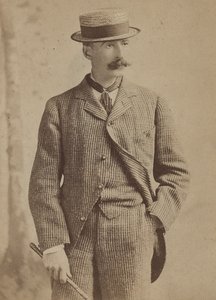
Winslow Homer

Winslow Homer

1836 - 1910, Spojené státy americké

Rychlé informace o umělci Winslow Homer

  • Artistic Movement Or Style: Americký Realismus
  • Artists Or Movements Influenced By This Artist: ['Američané']
  • Artists Who Influenced This Artist:
    • Barbizon škola
    • Courbet
    • Millet
  • Date Of Birth: 24. února 1836
  • Date Of Death: 29. září 1910
  • Full Name: Winslow Homer
  • Nationality: Američan
  • Notable Artworks:
    • Breezing Up
    • Gulf Stream
    • Noblest Spirit
  • Place Of Birth: Boston, USA

Biografie umělce

A Brush with the American Spirit: The Life and Art of Winslow Homer

Winslow Homer, born in Boston in 1836, wasn’t sculpted by the traditional European art academies that shaped so many of his contemporaries. Instead, he emerged from a distinctly American experience, one rooted in practicality and observation. His journey began not with grand historical canvases, but as a commercial illustrator at the tender age of twelve for Harper's Weekly. This early apprenticeship was formative, honing an exceptional ability to capture scenes with clarity and detail – skills that would become hallmarks of his mature work. He wasn’t learning perspective in Paris; he was learning to *see* America, its people, and its unfolding story. The bustling streets of Boston, the quiet dignity of rural New England life, these were his first subjects, rendered with a precision born of necessity for the demands of print media. This foundation allowed him to transition into painting, initially in watercolor, before fully embracing the expressive potential of oil paints.

From Pastoral Scenes to the Raw Power of Nature

Homer’s early paintings often depicted idyllic scenes – children playing, farmers tending their fields, quiet moments of domesticity. These works, while charming, hinted at a deeper artistic sensibility waiting to be unleashed. The catalyst for this transformation was undoubtedly the Civil War. As a war correspondent for Harper's Weekly, Homer witnessed firsthand the brutal realities of conflict. He didn’t focus on heroic battles or grand strategies; instead, he documented the everyday lives of soldiers and civilians, the quiet moments of grief and resilience amidst chaos. This experience profoundly altered his artistic vision. The pastoral scenes gave way to more challenging subjects: veterans grappling with trauma, freed slaves navigating a new world, and the stark beauty of landscapes touched by hardship. He began to explore themes of struggle, isolation, and humanity’s precar He wasn't interested in imitating European styles; he wanted to create an art that was uniquely American, reflecting its landscapes, its people, and its challenges. His style also evolved, becoming bolder and more direct, reflecting the raw emotional impact of what he had witnessed.

Mastering Light, Texture, and the American Landscape

Winslow Homer's artistic technique is immediately recognizable for its solidity and texture. He wasn’t interested in fleeting impressions; he wanted to build up a sense of tangible reality on the canvas. His oil paintings are characterized by a direct painting approach – layers of paint applied with confidence, creating depth and luminosity. He possessed an extraordinary ability to capture light, whether it was the dazzling glare of the sun on the ocean or the soft glow of twilight over a rural landscape. This mastery extended to his watercolors, where he achieved remarkable atmospheric effects through vibrant colors and delicate washes. Breezing Up (A Fair Wind), painted in 1876, exemplifies this skill – a quintessential depiction of American maritime life, brimming with energy and movement. The Gulf Stream, created decades later, is perhaps his most iconic work, a powerful and symbolic portrayal of a lone man battling the forces of nature, a metaphor for human struggle against overwhelming odds. He wasn’t simply painting what he saw; he was conveying a feeling, an emotional truth about the human condition.

A Legacy Forged in American Realism

Winslow Homer's art offers a profound window into 19th-century America, providing invaluable insights into the social, political, and cultural landscape of his time. His paintings are not merely beautiful representations; they are powerful statements about human resilience, the beauty and power of nature, and the complexities of the American experience. He died in 1910, leaving behind a prolific body of work that continues to resonate with audiences today. His ability to depict America with honesty and authenticity, without romanticizing or idealizing it. He wasn’t interested in imitating European styles; he wanted to create an art that was uniquely American, reflecting its landscapes, its people, and its challenges. Innocence, a poignant portrayal of childhood set against the backdrop of nature, and Man of Science, demonstrating his skill in capturing human psychology, are testaments to this commitment. His influence can be seen in the work of later American painters who sought to depict their own country with similar directness and emotional depth.
  • His work continues to inspire contemporary artists.
  • Homer remains a pivotal figure in the development of American Realism.

§ 5Podobná díla

§ 6Otázky

Rychlé informace

  • Influences: American Landscape Painting
  • Medium: Watercolor on paper
  • Artist: Winslow Homer
  • Title: Homework
  • Subject or theme: Domestic life

Artový kvíz

U každé otázky je pouze jedna správná odpověď.

Otázka 1:
What artistic style is prominently featured in Winslow Homer’s ‘Homework’?
Otázka 2:
The painting depicts a scene of everyday life. What element contributes to the artwork's quiet contemplation?
Otázka 3:
'Homework' showcases Homer’s mastery of watercolor technique. What characteristic is particularly notable about his approach?
Otázka 4:
Where can viewers experience ‘Homework’ firsthand?
Otázka 5:
Besides Homer, which other artist's paintings share similar themes of rural life and observation?

§ 7Citovat tento záznam

AllPaintingsStore.com, “Winslow Homer, Homework (1874)”, https://allpaintingsstore.com/cs/art/winslow-homer-homework-8BX2LA-en/ArtistReproduction/ (dne 7 říjen 2026 zkontolováno).

§ 8Reprodukce díla

Ručně malovaná olejová reprodukce

Rukou malované olejné plátno v libovolném rozměru i s rámem, vyrobené našimi umělci na zakázku. ( Přepnout na tisk Přepnout na digitální obraz)

Je uvedeno na okraji objednávkového listu; aktuální stav tohoto listu zní následovně.

Homework

Technika reprodukce

Rozměry reprodukce

-

Vybraní mistři umění

Vyšší míra detailu, jemnosti a delší doba výroby

-

Možnosti rámování reprodukcí

-

-

U děl nebo reprodukcí, u nichž je jakákoliv strana větší než 105 cm (přibližně 41 palců), bude rám dodán jako sestava v rozloženém stavu. Tato metoda zajišťuje bezpečné doručení a chrání dílo před poškozením během přepravy.

Vyžaduje se odborná montáž – nejedná se o produkt pro svépomocnou realizaci (DIY).
Sestava musí být složena a plátno napnuto zkušeným profesionálním rámovačem s použitím dřevěného lepidla (není součástí balení), kleští na napínání plátna a svorek pro udržení pravých úhlů křížů během schnutí lepidla. Nesprávná montáž nebo nerovnoměrné napnutí plátna může způsobit trvalé poškození uměleckého díla, které není kryto naší zárukou.

  • Jsou zahrnuty všechny lišty z masivního dřeva, přesně na míru nařezané.

  • Sestavuje se pomocí součástí balení (šroubů), plus dřevěného lepidla na rohové spoje, které není součástí balení a musí jej zajistit váš rámovač.

  • Vyžaduje se profesionální nářadí, které není součástí sady: kleště na napínání plátna a svorky pro udržení kolmosti příček během schnutí lepidla.

Důležité:
Spoje v rozích vyžadují lepidlo na dřevo, tyčinky musí být přichyceny pomocí svorek, dokud lepidlo zcela neuschne, a pro napnutí plátna na sestavený rám je zapotřebí kleští na natahování plátna. Žádný z těchto náčiní není součástí sady. Před objednáním této velikosti prosím zajistěte zkušeného profesionálního rámovače.

Popisek díla

-

-

Ochranný lak

Lesklý lak (zvýrazňuje barvy, chrání před světlem a vlhkostí)

-

Přizpůsobit své umělecké dílo

Příklady možných úprav: nahrazení obličeje fotografií zákazníka; přidání domácího mazlíčka (např. výměna kočky za psa); vložení skrytého vzkazu do pozadí; změna krajiny nebo prvků v pozadí.

-

Prioritní doručení

Celosvětové doručení () za 3–4 týdny namísto standardních 5 týdnů. (4 listopad). Bez kompromisů v kvalitě.

-

Expresní doručení

Celosvětová doprava () do 5 týdnů. (11 listopad).

V ceně

Celková cena za vybrané možnosti reprodukcí

Kč 5626

Součást každé objednávky

  • Zdarma celosvětová expresní doprava
  • Vysoce kvalitní lněné plátno
  • Kompletní pojištění přepravy
  • Záruka vrácení celního poplatku
  • Záruka věrného barevného souladu
  • 100dení lhůta pro vrácení zboží (pouze při vadách výroby)
  • 100% záruka vrácení peněz
  • Sleva při více objednávkách
Objednávací formulář