Pengene tilbage-garanti · 100 dage Gratis levering i hele verden
646.446kunstværker 53.409kunstnere 5.406museer 32sprog
Portræt af Eugenio Caxés

Eugenio Caxéss malerier: De 14 mest berømte, rangeret

Opdateret oktober 2026 · rangeret efter vores popularitetsscore (søgninger, besøg og ordrer for hvert værk) · 14 værker af Eugenio Caxés i vores katalog

Hurtigt svar

Det mest berømte maleri af Eugenio Caxés er Saint Ildefonso receiving the Chasuble (1600); originalen findes på Museo del Prado, Madrid. The Fall of the Angels (1605) og The Martyrdom of Saint James the Less (1627) er tallene to og tre. Ud af de 14 værker af Eugenio Caxés i vores katalog er dette de 14 mest berømte, rangeret med årstal og museum, så du kan vælge det maleri, du ønsker at bestille.

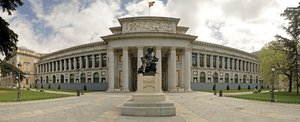
1574 – 1634, Madrid Baroque Flest værker: Museo del Prado

Top 10 Eugenio Caxés malerier, rangeret

1
Saint Ildefonso receiving the Chasuble (1600) af Eugenio Caxés

Saint Ildefonso receiving the Chasuble

1600 · Oil On Canvas · Museo del Prado, Madrid

Saint Ildefonso receiving the Chasuble is an oil painting by the Spanish School artist Eugenio Caxés. The work captures a moment of divine bestowal, centering on the figure of San Ildefonso. He is depicted in a state of humble reception, receiving a chasuble, a liturgical vestment, as part of a sacred encounter.

Hand-painted oil reproduction from $945 36 × 28 cm Same size as the original $976 51 × 40 cm Order at original size →
Bestil dette maleri Maleriets detaljer
2
The Fall of the Angels (1605) af Eugenio Caxés

The Fall of the Angels

1605 · Oil On Canvas · Statens Museum for Kunst, København

Created in 1605, The Fall of the Angels is an oil on canvas painting by Eugenio Caxés. This work belongs to the religious art genre, capturing a moment of divine conflict. The piece is held within the collection of the Statens Museum for Kunst in Copenhagen, Denmark.

Hand-painted oil reproduction from $770 23 × 43 cm Same size as the original $830 41 × 74 cm Order at original size →
Bestil dette maleri Maleriets detaljer
3
The Martyrdom of Saint James the Less (1627) af Eugenio Caxés

The Martyrdom of Saint James the Less

1627 · Oil

In this oil painting, The Martyrdom of Saint James the Less, Eugenio Caxés captures a moment of profound religious intensity. Created about 1627, the work depicts the violent end of the apostle, a subject central to early Christian history. The scene focuses on the physical struggle of the saint as he faces his executioners, a narrative choice that emphasizes the weight of his sacrifice. It is a significant example of…

Hand-painted oil reproduction from $445 27 × 37 cm Same size as the original $1039 128 × 167 cm Order at original size →
Bestil en håndmalet kopi Om maleriet
4
Nativity (1610) af Eugenio Caxés

Nativity

1610 · Oil On Canvas · Museo del Prado, Madrid

The Nativity is an oil on canvas painting by the Spanish Baroque artist Eugenio Caxés. Created about 1610, this work depicts a central scene of the holy family. The composition focuses on three figures: a man identified as Joseph, a woman identified as Mary, and an infant, Jesus. The figures are positioned in a tight, close-up arrangement that emphasizes their proximity to one another. The infant is nestled between the…

Hand-painted oil reproduction from $220 34 × 29 cm Same size as the original $357 81 × 70 cm Order at original size →
Bestil en håndmalet kopi Om maleriet
5
The Adoration of the Magi (1620) af Eugenio Caxés

The Adoration of the Magi

1620 · Oil On Canvas · Szépművészeti Múzeum, Budapest

Eugenio Cajes’s “The Adoration of the Magi,” painted in 1620, is more than just a religious scene; it's a vibrant tableau of faith, royalty, and nascent modernity. This monumental oil on canvas, currently residing in the Museum of Fine Arts, Budapest, transports us to a pivotal moment in the infant Jesus’s life – the arrival of the Magi, bearing gifts of gold, frankincense, and myrrh. Cajes, a prominent figure within…

Hand-painted oil reproduction from $170 32 × 31 cm Same size as the original $1129 186 × 183 cm Order at original size →
Bestil dette maleri Maleriets detaljer
6
The Adoration of the Magi af Eugenio Caxés

The Adoration of the Magi

Oil On Canvas · Museo del Prado, Madrid

A profound stillness settles over the figures, caught in a moment of intense reverence. In the foreground, the three Magi kneel, their bodies bowed in a gesture of deep humility. Their garments—heavy silks, velvets, and intricate brocades—catch the light, revealing textures that seem almost tangible. Deep reds and rich golds dominate the palette, clashing against the dark, shadowy recesses of the background. A single, celestial light source descends from the…

Hand-painted oil reproduction from $320 23 × 44 cm Same size as the original $860 100 × 195 cm Order at original size →
Bestil en håndmalet kopi Om maleriet

Eugenio Caxéss malerier rangeret fra 11 til 14

Eugenio Caxés malerier efter motiv

De fire mest hyppige motiver i denne rangliste, med det øverste maleri for hvert.

Museer der udstiller Eugenio Caxéss originalværker

De 3 museer, der rummer flest af malerierne på denne side.

Museum By Værker af Eugenio Caxés Malerier fra denne liste
Museo del Prado, MadridMuseo del Prado Madrid 7 Saint Ildefonso receiving the Chasuble, Nativity, The Adoration of the Magi
Statens Museum for Kunst, KøbenhavnStatens Museum for Kunst København 1 The Fall of the Angels
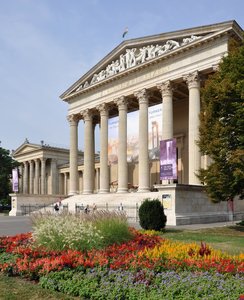
Szépművészeti Múzeum, BudapestSzépművészeti Múzeum Budapest 1 The Adoration of the Magi

Eugenio Caxés efter årti: det bedste maleri fra hvert årti

Værker per årti

Vælg et årti for at se dets mest populære maleri.

Eugenio Caxés malerier: ofte stillede spørgsmål

Hvad er det mest berømte maleri af Eugenio Caxés?Vis svar

Saint Ildefonso receiving the Chasuble (1600), Museo del Prado, Madrid, rangerer som nummer ét, efterfulgt af The Fall of the Angels (1605) og The Martyrdom of Saint James the Less (1627).

Hvor gammel var Eugenio Caxés, da Saint Ildefonso receiving the Chasuble blev malet?Vis svar

Eugenio Caxés var 26 år gammel: Saint Ildefonso receiving the Chasuble er dateret 1600, og Eugenio Caxés blev født i 1574.

Hvilke er de 10 bedste malerier af Eugenio Caxés?Vis svar

Saint Ildefonso receiving the Chasuble, The Fall of the Angels, The Martyrdom of Saint James the Less, Nativity, The Adoration of the Magi, The Adoration of the Magi, Imposición De La Casulla A San Ildefonso, Museo Del Prado, San Ramón Nonato alimentado por los ángeles, Adoración De La Virgen og Encuentro Ante La Puerta Dorada. Årstal og museum for hver enkelt findes i ranglisten ovenfor.

Hvor mange værker af Eugenio Caxés har du på listen?Vis svar

14 værker af Eugenio Caxés er i vores katalog, dateret fra 1600 til 1634.

Hvor opbevares de originale Eugenio Caxés-malerier?Vis svar

Primært i Museo del Prado (Madrid), Statens Museum for Kunst (København) og Szépművészeti Múzeum (Budapest). Se museomtabelen ovenfor for den fulde liste.

Hvilken periode frembragte Eugenio Caxéss mest berømte malerier?Vis svar

I 1600s: 2 af de 14 malerier, der er rangeret her, stammer fra den tid, herunder Saint Ildefonso receiving the Chasuble.

Hvilke er de tidligste og seneste berømte Eugenio Caxés malerier?Vis svar

Ældste på denne side: Saint Ildefonso receiving the Chasuble (1600). Nyeste: The Recapture of San Juan in Puerto Rico (1634).

Hvad er de primære motiver i Eugenio Caxéss malerier?Vis svar

Blandt de 14 malerier, der er rangeret her: People (3), Figures (3) og Man (3).

Hvilket medie er de fleste originale værker af Eugenio Caxés udført i?Vis svar

Oil On Canvas, for 6 af de 14 malerier, der er rangeret her.

Hvilken stilart er Eugenio Caxés associeret med?Vis svar

Baroque, baseret på de malerier, der er rangeret på denne side.

Hvilke originalværker af Eugenio Caxés findes på Museo del Prado?Vis svar

Museo del Prado, Madrid har 7 af de malerier, der er rangeret her, herunder Saint Ildefonso receiving the Chasuble, Nativity og The Adoration of the Magi.

Kan jeg bestille en Eugenio Caxés reproduktion?Vis svar

Ja. Hvert maleri på denne side kan bestilles som en håndmalet oliereproduktion eller som et print. Åbn maleriet, vælg størrelsen og afgiv din bestilling.

Om kunstneren: Eugenio Caxés

Eugenio Cajes: A Baroque Visionary of Madrid

The history of the Spanish Baroque is often told through the lens of its most famous titans, yet the tapestry of this era is woven with the threads of masters like Eugenio Cajes. Born in Madrid around 1575, Cajes was a painter whose very identity was a bridge between cultures. Though his life was rooted in the Spanish capital, his artistic soul was deeply shaped by a Florentine lineage. As the son of Patricio Cajés—a talented artist recruited to Spain by the ambassador Luis de Requesens—Eugenio inherited a legacy steeped in the refined traditions of Italy. This dual heritage allowed him to infuse the grandeur of the Spanish court with the sophisticated elegance of the Florentine school, creating a style that was both locally resonant and internationally informed.

The evolution of Cajes’s technique is a journey through the most transformative artistic movements of his time. His early years were marked by the classical influences of his father, a disciple of Alessandro Allori, which instilled in him a respect for balanced composition and anatomical precision. However, the true metamorphosis occurred around 1595, when Cajes traveled to Rome. Immersed in the vibrant, turbulent atmosphere of the Eternal City, he witnessed the dawn of Caravaggio’s naturalism. This exposure to the dramatic use of chiaroscuro—the interplay of profound shadow and piercing light—would become a hallmark of his mature work, lending an emotional intensity and a palpable sense of drama to his religious and historical narratives.

Royal Commissions and Monumental Mastery

Cajes’s professional ascent was inextricably linked to the highest echelons of Spanish power. His talent earned him a prestigious position within the royal courts of King Philip II and Philip III, eventually being appointed as a Painter to the King in August 1612. This role granted him access to the most significant architectural and religious projects of the age. One of his most breathtaking achievements was the decoration of the royal audience chamber in Madrid, where he executed a monumental depiction of Solomon’s Judgment upon the vault. Such works required not only technical skill but an ability to manage vast, complex compositions that could command the attention of a monarch.

Beyond the palace walls, Cajes left an indelible mark on Spain's sacred spaces. His collaborative spirit was evident in his work with Vincenzo Carducci, particularly in the decoration of the chapel of Our Lady del Sagrario in Toledo. He also contributed significant canvases to the retablo mayor of the Monastery of Guadalupe, demonstrating a versatility that allowed him to move seamlessly between intimate devotional pieces and massive, multi-figure altarpieces. His ability to weave together biblical storytelling with the opulent textures of the Baroque era made him a preferred hand for the most important ecclesiastical commissions in the kingdom.

A Legacy of Light and Narrative

The enduring significance of Eugenio Cajes lies in his ability to synthesize disparate influences into a cohesive, emotive language. Whether he was depicting the mythic allure of Leda and the Swan or the profound solemnity of The Adoration of the Magi, his work always sought to capture the divine within the human. In his religious paintings, the figures are not merely icons; they are characters imbued with a sense of weight, breath, and spiritual yearning. His mastery of detail—the shimmer of silk, the glint of gold, and the soft glow of skin—served to ground his grand narratives in a reality that felt both miraculous and immediate.

Though some of his most ambitious works, such as his large-scale historical canvas on the History of Agamemnon, have been lost to the passage of time, the remnants of his oeuvre continue to fascinate scholars and art lovers alike. Cajes remains a vital figure for understanding the complexity of the Spanish Baroque, representing a moment when the traditions of Italy and the ambitions of Spain converged to create something truly transcendent. His life and work stand as a testament to the power of artistic lineage and the transformative impact of cultural exchange.