Introduction
Imagine stepping into a world where the boundaries between light, color, and atmosphere dissolve into a single, breathtaking moment. The Impressionist movement emerged not merely as a new technique, but as a radical rebellion against the rigid, dark corridors of traditional academic painting. In late 19th-century France, a group of visionary artists stepped out of their studios and into the sunlight, seeking to capture the fleeting essence of a landscape, the shimmer of water, or the soft glow of a passing afternoon.
These masters moved away from precise lines and towards visible, energetic brushstrokes that pulse with life. They traded the heavy shadows of history for a vibrant palette, celebrating the ephemeral beauty of the everyday. Today, these masterpieces remain profoundly meaningful; they serve as a timeless reminder to find wonder in the transient and the ordinary. As we journey through this selection, each painting invites you to witness the very moment light meets canvas , forever altering our perception of the world around us.
Water Lilies (or Nympheas) - Claude Monet
 Water Lilies (or Nympheas) - Claude Monet
Immerse yourself in the tranquil beauty of Claude Monet’s iconic Water Lilies , a series that serves as a breathtaking meditation on nature’s serenity. Painted during his time at Giverny, these works capture the ephemeral dance of light and reflection upon a garden pond. Through a masterful application of impasto , Monet uses thick, textured strokes of lavender, soft pink, and deep green to create a shimmering surface where colors blend optically in the viewer's eye.
This work represents the very zenith of Impressionism, rejecting rigid lines for the fleeting impression of a moment. To bring such a masterpiece into your space is more than a design choice; it is an inheritance . It is a way to claim a lineage of taste, where every glance at the water's surface becomes a nod to the masters, transforming your walls into a gallery of enduring prestige.
Gare Saint Lazare, Pari - Claude Monet
 Gare Saint Lazare, Pari - Claude Monet
Did you know that Claude Monet , the master of light, found profound inspiration not in a quiet garden, but amidst the choking soot and billowing steam of an industrial railway station? In Gare Saint Lazare, Paris , Monet achieved a monumental conceptual leap for the Impressionism movement . Rather than documenting mere architecture, he utilized loose, broken brushstrokes to transform thick locomotive smoke into a translucent, ethereal veil. This technical mastery—using muted blues and grays punctuated by sudden ochre highlights—captures the very pulse of 19th-century modernity. He turned the grit of industrialization into a poetic study of transience, where the boundaries between solid iron and fleeting atmosphere dissolve entirely.
This dynamic energy makes such a masterpiece an ideal centerpiece for a professional environment. Integrating this sense of rhythmic motion and atmospheric depth into a modern home office or study can inspire a sophisticated, focused, and productive atmosphere, grounding your workspace in the timeless beauty of historical progress.
The Child's Bath - Mary Stevenson Cassatt
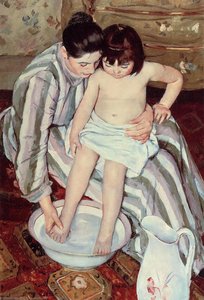 The Child's Bath - Mary Stevenson Cassatt
Observe the delicate, broken brushstrokes in Mary Cassatt’s The Child's Bath , where the layered oil paint captures the fleeting shimmer of water and the soft warmth of skin. The texture is palpable; short, confident strokes define the porcelain bowl and the flowing fabrics, creating a sense of immediate, living light that breathes within the composition.
As one of the top 10 masterpieces that defined the Impressionism movement, this work revolutionizes the genre by elevating private, domestic moments to high art. Through a flattened perspective and organic shapes influenced by Japanese ukiyo-e prints, Cassatt invites us into an intimate, maternal embrace.
We are dedicated to preserving this tactile, three-dimensional quality for the connoisseur's home. Our hand-painted oil reproductions honor every visible stroke and tonal depth, ensuring the emotional resonance and physical soul of Cassatt’s masterpiece are brought vividly into your space.
The Great Bathers (The Nymphs) - Pierre-Auguste Renoir
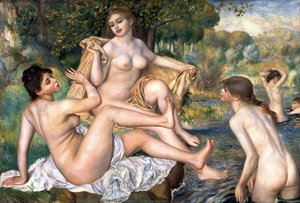 The Great Bathers (The Nymphs) - Pierre-Auguste Renoir
There is a gaze in The Great Bathers (The Nymphs) by Pierre-Auguste Renoir that follows you—not with judgment, but with understanding . This isn’t merely a portrait; it’s a mirror . As a cornerstone of the top 10 masterpieces that defined the Impressionism movement, this work reflects our deepest connection to the natural world. Within this luminous river landscape, soft pinks and peaches blend seamlessly with lush greens, capturing the ephemeral dance of dappled sunlight across skin and shimmering water. Renoir’s mature style moves beyond fleeting impressions toward a more sculptural, monumental grace, where the figures possess a weight that anchors the atmospheric light. To invite such a piece into your space is to experience more than decoration; it is to be reminded through its soft, impasto textures and tranquil glow: you are seen. You are part of this timeless, idyllic story of beauty and renewal.
Bathers (Summer Scene) - Frédéric Bazille
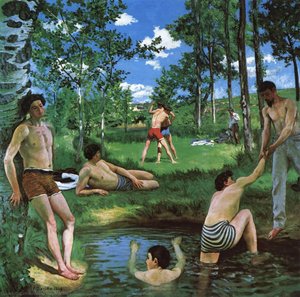 Bathers (Summer Scene) - Frédéric Bazille
A sun-drenched moment of pure vitality, Bathers (Summer Scene) by Frédéric Bazille captures the fleeting warmth of a summer afternoon frozen in time. As one of the Top 10 Masterpieces That Defined the Impressionism Art Movement , this work stands as a pivotal bridge between academic tradition and the radical, light-drenched freedom of the Impressionist era.
The canvas breathes with life; vibrant verdant greens and cool, shimmering blues dance across the water's surface through loose, broken brushstrokes that evoke a sense of uninhibited camaraderie. Bazille’s mastery of light and organic form creates a sensory experience where texture and color merge into a single, tranquil impression. For the modern professional or decorator, integrating such a piece into a contemporary interior provides an immediate sense of sophisticated calm and timeless elegance, allowing the spirit of French summer to reside permanently within a curated space.
Grainstack in the Morning, Snow Effect - Claude Monet
 Grainstack in the Morning, Snow Effect - Claude Monet
Imagine standing amidst a silent, frost-covered field at dawn, where the only sound is the muffled stillness of falling snow. Claude Monet’s Grainstack in the Morning, Snow Effect transports you directly into this ephemeral moment. As a cornerstone of the Impressionism movement, this work from his celebrated “Haystacks” series transcends mere landscape painting to become a masterclass in capturing light and atmospheric shifts.
Monet utilizes short, broken brushstrokes to build a tactile texture, making the snow appear to shimmer with cool blues and soft violets against the warm, earthy tones of the central haystack. This deliberate play of color avoids photographic realism, favoring instead a sensory impression of a winter morning. The painting’s profound tranquility offers more than historical value; its serene palette and soft, diffused illumination provide a perfect focal point for modern living, bringing a sense of quietude and artistic depth to any contemporary space.
The Luncheon on the Grass - Édouard Manet
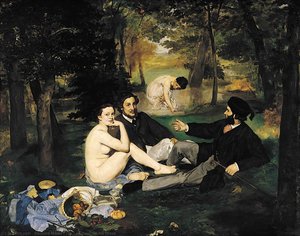 The Luncheon on the Grass - Édouard Manet
Close your eyes. Can you feel the light in The Luncheon on the Grass by Édouard Manet?
It is not just illumination; it is a language . The artist did not merely paint light—he composed it , like a musician crafting a sonata. This 1863 masterpiece acts as the pivotal bridge between Realism and Impressionism, using bold contrasts and a flattened perspective to capture the fleeting atmosphere of a sun-dappled glade.
Once the center of immense scandal at the Salon des Refusés , its loose brushwork and provocative figures broke every academic rule of its time. You can sense the organic texture of the forest and the warmth of the filtered sunlight within every masterful stroke. Now, open your eyes. That revolutionary light? It is waiting to spill into your home, turning walls into portals of inspiration.
A Bar at the Folies-Bergere - Édouard Manet
 A Bar at the Folies-Bergere - Édouard Manet
Édouard Manet’s A Bar at the Folies-Bergere stands as a haunting cornerstone of the Impressionism movement , capturing the fragmented soul of late 19th-century Paris. The painting’s enduring mystery lies in the barmaid’s detached gaze, which pierces through the bustling cabaret atmosphere to reveal a profound sense of urban isolation. Through the clever use of a distorted mirror reflection, Manet challenges our perception of reality and social connection.
This masterpiece explores the tension between the vibrant spectacle of nightlife and the quiet alienation of the individual—a theme that resonates deeply in our modern, hyper-connected yet often lonely digital age. The flickering gaslights and loose, impressionistic brushstrokes create a shimmering, atmospheric texture that continues to inspire contemporary aesthetic trends in moody, sophisticated interior curation. It is not merely a depiction of a scene, but a philosophical inquiry into the very nature of looking and being seen within the modern crowd.
La Grenouillere - Pierre-Auguste Renoir
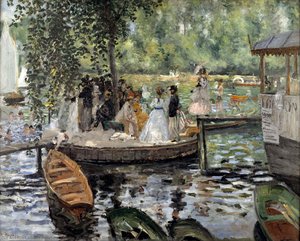 La Grenouillere - Pierre-Auguste Renoir
In La Grenouillere by Pierre-Auguste Renoir, the composition achieves a rhythmic balance through the organic interplay of shapes—the soft curves of boats set against the dappled, horizontal expanse of the water. This structural harmony, where light and shadow dance across the floating platform, creates a sense of timeless perfection that secures its place among the most defining masterpieces of the Impressionism art movement .
Much like the principles of modern minimalist design, Renoir’s ability to ground a scene with essential forms and an atmospheric focus allows this work to anchor a clean, contemporary aesthetic with effortless grace. One can almost feel the warmth of the sun through the loose, expressive brushstrokes that capture the fleeting joy of a summer afternoon. The palette—a vibrant mix of lush greens, deep blues, and sudden pops of white—invites you into a world of pure, unadulterated leisure, where every stroke celebrates the ephemeral beauty of light and life.
The Walk. Lady with a Parasol - Claude Monet
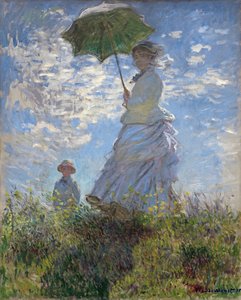 The Walk. Lady with a Parasol - Claude Monet
The luminous, airy blue in The Walk. Lady with a Parasol by Claude Monet sets an immediate mood of breezy tranquility and ephemeral light. As one of the Top 10 Masterpieces That Defined the Impressionism Art Movement , this work showcases a revolutionary mastery of color; Monet uses broken, visible brushstrokes to layer sun-drenched whites and lush greens, capturing the very essence of a fleeting moment. This innovative use of light and atmosphere makes the piece a cornerstone of the movement. For modern interior curation, the painting's soft, natural palette offers an exceptional way to influence the emotional lighting of a space. Incorporating this artwork into a dining room or lounge can introduce a sense of openness and calm, using its cool tones to create a sophisticated, light-filled atmosphere that complements contemporary architectural design.
Conclusion
As the golden hour settles over these Impressionist treasures, we are reminded that these paintings are not merely historical milestones, but living, breathing windows into the soul of light itself. They do not belong solely to the past; they reside in the way a soft blue shadow falls across a room or how a burst of lavender captures a passing memory. By integrating these textures and tones into our contemporary lives, we bridge the gap between the nineteenth century and the present, allowing the movement's revolutionary energy to pulse through our very homes. These works continue to shape our emotional landscapes and cultural identity, teaching us to find profound beauty in the transient and the fleeting. We invite you to rediscover this enduring magic within our full collection , where every canvas serves as a testament to the eternal dance between art and the everyday.