Pengene tilbage-garanti · 100 dage Gratis levering i hele verden
644.671kunstværker 52.888kunstnere 5.406museer 32sprog
Portræt af Adèle Riché

Adèle Richés malerier: De 1 mest berømte, rangeret

Opdateret oktober 2026 · rangeret efter vores popularitetsscore (søgninger, besøg og ordrer for hvert værk) · 1 værker af Adèle Riché i vores katalog

Hurtigt svar

Det mest berømte maleri af Adèle Riché er Portrait of Natalia Obrenovich, Queen of Serbia (1876); originalen findes på Hermitage Museum, Sankt Petersborg. Ud af de 1 værker af Adèle Riché i vores katalog er dette de 1 mest berømte, rangeret med årstal og museum, så du kan vælge det maleri, du ønsker at bestille.

1791 – 1878, Paris Flest værker: Hermitage Museum

Top 10 Adèle Riché malerier, rangeret

1
Portrait of Natalia Obrenovich, Queen of Serbia (1876) af Adèle Riché

Portrait of Natalia Obrenovich, Queen of Serbia

1876 · Oil On Canvas · Hermitage Museum, Sankt Petersborg

The Portrait of Natalia Obrenovich, Queen of Serbia is a painting by Adèle Riché. It captures the likeness of the woman born Natalia Keșco. She moved through the courts of Europe as the wife of King Milan I of Serbia. Her presence in the history of the Balkan monarchy was defined by her tenure as Queen Consort of Serbia from 1882 to 1889.

Håndmalet oliereproduktion fra $170 28 × 35 cm Samme størrelse som originalen $252 55 × 69 cm Bestil i original størrelse →
Bestil en håndmalet kopi Om maleriet

Museer der udstiller Adèle Richés originalværker

Det museum, der rummer flest af malerierne på denne side.

Museum By Værker af Adèle Riché Malerier fra denne liste
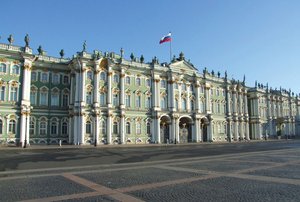
Hermitage Museum, Sankt PetersborgHermitage Museum Sankt Petersborg 1 Portrait of Natalia Obrenovich, Queen of Serbia

Adèle Riché efter år: de bedste malerier

Alle daterede Adèle Riché malerier på denne side er fra 1876 og er her opført efter rang.

Værker per år

Vælg et årstal for at se dets malerier.

Adèle Riché malerier: ofte stillede spørgsmål

Hvad er det mest berømte maleri af Adèle Riché?Vis svar

Portrait of Natalia Obrenovich, Queen of Serbia (1876) er nummer ét.

Hvor gammel var Adèle Riché, da Portrait of Natalia Obrenovich, Queen of Serbia blev malet?Vis svar

Adèle Riché var 85 år gammel: Portrait of Natalia Obrenovich, Queen of Serbia er dateret 1876, og Adèle Riché blev født i 1791.

Hvor mange værker af Adèle Riché har du på listen?Vis svar

1 værker af Adèle Riché er i vores katalog.

Hvor opbevares de originale Adèle Riché-malerier?Vis svar

Primært i Hermitage Museum (Sankt Petersborg). Se museomtabelen ovenfor for den fulde liste.

Kan jeg bestille en Adèle Riché reproduktion?Vis svar

Ja. Hvert maleri på denne side kan bestilles som en håndmalet oliereproduktion eller som et print. Åbn maleriet, vælg størrelsen og afgiv din bestilling.

Om kunstneren: Adèle Riché

The Precision of the Botanical Eye

Adèle Riché did not merely paint flowers; she documented them with the clinical accuracy required by the French Natural History Museum in Paris. Born in 1791, she occupied a specific niche where art met science. Her lineage provided her entry into this world, as her father, François-Joseph Riché, served as the chief gardener of the Paris Jardin des Plantes. This proximity to living specimens shaped her technical development. She was not a self-taught amateur but a disciplined student of Jan Frans van Dael and Gerard van Spaendonck, masters who understood the structural necessity of botanical illustration.

Her work on vellum required a level of control that most painters never achieve. Working on such a surface demands immediate, decisive application, as mistakes cannot be easily erased. This technical rigor is evident in her watercolor and gouache works, such as her depiction of the Queen of the Night or Night-Flowering Cereus. She moved between the delicate requirements of entomological and natural painting and the more traditional demands of oil portraiture. While her still lifes leaned toward the watercolor medium, her portraits, including a likeness of Natalia Obrenovich, Queen of Serbia, utilized oil to meet the stylistic expectations of the era.

Technical Mastery and Scientific Contribution

Riché’s career was defined by a dual identity as both a fine artist and a scientific illustrator. Her ability to translate complex organic forms into clear, legible images earned her a gold medal at the 1831 Salon. This was not a hollow accolade; it recognized a specific command over her medium. Her illustrations for François André Michaux's 1813 Histoire des arbres forestiers de l'Amerique Septentrionale demonstrate her capacity to handle large-scale botanical subjects with the same precision she applied to small-scale watercolors on vellum.

Her professional circle included significant figures in the field of botanical art, such as Pierre-Joseph Redouté and Pancrace Bessa. These collaborations were not mere social connections but professional alignments with the leading specialists of the nineteenth century. Her output was diverse, spanning several distinct methods:

By the time of her death in Fontainebleau, France, Riché had established a body of work that bridged the gap between aesthetic composition and scientific record. She did not rely on abstraction; she relied on the truth of the specimen. Her legacy is found in the accuracy of her lines and the permanence of her botanical observations.