A Life of Quiet Observation
Born in Leeuwarden in 1626, Dirck de Horn was a man whose existence was deeply rooted in the soil and social fabric of the Netherlands. He was raised within a family of painters, learning the nuances of his craft at the hand of his father, Uldrick Dircks. This early immersion in the technicalities of pigment and brushwork was shared by his brothers, Artus and Pieter, creating a household defined by the visual language of the era. While his training began at home, a possible period of study in Leiden suggests a mind that sought to absorb the evolving styles of the Dutch Golden Age, perhaps influenced by the works of David Bailly.
His professional life was not confined to the studio. De Horn was a man of many roles, navigating the practicalities of commerce and civic duty. He worked as a wine tapper, a trade that required a different kind of precision than the application of oil to canvas. His standing in Leeuwarden allowed him to move through various public spheres, serving as a hopman for the local civic guard and participating in the States of Holland and West Friesland. He was a figure of his community, balancing the quietude of a painter with the responsibilities of a public official.
The Stillness of the Subject
The surviving record of his artistic output is modest, with much of his work known only through archival traces. He focused his attention on the arrangement of the physical world, finding meaning in the temporary beauty of nature. His compositions were characterized by a specific selection of subjects:
- Poultry and game
- Vegetables and fruit
- Vanitas themes
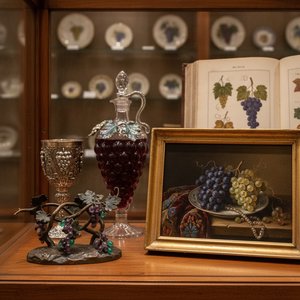
These works often find their way into the hands of museums, such as the Fries Museum, where a Vanitas still life remains a significant piece of his legacy. His paintings captured the textures of life—the feathers of a bird, the skin of a fruit, the weight of a vegetable—with a focus on the fleeting nature of existence. He did not seek to paint grand historical narratives, but rather the quiet, often overlooked details of the domestic and natural world.
A Fragmented Legacy
Because his oeuvre is small and many pieces were lost to time or remained in private hands, the full scope of his talent remains difficult to measure. He was not a man of mass production, and his paintings rarely appeared at auction, making them rare sightings for collectors. His significance lies in this scarcity and the specific way he documented the material life of the seventeenth-century Netherlands. He remains a painter of the particular, a man who found his place between the art of the brush and the duties of the citizen.