


1


Opdateret november 2026 · rangeret efter vores popularitetsscore (søgninger, besøg og ordrer for hvert værk) · 25 værker af Robert Wolfe i vores katalog
Hurtigt svar
Det mest berømte maleri af Robert Wolfe er Manteau sonore (1964); originalen findes på Musée national des beaux-arts du Québec, Québec City. Les Dieux nordiques (1966) og Dishevelled Lectern (1966) er tallene to og tre. Ud af de 25 værker af Robert Wolfe i vores katalog er dette de 24 mest berømte, rangeret med årstal og museum, så du kan vælge det maleri, du ønsker at bestille.
 Krwth1998 · Musée national des beaux-arts du Québec
12
 Giotto1999 · Musée national des beaux-arts du Québec
13
 Sarab2003 · Musée national des beaux-arts du Québec
14
 Hériz2003 · Musée national des beaux-arts du Québec
15
 Varamin2003 · Musée national des beaux-arts du Québec
16
 Sarouk2003 · Musée national des beaux-arts du Québec
17
 Malaïr2003 · Musée national des beaux-arts du Québec
18
 Ganymède de la série «Les Nébuleuses»1983 · Musée national des beaux-arts du Québec
19
 La Prophétie1988 · Musée national des beaux-arts du Québec
20
 Je crois qu'il ne se fût pas départi de son sourire si je lui avais déclaré que j'allais mourir dans quelques minutes1991 · Musée national des beaux-arts du Québec
21
 Tabriz2003 · Musée national des beaux-arts du Québec
22
 Goltok2003 · Musée national des beaux-arts du Québec
23
 Pazyrik2003 · Musée national des beaux-arts du Québec
24
 Hamadan2003 · Musée national des beaux-arts du Québec
De 2 museer, der rummer flest af malerierne på denne side.
| Museum | By | Værker af Robert Wolfe | Malerier fra denne liste |
|---|---|---|---|
 Musée national des beaux-arts du Québec |
Québec City | 23 | Manteau sonore, Les Dieux nordiques, Moïse |
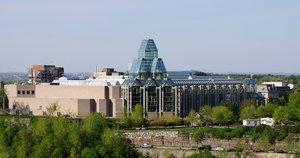 National Gallery of Canada |
Ottawa | 1 | Dishevelled Lectern |
Vælg et årti for at se dets mest populære maleri.


Manteau sonore (1964), Musée national des beaux-arts du Québec, Québec City, rangerer som nummer ét, efterfulgt af Les Dieux nordiques (1966) og Dishevelled Lectern (1966).
Robert Wolfe var 29 år gammel: Manteau sonore er dateret 1964, og Robert Wolfe blev født i 1935.
Manteau sonore, Les Dieux nordiques, Dishevelled Lectern, Moïse, Tiarella cordifolia, Ligularia, Maslaghan, Rusucurru, Jaune et blanc og Ennéades 3. Årstal og museum for hver enkelt findes i ranglisten ovenfor.
25 værker af Robert Wolfe er i vores katalog, dateret fra 1964 til 2003.
Primært i Musée national des beaux-arts du Québec (Québec City) og National Gallery of Canada (Ottawa). Se museomtabelen ovenfor for den fulde liste.
I 1980s: 9 af de 24 malerier, der er rangeret her, stammer fra den tid, herunder Moïse.
Ældste på denne side: Manteau sonore (1964). Nyeste: Sarab (2003).
Musée national des beaux-arts du Québec, Québec City har 23 af de malerier, der er rangeret her, herunder Manteau sonore, Les Dieux nordiques og Moïse.
Born in Montreal, Canada, in 1935, Robert Wolfe spent his years observing the world through a lens of stillness. His work does not shout; instead, it settles into a space, much like the objects he chose to paint. He worked with oils on masonite and acrylics on canvas, focusing on the way light and form occupy a room. There is a certain weight to his compositions, a sense of things being exactly where they belong, even when they appear slightly out of place.
His hands moved between different textures and surfaces, seeking to capture the essence of a subject without the need for grand gestures. In 1966, he produced Dishevelled Lectern, an oil on masonite piece that found its way into the National Gallery of Canada. It is a work that demands a slow look, much like the quiet corners of a library or a study.
The practice of his work reveals a steady commitment to the physical reality of his subjects. He dealt with the tangible, the everyday, and the structural. His output includes works that explore the relationship between space and object, often leaving the title to the viewer's own perception.
His approach to a canvas was methodical. Whether working with the thick application of oil or the more direct nature of acrylic, the focus remained on the subject at hand. He did not seek to transform the world, but to record it as it sat before him.
By the time of his death in 2003, Wolfe had left behind a body of work that remains part of the Canadian artistic landscape. His paintings, such as the large-scale Tombeau de Vincent, show a continued interest in the way light interacts with a surface. He remained a painter of the specific, finding meaning in the arrangement of a room or the tilt of a piece of furniture. His legacy is found in these quiet, composed moments captured on wood and cloth.


