Pengene tilbage-garanti · 100 dage Gratis levering i hele verden
646.446kunstværker 53.409kunstnere 5.406museer 32sprog
Portræt af Max Kurzweil

Max Kurzweils malerier: De 22 mest berømte, rangeret

Opdateret oktober 2026 · rangeret efter vores popularitetsscore (søgninger, besøg og ordrer for hvert værk) · 22 værker af Max Kurzweil i vores katalog

Hurtigt svar

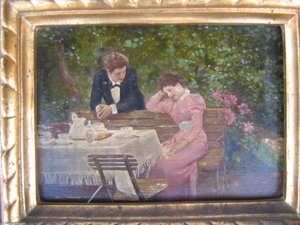
Det mest berømte maleri af Max Kurzweil er Lady in Yellow Dress (1899). Bettina Bauer (1908) og A Dear Visit (1894) er tallene to og tre. Ud af de 22 værker af Max Kurzweil i vores katalog er dette de 22 mest berømte, rangeret med årstal og museum, så du kan vælge det maleri, du ønsker at bestille.

1867 – 1916, Bzenec Expressionism Flest værker: Los Angeles County Museum of Art

Top 10 Max Kurzweil malerier, rangeret

Max Kurzweils malerier rangeret fra 11 til 22

Max Kurzweil malerier efter motiv

De fire mest hyppige motiver i denne rangliste, med det øverste maleri for hvert.

Museer der udstiller Max Kurzweils originalværker

De 2 museer, der rummer flest af malerierne på denne side.

Museum By Værker af Max Kurzweil Malerier fra denne liste
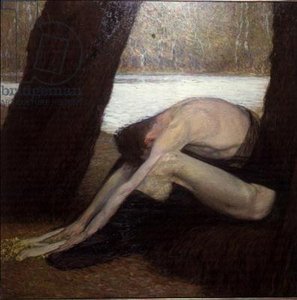
Los Angeles County Museum of Art, Los AngelesLos Angeles County Museum of Art Los Angeles 1 Seated nude facing right and meditating
Secession, WienSecession Wien 1 Withdrawal letter from Max Kurzweil, June 15, 1905

Max Kurzweil efter årti: det bedste maleri fra hvert årti

Værker per årti

Vælg et årti for at se dets mest populære maleri.

Max Kurzweil malerier: ofte stillede spørgsmål

Hvad er det mest berømte maleri af Max Kurzweil?Vis svar

Lady in Yellow Dress (1899) rangerer som nummer et, efterfulgt af Bettina Bauer (1908) og A Dear Visit (1894).

Hvor gammel var Max Kurzweil, da Lady in Yellow Dress blev malet?Vis svar

Max Kurzweil var 32 år gammel: Lady in Yellow Dress er dateret 1899, og Max Kurzweil blev født i 1867.

Hvilke er de 10 bedste malerier af Max Kurzweil?Vis svar

Lady in Yellow Dress, Bettina Bauer, A Dear Visit, Seated nude facing right and meditating, Seated nude facing right and meditating, The Farrier, The fisherman, Christ, A walk in the garden og The Pond (Concarneau). Årstal og museum for hver enkelt findes i ranglisten ovenfor.

Hvor mange værker af Max Kurzweil har du på listen?Vis svar

22 værker af Max Kurzweil er i vores katalog, dateret fra 1894 til 1915.

Hvor opbevares de originale Max Kurzweil-malerier?Vis svar

Primært i Los Angeles County Museum of Art (Los Angeles) og Secession (Wien). Se museomtabelen ovenfor for den fulde liste.

Hvilken periode frembragte Max Kurzweils mest berømte malerier?Vis svar

I 1900s: 13 af de 22 malerier, der er rangeret her, stammer fra den tid, herunder Bettina Bauer.

Hvilke er de tidligste og seneste berømte Max Kurzweil malerier?Vis svar

Ældste på denne side: A Dear Visit (1894). Nyeste: Christ (1915).

Hvad er de primære motiver i Max Kurzweils malerier?Vis svar

Blandt de 22 malerier, der er rangeret her: Women (3), Children (2) og Beach (2).

Hvilken stilart er Max Kurzweil associeret med?Vis svar

Expressionism og Art nouveau, baseret på de malerier, der er rangeret på denne side.

Kan jeg bestille en Max Kurzweil reproduktion?Vis svar

Ja. Hvert maleri på denne side kan bestilles som en håndmalet oliereproduktion eller som et print. Åbn maleriet, vælg størrelsen og afgiv din bestilling.

Om kunstneren: Max Kurzweil

The Bohemian Roots of a Viennese Visionary

Born amidst the evocative landscapes of Bisenz, Bohemia, Maximilian Franz Viktor Zdenko Marie Kurzweil carried the romantic sensibilities of his youth into the heart of the Austro-Hungarian Empire. His relocation to Vienna in 1879 marked the beginning of a transformative era for both the artist and the city itself, as he moved from the quietude of his Czech origins toward the vibrant, pulsing energy of a burgeoning metropolis. Under the rigorous academic guidance of masters such as Christian Griepenkerl and Leopold Carl Müller at the Academy of Fine Arts Vienna, Kurzweil mastered the classical foundations of his craft. Yet, it was his immersion in the light-drenched ateliers of Paris, particularly the Académie Julian, that truly ignited his creative spirit. Here, the rigid boundaries of academic tradition began to dissolve, replaced by a burgeoning fascination with the fleeting impressions of light and the profound, often unsettling, depths of human emotion.

A Revolutionary Spirit in the Vienna Secession

As the nineteenth century drew to a close, Kurzweil emerged not merely as a painter, but as a pivotal architect of the modern Viennese aesthetic. In 1897, he stood alongside luminaries such as Gustav Klimt and Emil Nolde to co-found the Vienna Secession, a movement dedicated to shattering the stifling constraints of conservative academicism. Through his influential role as an editor and illustrator for the magazine Ver Sacrum, he helped weave a new visual language that married the textured, expressive palettes of Impressionism with the haunting, dreamlike motifs of Symbolism. His artistic evolution was marked by a deepening psychological intensity, drawing profound inspiration from the raw emotionality of Edvard Munch and the structural elegance of Ferdinand Hodlen. Whether capturing the contemplative stillness in "Seated nude facing right and meditating" or the atmospheric textures found in "The Fisherman," his work became a vessel for the complex tensions of a world caught between tradition and modernity.

A Legacy of Melancholy and Mastery

The trajectory of Kurzweil’s life was as profound as it was tragic. While he achieved significant professional milestones—including being awarded the prestigious Villa Romana prize in 1905 and serving as a respected professor at the Frauenkunstschule—his personal existence was often shadowed by an innate sense of melancholy. This internal struggle reached its devastating conclusion in 1916, when he ended his life alongside his student and lover, Helene Heger. Despite this somber end, his contribution to the Viennese Secessionist movement remains indelible. His ability to bridge the gap between Bohemian Romanticism and the avant-garde future ensures that his name continues to resonate within the annals of European art history, serving as a testament to a soul that sought to capture the ephemeral beauty of a vanishing era.

Alle 22 værker af Max Kurzweil →