


 Vorschau anzeigen
 Versenden
 Teilen
 Details anzeigen
 Leitfaden

 Herunterladen
 Ähnliche Objekte
 Röntgenaufnahme
 Diashow
 Statistiken
Self-Portrait
 Acryl auf Leinwand
- Wandkunst
- Renaissance Realism
 1521
1521 127.0 x 117.0 cm
 Kunsthalle
 Weiterlesen
Giclée / Kunstdruck
Giclée- oder Leinwanddruck in Museumsqualität mit schneller Produktion und flexiblen Veredelungsoptionen. ( Handgemalte Reproduktion bestellen Zum digitalen Bild wechseln)




P118B €10

P118H €10

P118W €10

P438Z €10

P508JH €12

P508YH €12

P805H €10

P805Z €10

P919BZ €10

P919G €10

P919XJ €10

P959ZH €10

P968JZ €12

W106C €8

W218G €10

W218JH €8

W218Y €10

W307PJ €10

W316G €10

W316PJ €8

W316Y €10

W398PJ €8

W4111J €10

W500HY €15

W500JH €15

W692G €12

W849H €8

W940BG €15

W953PJ €8




Wählen Sie aus unseren vordefinierten Formaten, die den ursprünglichen Proportionen des Kunstwerks entsprechen.

Geben Sie die benötigte Breite und Höhe an, damit der Druck perfekt in Ihren Rahmen oder an Ihre Wand passt. Ein Druck kann nur beschnitten, aber niemals größer als das Originalbild angefertigt werden; daher verliert ein Format mit anderen Proportionen einen Teil des Bildes. Wir senden Ihnen ein digitales Mockup zur Freigabe, bevor wir den Druck ausführen. Das auf dieser Seite gezeigte Bild zeigt nicht den tatsächlichen Beschnitt – dies ist nur im Mockup ersichtlich.
Weltweiter Versand () innerhalb von 2 Wochen statt der üblichen 4/5 Wochen. (27 Oktober)

Kostenloser weltweiter Expressversand

Hochwertige Leinenleinwand

Umfassender Versicherungsschutz beim Versand

Zollgebühren-Rückerstattungsgarantie

Garantie für exakte Farbtreue

100 Tage Rückgaberecht (nur bei Mängeln)

100% Geld-zurück-Garantie

Mengenrabatt verfügbar
 Die Glasoption ist nur für Größen unter 110 cm verfügbar.

Self-Portrait
Giclée / Kunstdruck
Format der Reproduktion
-


Endpreis
€ 56
A Window into Renaissance Genius: Albrecht Dürer’s Self-Portrait
Albrecht Dürer, a name etched in the annals of art history, stands as arguably the most influential artist of the German Renaissance. Born in Nuremberg in 1471, his life was a testament to unwavering dedication and artistic innovation—a journey that culminated in the creation of one of the most enduring images of introspection and mastery: *Self-Portrait at 22*. Currently residing within the Kunsthalle Bremen’s collection, this drawing transcends mere representation; it embodies the very spirit of humanist inquiry and artistic ambition characteristic of its era.- Subject Matter & Composition: The portrait depicts Dürer in a strikingly candid pose—naked except for a gold ring adorning his finger—a deliberate choice that speaks volumes about Renaissance ideals concerning human dignity and anatomical accuracy. He holds what scholars believe to be an apple or fruit, subtly referencing biblical symbolism and highlighting the artist’s awareness of cultural narratives.
- Style & Technique: Dürer's approach aligns perfectly with the prevailing stylistic trends of his time—a fervent embrace of classical principles combined with meticulous observation of nature. The drawing is executed with unparalleled precision using graphite and chalk, demonstrating a mastery of shading techniques that create an illusion of three-dimensionality. Notice the subtle gradations of tone capturing the contours of Dürer’s face, hair, and torso.
- Historical Context: Created in 1548, *Self-Portrait at 22* reflects the intellectual fervor of the Reformation and the burgeoning humanist movement. Artists like Dürer sought to elevate human experience through art—to portray individuals with psychological depth and anatomical realism—a radical departure from medieval conventions.
- Symbolism & Significance: The inclusion of the apple is particularly noteworthy, referencing Adam and Eve’s expulsion from Paradise – a poignant reminder of mortality and the pursuit of spiritual enlightenment. Furthermore, Dürer's gaze directly confronts the viewer, establishing an intimate connection between artist and audience—a hallmark of Renaissance portraiture intended to convey both physical beauty and inner character.
- Legacy & Reproduction: Today’s reproductions capture the essence of Dürer’s genius, allowing admirers worldwide to experience the profound impact of this seminal artwork. AllPaintingsStore offers exceptional quality prints that faithfully recreate the drawing's nuanced textures and tonal range—bringing a piece of Renaissance history into your home or studio.
Exploring Dürer’s Innovative Drawing Method
Dürer’s technique wasn’t merely skillful; it was revolutionary for its time. He meticulously studied human anatomy, dissecting cadavers to gain a deeper understanding of musculature and bone structure—a practice considered unorthodox by many contemporaries. This anatomical knowledge informed his drawing process, resulting in depictions that are remarkably accurate and expressive. The artist employed hatching and cross-hatching techniques with astonishing subtlety, creating textures that mimic the appearance of skin and muscle tissue. Consider how these lines convey not only form but also light and shadow—elements crucial to achieving a convincing illusion of reality.A Reflection of Renaissance Humanism
The Kunsthalle Bremen’s careful preservation ensures that future generations can appreciate *Self-Portrait at 22* alongside the masterpieces of Raphael, Leonardo da Vinci, and Michelangelo. This artwork embodies the humanist spirit—a belief in human potential and a fascination with the natural world—values that underpinned the Renaissance's artistic achievements. Dürer’s self-portrait serves as an enduring reminder of the transformative power of art to illuminate both the physical form and the inner soul.Fragen & Antworten
Wie lässt sich "Self-Portrait" von Albrecht Dürer in der Inneneinrichtung verwenden?
"Self-Portrait" wird für Akzentuierung empfohlen; der ideale Ort dafür ist ein Wohnbereich.
Welche Druckgröße wird für "Self-Portrait" empfohlen?
Die empfohlene Druckgröße für "Self-Portrait" von Albrecht Dürer ist Großformatig.
In welche Phase von Albrecht Dürers Schaffen lässt sich "Self-Portrait" einordnen?
Innerhalb der Schaffensperiode von Albrecht Dürer lässt sich „Self-Portrait“ der Mature Period zuordnen. Diese Phase ermöglicht einen Vergleich mit anderen Werken des Künstlers.
Ähnliche Kunstwerke


Künstlerbiografie
Albrecht Dürer: Leben und Vermächtnis
Frühes Leben und Ausbildung
Albrecht Dürer, eine herausragende Figur der deutschen Renaissance, wurde am 21. Mai 1471 in Nurnberg, Deutschland, geboren. Sein Vater, Albrecht Dürer der Ältere, war ein erfolgreicher Goldschmied, und es war in dieser künstlerischen Umgebung, dass sich bei dem jungen Albrecht die Neigung zum Kunsthandwerk entfaltete. Mit dreizehn Jahren begann er seine Ausbildung bei Michael Wolgemut, einem führenden Künstler in Nurnberg, wo er grundlegende Fähigkeiten in Malerei, Zeichnung und Holzschnitt erwarb. Ein Selbstporträt aus dem Jahr 1484, das sich im Albertina in Wien befindet, bietet beeindruckende Beweise für sein frühreifes Talent.
Aufstieg zur Prominenz und künstlerische Entwicklung
Bis zu seinem zwanzigsten Lebensjahr hatte sich Dürer als Meister des Holzschnitts etabliert und Anerkennung in ganz Europa erlangt. Er unternahm Reisen nach Italien, wo er die Werke von Renaissance-Meistern wie Raphael, Giovanni Bellini und Leonardo da Vinci kennenlernte. Diese Begegnungen beeinflussten seinen künstlerischen Stil nachhaltig und führten ihn dazu, klassische Motive und Techniken in seine nordeuropäische Ästhetik zu integrieren.
Schlüsselwerke und künstlerischer Stil
Dürers Œuvre umfasst eine breite Palette von Medien, darunter Gemälde, Radierungen, Holzschnitte und theoretische Schriften. Zu seinen bekanntesten Werken gehören:
- Die Apokalypse-Serie (1498): Eine Sammlung von vierzehn Holzschnitten, die das Buch der Offenbarung illustrieren und Dürers Können in diesem Medium zeigen, trotz seiner gotischen stilistischen Elemente.
- Melancholia I (1514): Vielleicht sein rätselhaftester Kupferstich, Melancholia I ist weiterhin Gegenstand intensiver wissenschaftlicher Analyse und Interpretation.
- St. Jerome in seinem Arbeitszimmer (1514): Eine meisterhafte Kupferätzung, die Dürers außergewöhnliche Beherrschung von Perspektive, Detail und symbolischer Darstellung demonstriert.
Dürers Stil ist durch akribische Realismus, präzise Draftsmanship und ein tiefes Verständnis von Anatomie und Perspektive gekennzeichnet. Er war auch Pionier bei der Verwendung von Aquarell als eigenständiges Medium.
Theoretische Beiträge
Über seine künstlerische Praxis hinaus leistete Dürer bedeutende Beiträge zur Kunsttheorie. Er verfasste mehrere Schriften über Geometrie, Proportionen und menschliche Anatomie, darunter Vier Bücher der menschlichen Proportion (1528). Diese Schriften demonstrieren seinen Glauben an die mathematischen Grundlagen der Kunst und sein Engagement für die Etablierung eines wissenschaftlichen Ansatzes zur künstlerischen Schaffung.
Vermächtnis und historische Bedeutung
Albrecht Dürers Einfluss auf die Kunstwelt ist unbestreitbar. Er schloss die Lücke zwischen nordeuropäischen Traditionen und italienischen Renaissance-Idealen, indem er klassische Motive in die nordeuropäische Kunst einführte, während er gleichzeitig ihren einzigartigen Charakter bewahrte. Seine theoretischen Schriften trugen dazu bei, den Status von Künstlern zu erhöhen und einen neuen intellektuellen Rahmen für künstlerliche Praxis zu etablieren. Er bleibt eine zentrale Figur in der Geschichte der Kunst und inspiriert bis heute Generationen von Künstlern mit seiner technischen Begabung, seinem innovativen Geist und seiner tiefgründigen Vision.
Einflüsse
- Michael Wolgemut
- Leonardo da Vinci
- Raphael
- Giovanni Bellini

Albrecht Dürer
1471 - 1528 , Italy
Kurzinfos
- Beeinflusste Künstler:
- Michael Wolgemut
- Raphael
- Giovanni Bellini
- Leonardo da Vinci
- Bemerkenswerte Werke:
- Apokalypse-Serie
- Melancholia I
- St. Hieronymus im Arbeitszimmer
- Geburtsdatum: 21. Mai 1471
- Geburtsort: Nürnberg, Italien
- Künstlerische Bewegung: Deutsche Renaissance
- Nationalität: Deutsch
- Sterbedatum: 1528
- Vollständiger Name: Albrecht Dürer
Ähnliche Artikel

The Nuances of Graphite: Exploring Emotional Depth & Technical Mastery in Pencil Drawing
Explore the captivating world of graphite drawing! Discover its rich history, master essential techniques like chiaroscuro, and learn how artists evoke emotion through this timeless medium. Expert insights for art enthusiasts.
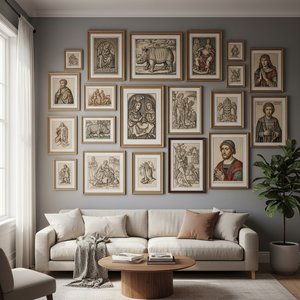
Albrecht Dürer: Die 25 Meisterwerke des Renaissance-Genies – Für Kunstliebhaber & Ihr Zuhause
Entdecken Sie die 25 Meisterwerke von Albrecht Dürer! Tauchen Sie ein in die Welt der Renaissance, Holzschnitte & Kupferstiche. Finden Sie hochwertige Kunstdrucke und Reproduktionen für Ihr Zuhause auf AllPaintingsStore.com.

Albrecht Dürer: Innovation und Selbstbildnis eines Renaissance-Meisters – Eine Untersuchung seines künstlerischen Vermächtnisses
Entdecken Sie das faszinierende Leben und Werk von Albrecht Dürer! Unsere Expertenanalyse beleuchtet seine Innovationen, Selbstporträts und seinen bleibenden Einfluss auf die Kunstgeschichte. Jetzt lesen!

The Power of Graphite: Mastering Depth, Texture, and Detail in the Art of Pencil Drawing
Explore the profound artistry of graphite drawing. Discover professional techniques for mastering depth, texture, and detail through a lens of art history, from classical sketches to modern masterpieces. Elevate your understanding of the pencil medium with our expert guide.

Die 25 Meisterwerke des British Museum: Kunstgeschichte für Ihr Zuhause | AllPaintingsStore
Entdecken Sie die 25 bedeutendsten Kunstwerke des British Museum! Von ägyptischen Schätzen bis zu Meisterwerken von Rembrandt & Van Gogh – erfahren Sie faszinierende Geschichten und finden Sie hochwertige Reproduktionen für Ihr Zuhause. Jetzt auf AllPaintingsStore.com inspirieren lassen!


