


 Vorschau anzeigen
 Versenden
 Teilen
 Details anzeigen

 Herunterladen
 Ähnliche Objekte
 Röntgenaufnahme
 Diashow
Nu couche de dos

 Weiterlesen
Giclée / Kunstdruck
Giclée- oder Leinwanddruck in Museumsqualität mit schneller Produktion und flexiblen Veredelungsoptionen. ( Handgemalte Reproduktion bestellen Bild kaufen)




P118B $10

P118H $10

P118W $10

P438Z $10

P508JH $12

P508YH $12

P805H $10

P805Z $10

P919BZ $10

P919G $10

P919XJ $10

P959ZH $10

P968JZ $12

W106C $8

W218G $10

W218JH $8

W218Y $10

W307PJ $10

W316G $10

W316PJ $8

W316Y $10

W398PJ $8

W4111J $10

W500HY $15

W500JH $15

W692G $12

W849H $8

W940BG $15

W953PJ $8




Wählen Sie aus unseren vordefinierten Formaten, die den ursprünglichen Proportionen des Kunstwerks entsprechen.

Sie können Ihre eigenen Maße eingeben, um ein bestimmtes Format oder einen speziellen Platz einzupassen. Wenn das von Ihnen gewählte Format nicht den Proportionen des Originalbildes entspricht, werden wir das Kunstwerk entweder beschneiden oder das Bild mit einem gespiegelten oder einfarbigen Rand erweitern. Ein digitaler Entwurf wird Ihnen zur Genehmigung zugesandt, bevor die Produktion beginnt.
Bitte beachten Sie, dass die Vorschau auf dem Bildschirm nicht den tatsächlichen Zuschnitt oder die Erweiterung widerspiegelt. Nur der Entwurf zeigt die endgültige Komposition präzise an.
Obwohl Sondermaße verfügbar sind, empfehlen wir die Auswahl eines Maßes aus der vordefinierten Liste, um die ursprünglichen Proportionen zu bewahren.
Weltweiter Versand () innerhalb von 2 Wochen statt der üblichen 4/5 Wochen. (21 August)

Kostenloser weltweiter Expressversand

Hochwertige Leinenleinwand

Umfassender Versicherungsschutz beim Versand

Zollgebühren-Rückerstattungsgarantie

Garantie für exakte Farbtreue

60 Tage Rückgaberecht (nur bei Mängeln)

100% Geld-zurück-Garantie

Mengenrabatt verfügbar
 Die Glasoption ist nur für Größen unter 110 cm verfügbar.

Nu couche de dos
Giclée / Kunstdruck
Format der Reproduktion
-


Gesamtpreis
$ 64
Sammlerstück-Beschreibung
The Enigmatic Figure: An Introduction to “Nu couché de dos”
Amedeo Modigliani's "Nu couché de dos" (Reclining Nude from the Back), painted in 1917, isn’t merely a depiction of a female nude; it’s a carefully constructed tableau of introspection and subtle sensuality. Captured during a period of intense creative ferment for the artist – a time marked by both profound artistic breakthroughs and personal hardship – this work embodies Modigliani's signature style: elongated forms, simplified features, and an almost unsettling stillness. The painting immediately draws the viewer in with its quiet intensity, inviting contemplation rather than overt display. It’s a portrait not of physical beauty as traditionally defined, but of a soul at rest, yet subtly aware.
The genesis of this piece lies within Modigliani's unique artistic environment. He was working under the patronage of Leopold Zborowski, a Polish poet and art dealer who provided him with a studio, models, and a vital lifeline during a period of considerable instability. This arrangement fostered an atmosphere of experimentation and collaboration, allowing Modigliani to push the boundaries of his style and explore new avenues for representing the human form. The painting’s creation coincided with a pivotal moment in Modigliani's career – a time when he was actively seeking to move beyond the influence of earlier masters and forge his own distinct visual language.
A Symphony of Line and Form: Technique and Style
Modigliani’s technique is immediately recognizable. He employs long, fluid lines to define the figure's contours, exaggerating the neck and limbs in a manner that creates an almost ethereal quality. The forms are deliberately simplified – reduced to their essential shapes while retaining a remarkable sense of volume. The elongated proportions, characteristic of his work, contribute significantly to the painting’s dreamlike atmosphere. Notice how the curves of the body flow seamlessly into one another; there are no sharp edges or abrupt transitions, creating a feeling of harmonious balance.
The color palette is deliberately muted and earthy – ochre, beige, brown, and subtle hints of red—reflecting Modigliani’s preference for understated tones. This restrained use of color allows the forms themselves to take center stage, while the dark background and cushions provide a dramatic contrast, emphasizing the figure's delicate flesh tones. The application of paint is remarkably smooth, suggesting an oil-on-canvas technique executed with meticulous care. Brushstrokes are visible but subtle, contributing to a sense of tactile richness.
Symbolism and Emotional Resonance
Beyond its formal qualities, “Nu couché de dos” resonates with layers of symbolic meaning. The reclining pose itself suggests vulnerability and introspection—a moment of quiet contemplation away from the demands of the world. The woman’s gaze, directed directly at the viewer, is particularly arresting. It's not a seductive or overtly provocative look; rather, it conveys a sense of detached awareness, as if she is observing us with a gentle curiosity. The slightly downturned mouth adds to this impression of quiet melancholy.
The elongated neck and limbs—a hallmark of Modigliani’s style—contribute to the painting's ethereal quality, evoking a sense of timelessness and spiritual depth. Some art historians interpret these features as reflecting Modigliani’s own preoccupation with mortality and his fascination with ancient cultures, particularly those of Africa and Greece, which he saw as sources of profound artistic inspiration. The overall effect is one of poignant beauty—a reminder of the fragility and transience of human existence.
A Legacy of Longing: Historical Context and Artistic Influence
“Nu couché de dos” stands as a crucial work within Modigliani’s oeuvre, representing a pivotal moment in his artistic development. It exemplifies his departure from traditional academic approaches to the nude figure, embracing instead a more stylized and emotionally resonant representation of the human form. The painting's creation coincided with a period of intense experimentation in European art, marked by the rise of Cubism, Futurism, and Expressionism—movements that challenged conventional notions of perspective, space, and representation.
Modigliani’s influence extends far beyond his own lifetime. His distinctive style—characterized by elongated forms, simplified features, and a hauntingly beautiful aesthetic—has inspired generations of artists. Reproductions of “Nu couché de dos” continue to be highly sought after by collectors and interior designers alike, serving as elegant reminders of Modigliani’s enduring legacy.
Ähnliche Kunstwerke


Über den Künstler
frühes Leben und Hintergrund
Amadeo Clemente Modigliani, ein italienischer jüdischer Maler und Bildhauer, wurde am 12. Juli 1884 in Livorno, Italien, geboren. Seine Familie, von sephardischer jüdischer Abstammung, hatte eine bedeutende Präsenz im Mittelmeerraum. Das frühe Leben von Modigliani war von häufigen Krankheiten geprägt, darunter Pleuritis und Typhus, die seinen späteren künstlerischen Stil beeinflussen sollten.Künstlerische Reise
- Amadeo Clemente Modigliani's künstlerische Reise begann in Italien, wo er die Kunst der Antike und des Renaissance studierte.
- Im Jahr 1906 zog er nach Paris und kam mit namhaften Künstlern wie Pablo Picasso und Constantin Brâncuși in Kontakt.
- Die Œuvre von Modigliani umfasst Gemälde und Zeichnungen, wobei der Schwerpunkt auf Porträts und vollen Figuren von Menschen liegt, sowohl in Bildern als auch in Skulpturen.
Bekannte Werke und Stil
- Nacktbildnis (35 x 26 cm, Expressionismus, Öl auf Leinwand), ein Paradebeispiel für den einzigartigen Stil von Modigliani.
- Liegender Nackt mit losem Haar (Osaka City Museum of Modern Art, Japan, Expressionismus, Öl auf Leinwand), das seine Meisterschaft der menschlichen Form demonstriert.
- Sitzende weibliche Nacktheit (92 x 60 cm, Expressionismus, Öl auf Leinwand), ein Beweis für seine Fähigkeit, die Essenz der Weiblichkeit einzufangen.
Einfluss und Vermächtnis
Trotz geringem Erfolg während seines Lebens wurden Modiglianis Werke nach seinem Tod populärer, wobei seine Kunstwerke zu hohen Preisen verkauft wurden. Sein Einfluss ist in verschiedenen Kunstbewegungen zu sehen, darunter Expressionismus und Modernismus.- Entdecken Sie die Top 5 berühmtesten Expressionisten aller Zeiten, um mehr über die Bewegung zu erfahren.
- Erkunden Sie Amadeo Clementes Modiglianis umfangreiche Sammlung auf AllPaintingsStore, mit über 240 Kunstwerken.
- Entdecken Sie die Geschichte der Malerei und ihre Bedeutung für den Kunstwelt.
Museen und Kunstsammlungen
Osaka City Museum of Modern Art, Japan, das einige seiner bedeutenden Werke beherbergt, ist eine wichtige Institution für Kunstinteressierte. Die Sammlung des Museums zeigt eine breite Palette künstlerischer Stile, darunter Expressionismus und Modernismus.Schlussfolgerung
Amadeo Clementes Modiglianis rätselhafter Stil, der durch die Verlängerung von Gesichtern und Figuren gekennzeichnet ist, hat einen unauslöschlichen Eindruck in der Kunstwelt hinterlassen. Sein Vermächtnis inspiriert weiterhin Künstler und Kunstinteressierte gleichermaßen und macht ihn zu einer geliebten Figur in der Geschichte der Malerei.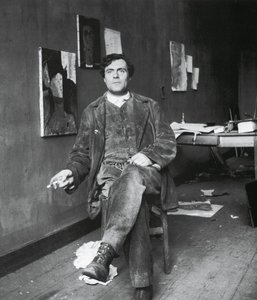
Amedeo Modigliani
1884 - 1920 , Italien
Kurzinfos
- Beeinflusste Künstler:
- Pablo Picasso
- Constantin Brâncuși
- Bemerkenswerte Werke:
- Nackte Figur
- Liegende Akt mit losem Haar
- Sitzende weibliche Nacktheit
- Geburtsdatum: 12. Juli 1884
- Geburtsort: Livorno, Italien
- Künstler Beeinflusst Durch:
- Expressionismus
- Modernismus
- Künstlerische Bewegung: Expressionismus
- Nationalität: Italienisch
- Vollständiger Name: Amedeo Clemente Modigliani
Ähnliche Artikel

Modiglianis Meisterwerke: Die 25 ikonischsten Gemälde für Ihr Zuhause | AllPaintingsStore
Entdecken Sie die 25 ikonischsten Gemälde von Amedeo Modigliani! Erfahren Sie mehr über seine einzigartigen Porträts, den Expressionismus & seinen Stil. Hochwertige Kunstdrucke auf AllPaintingsStore.com – für Kunstliebhaber & stilvolles Wohnen.

The Enduring Allure of the Nude: A Historical & Artistic Exploration of the Human Form
Explore the captivating history of nude art! Discover iconic paintings & artists from classical to modern eras. Uncover symbolism, techniques & find museum-quality reproductions at AllPaintingsStore.
Paul Cézanne: Die 25 Meisterwerke des Impressionismus | AllPaintingsStore
Entdecken Sie die 25 Meisterwerke von Paul Cézanne! Tauchen Sie ein in die Welt des Impressionismus und Postimpressionismus. Erfahren Sie mehr über seine Stillleben, Landschaften & berühmten Gemälde – jetzt hochwertige Kunstdrucke auf AllPaintingsStore.com.

The Eloquent Form: A Historical & Aesthetic Exploration of the Nude in Art
Explore the captivating history of the nude in art! From ancient Greece to modern masters, discover its evolving symbolism, techniques & enduring beauty. Expert insights for collectors and enthusiasts.
Fernand Léger: Die 25 Meisterwerke des Kubismus für Ihr Zuhause | AllPaintingsStore
Entdecken Sie die 25 Meisterwerke von Fernand Léger! Tauchen Sie ein in die Welt des Kubismus, Tubismus & der Avantgarde. Hochwertige Kunstreproduktionen für Ihr Zuhause – jetzt auf AllPaintingsStore.com!


